RFID and NFC are leading wireless technologies for 2025, each with unique strengths. RFID can identify objects from a distance, while NFC enables secure, close-range communication. Both technologies require careful attention to consumer electronics certification requirements. Companies must adhere to these requirements because standards vary widely. RFID and NFC support numerous applications, such as item tracking and smart payments. Understanding their certification needs is crucial for business strategies, making the right technology choice essential for success.
Key Takeaways
RFID can read many tags from far away. This helps track lots of items fast. NFC only works when it is very close. It is good for safe payments and access control. Both RFID and NFC devices need to pass hard tests. These tests are in the US and EU. The tests make sure the devices are safe and legal. You should pick RFID or NFC based on your business needs. Use RFID if you need to scan many things fast. Use NFC if you want safe and close-up use. Start planning for certification early. Work with experts to save time and money. This helps your products follow rules and stay competitive.
RFID and NFC Basics
RFID Overview
RFID uses electromagnetic fields to find and track tags on things. It is common in logistics, retail, and factories. Companies use RFID to count items and manage assets. It helps them see where things are in the supply chain. RFID works at low, high, and ultra-high frequencies. Each frequency is good for certain jobs. Low frequency is used for tracking animals. Ultra-high frequency is used in warehouses. RFID tags can be passive, active, or semi-passive. Passive tags get power from the reader. Active tags have their own battery. RFID only lets the reader talk to the tag. The reader asks the tag for data. RFID can scan many tags at once. This makes it fast and useful where speed is important.
NFC Overview
NFC is based on RFID but works at close range. It is made for safe, short-distance communication. NFC works at 13.56 MHz and allows two devices to talk to each other. Phones, cards, and badges use NFC to share data by tapping. NFC follows strict ISO rules like ISO/IEC 14443 and ISO/IEC 18092. These rules help devices work together safely. NFC tags come in five types. Each type has different memory, speed, and security. Type 1 tags use ISO 14443A and have basic security. Type 4 tags use ISO 14443 A/B and are used for things like passports. NFC lets devices swap data, make payments, and pair up. Its short range, less than 4 centimeters, keeps data safe. NFC is important for contactless payments, transit, and smart homes.
Tip: NFC follows ISO rules to keep devices safe and working together.
Components and Operation
RFID and NFC both have three main parts. They need a reader, a tag, and an antenna. The reader sends out a radio signal. The tag gets the signal and sends back its data. RFID readers can scan many tags at once. This helps with checking lots of items quickly. NFC lets two devices share data directly. They often use safe ways to send information. The table below shows how NFC tag types are different:
Tag Type | ISO Standard | Memory Capacity | Communication Speed | Security Level | Typical Use Cases |
|---|---|---|---|---|---|
Type 1 | ISO 14443A | 96 bytes – 2 KB | Slow | Basic | Smart posters, simple tagging |
Type 2 | ISO 14443A | 48 – 888 bytes | Moderate | Moderate | Access control, loyalty cards |
Type 3 | FeliCa (JIS X 6319-4) | Up to 1 MB | High | High | Transit, payment (Japan-focused) |
Type 4 | ISO 14443 A/B | 4 KB – 32+ KB | High | High | Payment cards, passports |
Type 5 | ISO 15693 | Up to 64 KB+ | Moderate | Moderate to High | Industrial tracking, logistics |
NFC has special layers for safe data sharing, like LLCP and SNEP. RFID does not use these layers. NFC uses NDEF to help apps work together. RFID systems focus on finding and tracking things fast. Both RFID and NFC need to be certified to meet rules in different places.
RFID vs NFC: Key Differences
Range and Communication
RFID and NFC both use radio waves, but their ranges are different. RFID can work at low, high, or ultra-high frequencies. UHF RFID works at 865–868 MHz in Europe and 902–928 MHz in the US. RFID can read tags from up to 10 meters away. This is good for tracking things in big warehouses. NFC is a type of high-frequency RFID. It works at 13.56 MHz. NFC works best when devices are very close, about 10 centimeters apart. Some special NFC readers can reach up to 1 meter, but most only work at 10 centimeters.
Technology | Frequency Band | Typical Read Range |
|---|---|---|
NFC (HF) | 13.56 MHz | About 10 cm to 1 m |
UHF RFID | 865–868 MHz (ETSI) / 902–928 MHz (FCC) | 0 to 10 m |
NFC lets devices talk safely when they are close together. This short range helps keep data safe, like when paying with a phone. RFID’s long range is good for tracking lots of items at once. Both need to follow rules for using radio waves in different places.
Note: NFC is safer for payments because it works close up. RFID is better for tracking many things from far away.
Data Speed and Types
How fast data moves is important when picking RFID or NFC. RFID usually sends data faster than NFC. This helps RFID scan many things quickly in stores or warehouses. UHF RFID can go as fast as 640 kbps. This speed is good for moving lots of data at once. NFC works at 13.56 MHz and sends data at 106 to 424 kbps. NFC is a bit slower, but it is made for safe, close-up use.
Feature | RFID | NFC |
|---|---|---|
Data Transfer Speed | Faster, good for scanning many things | Slower, made for safe close-up use |
Range | Up to over 100 feet (depends on frequency) | About 4 cm (very close) |
Frequency | Many bands: LF, HF, UHF, Microwave | Works at 13.56 MHz (part of HF) |
Security | Normal security, not limited by range | Better security because of short range and encryption |
RFID can hold many types of data, from simple codes to lots of details. NFC is slower, but it is great for safe payments and letting people in places. Both must keep data safe and private, especially where there are strict rules.
Batch vs One-to-One
RFID and NFC handle tags in different ways. UHF RFID can read many tags at the same time. This is called batch processing. It is good for counting things in stores, libraries, or warehouses. For example, ISO-15693 lets RFID read tags from up to 1 meter away and read many at once. This makes counting fast and easy.
Operational Aspect | UHF RFID (Batch Processing) | NFC (One-to-One Communication) |
|---|---|---|
Operating Frequency | 860-960 MHz | 13.56 MHz |
Read Range | Several meters or more (long-range) | A few centimeters (short-range) |
Data Transfer Speed | Fast, reads many tags at once | Slower, reads one tag at a time |
Multi-Tag Reading | Yes, can read many at once | No, only one at a time |
Cost Efficiency | Cheaper for big projects | Costs more for lots of tags |
Scalability | Easy to use with many tags | Harder to use with lots of tags |
Data Storage Capacity | Can store lots of info | Stores small amounts, good for payments |
Versatility | Used for tracking, access, and libraries | Used for payments and close-up uses |
Compatibility | Works with many systems | May need new hardware or software |
NFC can only talk to one tag at a time. Each time you use NFC, it connects one device to one tag. This is good for safe payments, letting people in, or pairing devices. But it is not good for counting lots of things at once. Companies should think about these differences when picking which to use.
RFID (especially UHF) is good for reading many tags from far away.
NFC is best for safe, close-up, one-to-one uses like payments.
RFID usually sends data one way, but NFC can send data both ways.
RFID is cheaper for big projects, but NFC is useful in phones and smart devices.
Tip: Pick RFID if you need to count many things fast. Pick NFC if you need safe, close-up actions like paying or unlocking doors.
Applications in Business

RFID Use Cases
RFID helps many businesses in different ways. Companies use RFID to track inventory and assets. It also helps them see where things are in the supply chain. Big stores like Walmart and Target use RFID a lot. They use it to save money and help workers do their jobs faster. The table below shows how RFID helps businesses:
Success Metric | Description / Impact |
|---|---|
Labor Productivity Improvement | RFID adopters show higher labor productivity than non-adopters. |
Cost Savings | RFID reduces labor costs by eliminating manual inventory counting and scanning errors. |
Revenue Increase | RFID prevents theft, shrinkage, and counterfeit returns. |
Inventory Management Efficiency | Real-time inventory information improves accuracy and responsiveness. |
Operational Efficiency | RFID enhances retail supply chains, leading to better financial performance. |
Adoption Trends | Large retailers lead, while SMEs hesitate due to upfront costs and uncertain ROI. |
RFID is used in warehouses to make work faster. Libraries use RFID to keep track of books. Farmers use it to watch over animals. Hospitals use RFID to find equipment and check patient IDs. These uses help companies save money and work better.
NFC Use Cases
NFC is used in many new business ideas. Stores use NFC for tap-to-pay and loyalty cards. NFC helps with ads you can tap on your phone. Offices and hotels use NFC for safe entry. The table below shows how NFC helps in business:
Metric/Segment | Data Point/Value | Explanation/Context |
|---|---|---|
Reader/Writer Mode Share | 49.60% of NFC chip market revenue | Essential for retail applications like product tagging and interactive advertising. |
Contactless Payments | Largest revenue-generating segment | Driven by digital wallets and tap-to-pay systems in retail, BFSI, and transportation. |
Retail Segment | Largest revenue share | NFC plays a major role in retail commerce through contactless and interactive solutions. |
NFC is used for digital business cards and bus tickets. Smart posters use NFC to give info when you tap them. In 2023, most people used NFC to pay for things. NFC makes paying easy and safe. It also helps businesses connect with more customers.
Tip: More people use NFC as smartphones get more popular and people want fast, safe payments.
Creative Applications
Businesses now use RFID and NFC in new ways. Thinfilm uses NFC labels to make packages smarter and learn about buyers. GUTS Tickets in the Netherlands uses NFC tickets to stop fake tickets and help customers. Vulog lets people use NFC on phones to unlock shared cars. Wiliot uses both RFID and NFC to track things in the supply chain. CaféDirect puts NFC tags on coffee so buyers can see where it comes from. Bin-e uses RFID and AI to make smart trash bins that sort waste better. CIRCLY uses RFID to follow products and help the planet. Tenflecs and AU Optronics make new flexible tags and smart electronics.
Now, RFID and NFC are used for green projects, smart packages, and digital IDs. These new uses help businesses change and find new ways to grow.
Consumer Electronics Certification Requirements
US Certification
Companies making RFID and NFC devices for the US must follow strict rules. The Federal Communications Commission (FCC) makes the main rules for radio devices. Every RFID and NFC device that sends out radio waves needs FCC approval before it can be sold. The FCC uses steps like the Supplier’s Declaration of Conformity or full Certification. These steps check if the device is safe and does not cause problems with other electronics.
Manufacturers also need to think about UL certification. Underwriters Laboratories (UL) checks if electronics are safe to use. UL certification tests for fire, electric shock, and if the device is safe overall. Many stores want UL certification before they will sell RFID and NFC products.
Environmental safety is also important for certification. The Restriction of Hazardous Substances (RoHS) rule limits dangerous materials in electronics. RFID and NFC devices must meet RoHS rules so they do not have things like lead or mercury.
Note: Each RFID and NFC device must have a special FCC ID. It may also need other numbers, like IC ID or Bluetooth SIG Declaration ID. These numbers show the device meets all certification rules.
Key US Certification Identifiers and Standards:
FCC ID: LUBS550
IC ID: 2429A-S550
Bluetooth SIG Declaration ID: D048240
Electrical Safety: IEC 60950-1, UL 60950-1, CAN/CSA C22.2
Environmental: RoHS EN 50581
EMI/RFI: FCC Part 15 Class C, RSS 210, iCES 003, CISPR 22, CE EN55022, EN55024
Manufacturers must keep records of all test results and certifications. They must also put the right numbers on each product. These steps help companies show they follow all the rules.
EU Certification
The European Union has its own rules for RFID and NFC devices. Every product must have the CE mark before it can be sold in the EU. The CE mark shows the device meets all safety, health, and environmental rules.
RFID and NFC devices must follow several EU rules:
Low Voltage Directive (LVD): Makes sure devices are safe to use with certain voltages.
Electromagnetic Compatibility Directive (EMC): Stops devices from causing or having problems with radio waves.
RoHS Directive: Limits dangerous materials in electronics to protect people and the planet.
Radio Equipment Directive (RED): Makes sure devices work safely and do not cause problems for others.
WEEE Directive: Says electronics must be recycled or reused to cut down on waste.
Manufacturers must get third-party testing and certification before selling RFID and NFC devices in Europe. They must also have a recall plan if there are safety problems after selling. Data privacy is also important. Companies must follow GDPR rules to keep user data safe.
Main EU Certification Steps:
Test the device for safety, radio waves, and dangerous materials.
Get third-party certification and keep all records.
Put the CE mark and other symbols on the product.
Have a recall plan for safety problems.
Keep checking that the device still follows all rules.
Tip: Companies should update their compliance papers often to keep up with new EU rules.
Certification Costs
The cost for certification depends on the device, where it will be sold, and how hard the rules are. Companies must plan for testing, paperwork, and fees.
Typical Certification Cost Breakdown:
Certification Type | Estimated Cost (USD) | Notes |
|---|---|---|
FCC Certification | $5,000 – $20,000 | Depends on how complex the device is |
UL Certification | $3,000 – $10,000 | Depends on safety tests and device type |
RoHS Testing | $1,000 – $3,000 | Per product or batch |
CE Marking (EU) | $5,000 – $15,000 | Includes EMC, LVD, and RED testing |
Third-Party Lab Fees | $2,000 – $8,000 | For special testing |
Manufacturers should plan for extra costs if the device fails a test or needs to be tested again. Delays in certification can slow down product launches and cost more money. Companies can save by designing RFID and NFC devices to meet rules from the start.
Practical Tips for Compliance:
Start the certification process early when making a new product.
Work with labs and experts who know the rules.
Keep good records of all tests and certificates.
Use parts that already meet big standards and rules.
Update your papers as rules change.
Alert: If you do not meet certification rules, your product could be recalled, you could get fined, or you might not be able to sell in some places.
Certification rules for RFID and NFC devices will keep changing. Companies that keep up with new rules will protect their brand and stay ahead of others.
Alternatives to RFID and NFC
Barcodes and QR Codes
Barcodes and QR codes are still used a lot for tracking. Many businesses pick them because they are cheap and simple to use. Printing these codes does not cost much money. Workers can scan them with phones or simple scanners. These codes are good for small shops or when money is tight.
Technology | Scanning Distance | Scanning Speed / Capability | Cost / Investment | Operational Notes |
|---|---|---|---|---|
Barcode / QR Code | ~25 cm | Manual scanning; slower | Very low; inexpensive printing | Needs line of sight; scans one asset at a time |
NFC | ~4 cm | Faster than barcodes; no line of sight needed | Higher than barcodes | Passive tags; scans each asset individually |
RFID | Up to a mile | Bulk, automated scanning; real-time mapping | High; needs dedicated hardware | Scans multiple tags at once; automated tracking |
Tip: Barcodes and QR codes need to be seen to scan. This makes big jobs slower because each item must be scanned by hand.
Wired ID Chips
Wired ID chips are another way to mark things. These chips connect to devices with wires. Companies use them where wireless signals are not safe. Wired chips send data well and work in tough places. But they are not as easy to move or change as wireless ones. Putting them in takes more time and costs more work. Wired chips cannot scan many things at once or update from far away.
Wired ID chips are best for places that need high security.
They are not as good as RFID or NFC for fast work or big jobs.
Most companies now like wireless systems for speed and easy changes.
Wireless Alternatives
There are other wireless choices besides RFID and NFC. Bluetooth Low Energy (BLE) is used to track things in hospitals and offices. BLE tags cost less than RFID tags and work with phones. BLE can track things in real time and cover more space than NFC. QR codes are also used in stores to help keep track of items and save money.
Technology | Application Area | Reliability & Performance | Key Advantages |
|---|---|---|---|
QR Codes | Retail, inventory | Real-time updates, fewer stockouts | Low cost, uses smartphones |
BLE | Healthcare, logistics | Accurate location, long battery life | Lower cost, scalable, easy integration |
Blockchain | Food supply chain | Transparent, immutable tracking | Data integrity, consumer trust |
Note: Wireless options like BLE and QR codes help companies work faster and spend less, especially when used with phones or cloud tools.
Design and Cost Considerations
System Complexity and Cost
RFID systems can make product design more complicated. Companies need to think about how to add RFID, handle data, and keep things working. RFID helps businesses work faster and do more jobs automatically. These benefits are often worth the problems, like signal issues or keeping data safe. Many stores and warehouses think RFID is a good investment. The technology keeps changing, so designers must learn new things often. NFC is easier to set up but does not work for every job. Picking RFID or NFC depends on what the business needs and where it will be used.
Tip: Companies should think about how much time and money RFID saves compared to how much it costs to set up and keep running.
Off-the-Shelf vs Custom
Businesses can pick ready-made modules or make their own for RFID and NFC. Ready-made products are quick to use and cost less. They are usually already checked for safety. Custom solutions let companies add special features and fit better with what they already have. But making custom products costs more and takes longer. It also needs more testing to make sure they are safe and work well. Companies must decide if spending more on custom RFID or NFC is right for their needs.
Solution Type | Pros | Cons |
|---|---|---|
Off-the-Shelf | Fast to deploy, lower cost, certified | Limited customization |
Custom | Tailored features, better integration | Higher cost, longer development, more requirements |
Testing and Modules
Testing is very important for safety and making sure things work right. RFID and NFC modules must pass hard tests before they can be sold. Tests show that NFC modules work well, with accuracy between 74.94% and 85.21%. These results come from smart computer models that help make them better. NFC modules also use less power and cost less to read, so they are good for safe uses. RFID modules, especially ones without chips, have more trouble with weak signals and need better readers. Companies should pick modules that are safe and work well in real life.
Companies should always test RFID and NFC modules where they will be used to make sure they are safe and work well.
Case Studies
Smart Home NFC
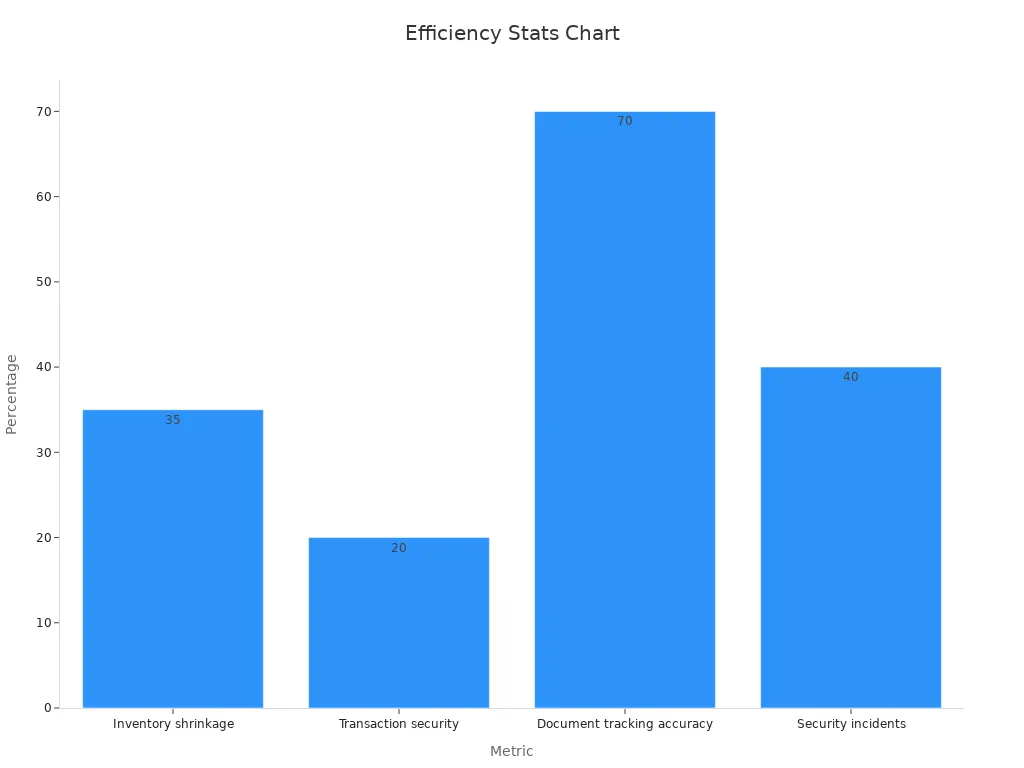
Smart homes use NFC to make things easy and safe. People can tap their phones or cards to open doors. They can also turn on lights or set alarms this way. NFC works well because it uses little power and is fast. When NFC is used with other IoT tools, homes get safer and save more energy. For example, NFC tags on doors and appliances help control who can enter and start routines. In stores, MegaMart uses NFC tags to track items and keep payments safe. This cut down on lost items by 35% and made payments 20% safer. The National Security Dept. uses NFC to track important papers. They made tracking 70% better and had 40% fewer security problems.
Organization | Application Area | NFC Application | AI Integration Role | Efficiency Statistics / Outcomes |
|---|---|---|---|---|
MegaMart (Retail) | Inventory & Payment Security | NFC tags for inventory tracking and NFC-enabled POS systems | AI detects theft patterns and fraud in transactions | 35% reduction in inventory shrinkage; 20% improvement in transaction security |
National Security Dept. | Classified Document Security | NFC tags on documents and NFC-enabled secure access cards | AI manages access, tracks movement, detects anomalies | 70% improvement in document tracking accuracy; 40% reduction in security incidents |
Restaurant Network
Restaurants use RFID and NFC to help staff and keep food safe. Workers scan NFC tags to check food orders and kitchen stock. RFID tags on food boxes help watch freshness and stop waste. These tools make service faster and save money. Customers can pay by tapping NFC cards or phones. This makes paying quick and safe. Managers use data from these systems to plan staff and order supplies.
Event Tracker
Big events use RFID and NFC to manage crowds and keep people safe. Organizers give out RFID wristbands and NFC badges for entry and tracking.
RFID and NFC collect data on what people do and where they go.
Planners use this data to find crowded spots and fix signs.
Traffic checks help move people better.
NFC wearables let people get in fast and have more fun.
Special access levels keep things safe.
Interactive NFC apps let people join live polls and take photos.
RFID cuts entry lines by more than half.
NFC wristbands let people pay fast and get in safely.
Data shows how long people stay and busy times, helping plan future events.
Certification Solutions
Businesses must follow strict rules when using RFID and NFC. Many pick ready-made modules that already pass safety checks. This saves time and lowers risk. Some work with labs to test custom systems for the rules. Planning early and asking experts helps avoid delays. Certified RFID and NFC systems are safe, legal, and work well everywhere.
RFID and NFC each have special benefits for businesses in 2025. RFID can track things from far away and scan many items at once. NFC is good for safe, close-up communication. Companies must follow tough rules like ISO/IEC 14443 and ISO/IEC 18000. The table below shows the main differences:
Aspect | RFID (2025) | NFC (2025) |
|---|---|---|
Read Range | 1–100+ meters | Up to 0.1 meters |
Applications | Retail, logistics, healthcare | Payments, access, pairing |
Planning early and asking experts helps companies pick the best technology and follow the rules.
FAQ
What is the main difference between RFID and NFC?
RFID can read tags from far away and scan many at once. NFC only works when two devices are very close together. NFC is good for safe data sharing. Companies use RFID to track things. They use NFC for payments or letting people in.
Do RFID and NFC devices need certification before selling?
Yes, all RFID and NFC devices must pass hard tests. These tests check if the device is safe and if it uses radio waves the right way. They also check if it is safe for the environment. Devices need these tests in the US and EU before they can be sold.
Can businesses use both RFID and NFC in one system?
Yes, some companies use both RFID and NFC together. They use RFID to keep track of items. They use NFC for safe payments or to let people in. Using both helps them get more benefits.
How much does certification cost for RFID or NFC devices?
The price for certification is different for each company. Most spend between $5,000 and $20,000 to get FCC or CE approval. If a device fails a test, it can cost more. Planning early helps companies save money.
Are barcodes better than RFID or NFC for tracking?
Barcodes are cheaper and work well for small jobs. RFID and NFC scan faster and can do more things automatically. They also keep data safer. Companies pick what works best for their needs and budget.