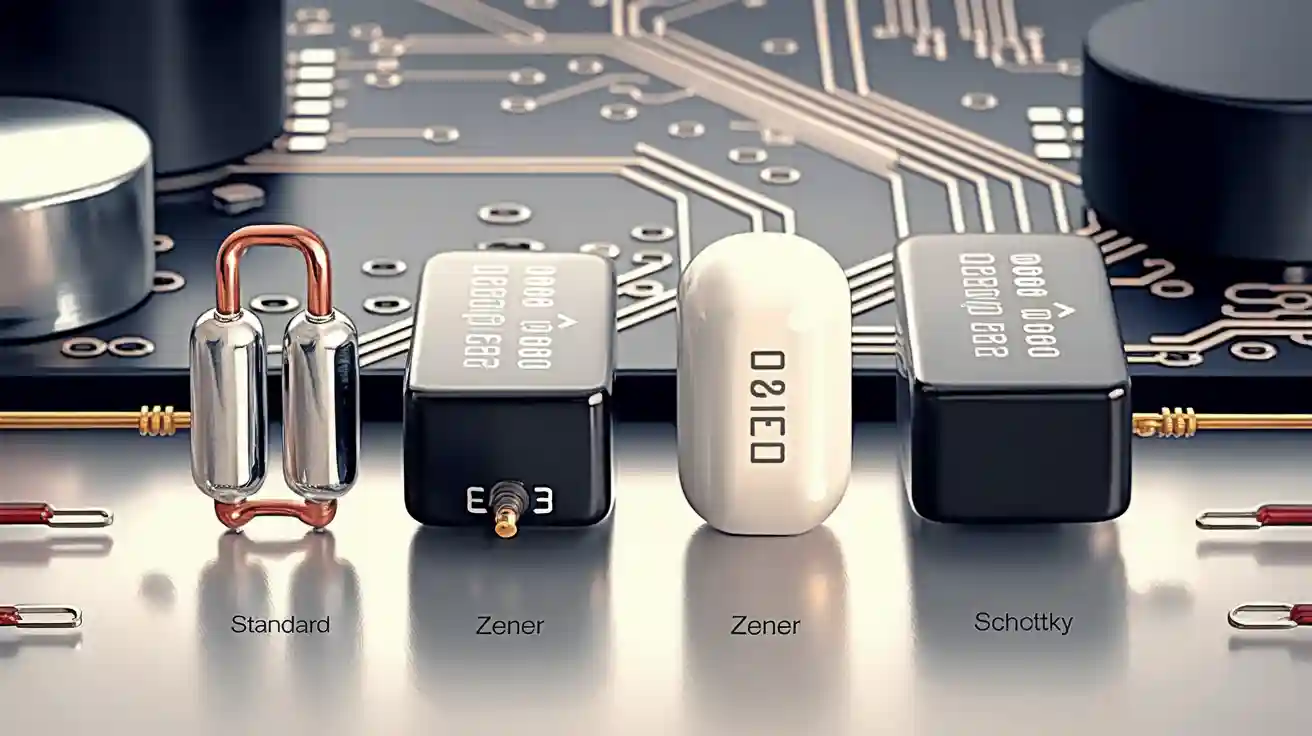
You will see many diode types in electronics projects. Some common ones are:
Schottky diodes help lower losses in car circuits.
Zener diodes are great for keeping voltage steady.
Power diodes are needed to change AC to DC.
Application Type | Recommended Diodes |
|---|---|
Rectification | Rectifier diodes |
Voltage Regulation | Zener diodes, TVS diodes |
Protection | Flyback diodes, TVS diodes |
Lighting and Displays | LEDs, Photodiodes, Laser diodes |
Pick your diode by what your project needs. You may need rectification, voltage control, protection, or lighting.
Diode Types Overview

You will see many diode types in electronics projects. Each one does a special job. This guide helps you pick the right diode.
Rectifier Diodes
Rectifier diodes change AC power into DC power. You use them in power supplies. These diodes let current go one way only. They lose some voltage when working.
Tip: Use rectifier diodes if you need steady DC voltage from AC.
Signal Diodes
Signal diodes handle small currents and voltages. You use them to work with signals in radios and computers. These diodes switch on and off very fast. They help control signals.
Schottky Diodes
A schottky diode uses metal and a semiconductor. It has a low forward voltage drop and switches fast. You use schottky diodes for fast switching and low voltage loss.
Note: Schottky diodes are good for high-frequency and high-current jobs.
Zener Diodes
Zener diodes keep voltage steady. You use them as voltage regulators. These diodes work backwards and hold a set voltage across the load.
Tip: Pick zener diodes to protect sensitive parts from voltage changes.
TVS Diodes
TVS diodes protect circuits from voltage spikes. You use them in devices that need overvoltage protection. These diodes react quickly to sudden voltage changes. They keep your electronics safe.
LEDs
LEDs are light-emitting diodes. They light up when current flows through them. You use LEDs for lighting, displays, and indicators. LEDs save energy and last a long time.
Photodiodes
Photodiodes sense light. They turn light into electrical current. You use photodiodes in sensors and light detection projects. These diodes work best when used in reverse.
Varactor Diodes
Varactor diodes act like variable capacitors. You use them in tuning circuits, like radios. The capacitance changes when you change the voltage.
Note: Varactor diodes help you adjust frequencies in electronic devices.
Here is a table to help you compare the main types of diodes:
Diode Type | Main Function | Common Use |
|---|---|---|
Rectifier | Changes AC to DC | Power supplies |
Signal | Switches small signals | Radios, computers |
Schottky | Fast switching, low voltage drop | High-frequency circuits |
Zener | Keeps voltage steady | Protecting sensitive parts |
TVS | Stops voltage spikes | Circuit protection |
LED | Makes light | Lighting, displays |
Photodiode | Senses light | Sensors, light meters |
Varactor | Changes capacitance | Tuning circuits |
Different diodes do different things. Pick the diode that matches what your project needs.
Key Features Comparison
Voltage and Current Ratings
When you pick a diode, check its voltage and current ratings. These ratings show how much voltage the diode can block. They also show how much current it can handle safely. If the ratings are too low, the diode might break.
Here is a table with ratings for common diodes:
Diode Type | Current Rating | Forward Voltage |
|---|---|---|
1N4001 | 1A | 1.1V |
1N4148 | 200mA | 0.72V |
Schottky | 1A | 0.15V – 0.45V |
LED | N/A | 1.2V – 3.3V |
You can also look at the highest ratings for each diode:
Diode Type | Maximum Reverse Voltage | Maximum Forward Current |
|---|---|---|
Rectifier Diodes | 400 V | 0.4 A |
Switching Diodes | 85 V | 0.3 A |
Tip: Always choose a diode with ratings higher than your circuit needs.
Forward Voltage Drop
The forward voltage drop is the voltage lost when current goes through a diode. This loss turns into heat. Lower drops mean your circuit works better and wastes less energy.
Rectifier diodes lose about 0.7V.
Schottky diodes lose less, from 0.15V to 0.45V.
LEDs lose different amounts, usually between 1.2V and 3.3V.
Type of Diode | Forward Voltage Drop (V) |
|---|---|
Rectifier Diode | ~0.7 |
Schottky Diode | 0.3 to 0.5 |
LED | Varies by type and color |
A lower drop, like in schottky diodes, saves energy. In low-voltage circuits, a regular diode’s 0.7V drop can waste a lot of voltage. Using a schottky diode helps your circuit work better and stay cooler.
Switching Speed
Switching speed means how fast a diode turns on and off. Fast switching is important in digital and high-frequency circuits. If a diode is slow, signals can get messed up or energy can be wasted.
Signal diodes can switch in just 10 nanoseconds.
Schottky diodes switch even faster, almost instantly.
Standard switching diodes turn off in a few nanoseconds.
Note: Turn-off time matters most in high-frequency circuits. Faster switching gives better results and cleaner signals.
Some diodes, like schottky diodes, have very low capacitance. This helps them switch quickly and work well in fast circuits.
Special Functions
Different diodes have special jobs in your projects. Here is a table showing what each type does best:
Diode Type | Special Function | Applications |
|---|---|---|
Zener Diode | Keeps voltage steady when working backwards | Voltage reference, stabilizers, circuit protection |
TVS Diode | Protects circuits by stopping voltage spikes | Overvoltage protection |
LED | Makes light when current flows, color depends on material | Indicators, displays, lighting |
Photodiode | Turns light into electrical current | Sensors, cameras, remote controls, solar cells |
Varactor Diode | Changes capacitance with voltage, used for tuning | Radios, oscillators, frequency controllers |
Zener diodes keep voltage steady and protect against too much voltage.
TVS diodes act like shields and stop dangerous spikes.
LEDs light up your projects and show status.
Photodiodes sense light and help with detection.
Varactor diodes let you tune frequencies in radios and other devices.
Each diode type has something special for your electronics projects.
Pros and Cons
Rectifier Diodes
Rectifier diodes are used in power supplies. They change AC to DC. They work well and are reliable. You can see their good and bad sides in the table:
Advantages | Disadvantages |
|---|---|
Versatility and Utility | Impact on Power Quality |
High Efficiency | Interference |
Enhanced Reliability | |
Smart Control |
They give steady DC power. If you pick the wrong diode, you might get interference. Power quality can drop if the diode is not right.
Signal Diodes
Signal diodes help with small signals. They work fast. Watch out for these problems:
Too much current can make them too hot.
If voltage or current is too high, they can break.
Voltage spikes can cause reverse bias breakdown.
Rough handling can damage them.
Over time, they can wear out.
Big voltage or current pulses can break the circuit. Using them too hard for a long time makes them stop working well.
Schottky Diodes
A schottky diode switches fast. It has a low forward voltage drop. It works better than regular rectifier diodes. Here are some things to know:
Schottky diodes switch quickly and save energy.
They can leak more current backwards, which wastes power.
Trench schottky rectifiers balance voltage drop and leakage.
Schottky diodes are great for high-frequency circuits. But watch out for leakage current in sensitive projects.
Zener Diodes
Zener diodes keep voltage steady. They help with:
Stable voltage, even when input changes.
Accurate voltage reference for circuits.
Small size and low price.
But they have some downsides:
If input changes too much, line regulation is hard.
They cannot give lots of current, so you need extra parts for big jobs.
Voltage output is limited, so design choices are fewer.
They are less efficient and can get hot.
TVS Diodes
TVS diodes protect against voltage spikes. They give:
Better protection than other devices.
Fast action, sometimes super quick.
Good clamping for short spikes and medium/high voltages.
They work well with medium-voltage, high-energy pulses.
TVS diodes are good for protecting sensitive electronics and whole systems.
LEDs
LEDs make bright light and use less energy. Here are some benefits:
LEDs use much less energy than old bulbs.
They last a long time, up to 50,000 hours.
LEDs do not have mercury, so they are safer.
Lighting Technology | Average Lifespan (Hours) | Energy Efficiency |
|---|---|---|
LED | 25,000 – 50,000 | 75-85% less than incandescent |
Incandescent | 1,000 | Baseline |
Fluorescent | 10,000 | 30-50% less than incandescent |
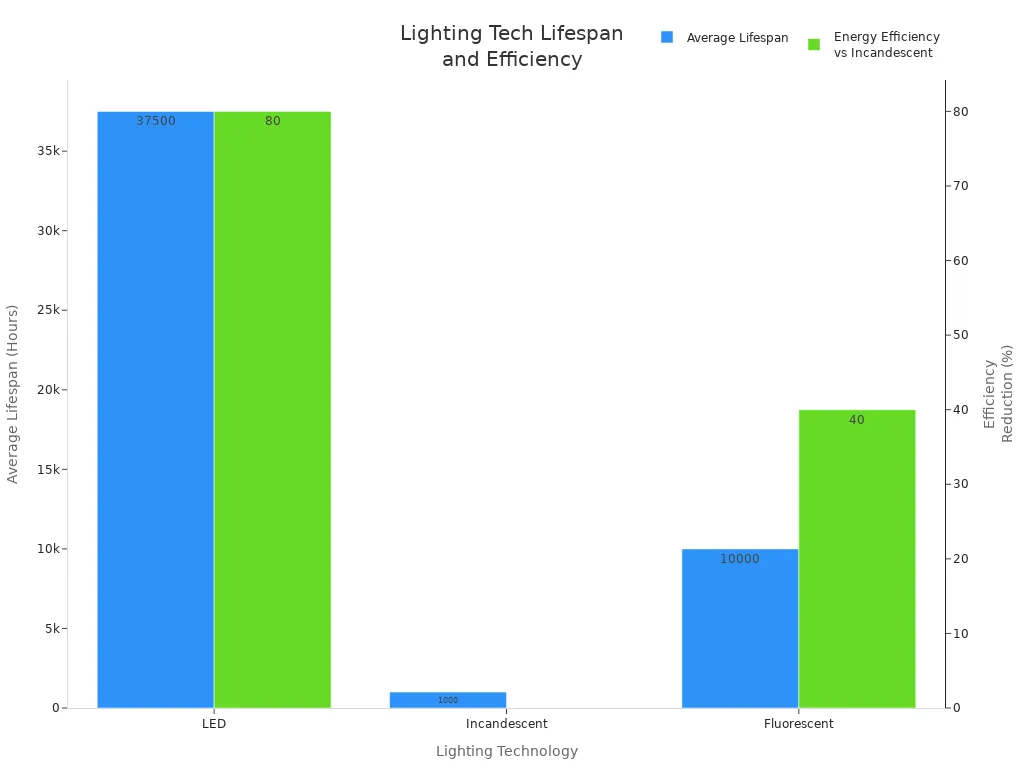
You save money on power and buying new bulbs. You also help the planet.
Photodiodes
Photodiodes sense light very well. They have these features:
Characteristic | Description |
|---|---|
Sensitivity | Very sensitive to light, good for exact detection. |
Response Time | Fast response, good for quick changes. |
Spectral Response | Can sense many kinds of light, from UV to NIR. |
You can use photodiodes in sensors, cameras, and science tools.
Varactor Diodes
Varactor diodes help tune circuits by changing capacitance. Here is what happens:
The junction has transition capacitance.
More reverse voltage makes the depletion region bigger and lowers capacitance.
When voltage goes up, capacitance goes down.
You can use varactor diodes in radios and oscillators to change frequency easily. There are limits to how much you can tune and the Q-factor, which can change how well they work in RF circuits.
There are many diode types to pick from. Each one has good and bad points for your electronics projects.
Types of Diodes in Applications
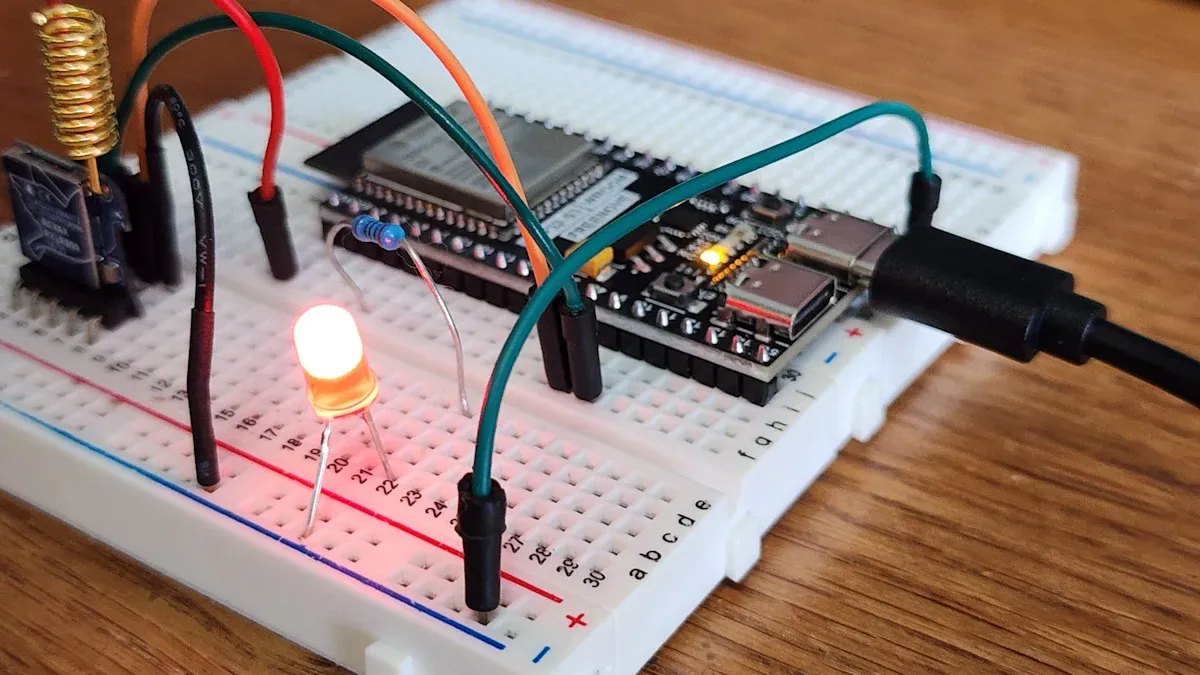
Power Conversion
Many projects need to change AC power to DC power. Diodes help make this change happen. Standard power diodes are good for slow jobs. Fast recovery diodes and ultrafast recovery diodes work better for quick switching. Schottky diodes switch very fast and lose less voltage. This makes them great for saving energy.
Diode Type | Recovery Time | Voltage Drop | Typical Applications |
|---|---|---|---|
Standard Power Diode | Long | High | Low-speed rectification |
Fast Recovery Diode | Short | Moderate | Inverters, switching supplies |
Schottky Diode | Very Short | Low | Low-voltage, high-efficiency applications |
Ultrafast Recovery Diode | Very Short | Low | High-speed switching |
Soft Recovery Diode | Controlled | Moderate | EMI-sensitive circuits |
Tip: Pick Schottky or ultrafast recovery diodes for fast or energy-saving circuits.
Voltage Regulation
Zener diodes help keep voltage steady in your circuit. They protect sensitive parts from changes. Schottky diodes do not control voltage, but they work well in fast circuits.
Diode Type | Voltage Regulation Capability | Efficiency | Application Focus |
|---|---|---|---|
Zener Diode | Yes | Moderate | Voltage regulation and protection |
Schottky Diode | No | High | High-frequency applications and rectification |
Note: Use Zener diodes for steady voltage. Schottky diodes are best for quick switching and low voltage loss.
Circuit Protection
Diodes can keep your electronics safe from voltage spikes. TVS diodes and surge protection Zener diodes help stop damage from ESD and lightning. TVS diodes act fast and clamp high voltages.
TVS diodes block short ESD pulses and lightning surges.
Surge protection Zener diodes work for longer pulses.
TVS surge diode protectors are used in low voltage places. Put them near I/Os or ESD sources for better safety.
Specification | Description |
|---|---|
Reverse Working Maximum Voltage (VRWM) | Highest reverse voltage the diode can handle in normal use. |
Breakdown Voltage (VBR) | Voltage where the diode starts to conduct. |
Clamping Voltage (VCLAMP) | Highest voltage during a surge. |
Dynamic resistance (RDYN) | Resistance when the diode is fully on. |
Bidirectional vs Unidirectional | Bidirectional TVS diodes are for signals that go above and below 0V, like RS485. |
Always check voltage and current ratings before picking a protection diode.
Lighting and Display
LEDs are great for lighting and displays. They shine bright and save lots of energy. LEDs use much less power than old bulbs. They last much longer and do not get hot. LEDs give off strong light, so your projects look clear.
LEDs use less power and last longer than other lights.
LEDs stay cool and work well.
Use LEDs for indicators, displays, and general lighting.
💡 Pick LEDs for projects that need bright, efficient, and long-lasting light.
Sensing and Tuning
Diodes can help sense light or tune frequencies. Photodiodes find light and help in sensors and cameras. Varactor diodes change with voltage and help tune radios. PIN diodes work well in RF switches and phase shifters. They handle high frequencies and have low capacitance.
Varactor diodes let you change frequencies with voltage.
PIN diodes are good for wireless and radar systems.
Photodiodes sense light for detection and measurement.
For tuning and sensing, use varactor diodes for frequency control and photodiodes for light detection.
Comparison Table
When you pick a diode, you want to see the main differences quickly. The table below shows the most common diode types. You can use it to match each diode to your project.
Diode Type | Key Function | Advantages | Disadvantages | Typical Use Cases |
|---|---|---|---|---|
Rectifier (PN) | Changes AC to DC | Simple, reliable, low cost | Voltage drop, heat sensitivity | Power supplies, adapters |
Zener | Keeps voltage steady | Stable voltage, protects circuits | Limited current, noisy at high frequencies | Voltage references, regulators |
Schottky | Fast switching | Low voltage drop, high speed | Low reverse voltage, more leakage | Power rectifiers, RF circuits |
LED | Makes light | Efficient, long life | Degrades over time, heat sensitive | Indicators, displays, lighting |
Photodiode | Senses light | Fast, very sensitive | Sensitive to noise, low current | Sensors, solar cells |
Varactor | Variable capacitance | Electronic tuning, no moving parts | Nonlinear, limited range | RF tuning, oscillators |
Tunnel | High-speed switching | Works at very high frequencies | Complex, expensive | Microwave, oscillators |
Avalanche | Surge protection | Handles high voltage spikes | Noisy, needs precise control | Surge protectors, pulse circuits |
PIN | RF switching | Low distortion, high frequency | Larger, slower at low frequencies | RF switches, attenuators |
Switching Diode | Signal switching | Very fast, compact | Low current, limited voltage | Digital circuits, logic gates |
Tip: Use this table to find the diode that fits your project. If you need to stop voltage spikes, look at avalanche or TVS diodes. If you want to light up something, pick an LED.
Each diode type has its own strong points. Rectifier diodes are best for power supplies. Zener diodes help keep voltage steady. Schottky diodes switch fast and lose less voltage. LEDs and photodiodes work with light. Varactor diodes help tune circuits. Tunnel and PIN diodes are used for high-frequency jobs.
Pick the diode that matches what your project needs. Always check the good and bad sides before you choose. This helps your electronics work well and stay safe.
Choosing a Diode
Application Needs
Think about your project before picking a diode. Every project needs different things from a diode. Here are some things to check:
Forward voltage drop means some voltage is lost when current goes through. Lower drops waste less energy.
Reverse voltage is the highest voltage the diode can block going the wrong way. Pick one with a higher reverse voltage than your circuit uses.
Leakage current is a small amount of current that gets through even when the diode blocks it. Less leakage is better for sensitive circuits.
Rectified current is the most current the diode can safely let through. Make sure it matches what your circuit needs.
Recovery time is how fast the diode switches from blocking to letting current flow. Fast recovery is important for quick circuits.
🛠️ Tip: Choose a diode with features that fit your project, like rectifying, protecting, or lighting.
Electrical Requirements
Check the electrical ratings before you pick a diode. Voltage, current, and power ratings help the diode work well and last longer. The reverse voltage rating should be higher than the highest voltage in your circuit. This keeps the diode safe from breaking. The current rating shows how much current the diode can handle without getting too hot. If you pick a diode with a low rating, it might break or get damaged. Power ratings show how much heat the diode can handle. Always look at these numbers before you choose.
Special Features
Some projects need diodes with extra things. You may need to check:
Electrical characteristics like forward voltage drop and how well the diode blocks reverse voltage.
Thermal management means making sure the diode can handle heat in your project. Look at the maximum power and see if you need to lower the rating for safety.
Reliability means picking diodes that follow safety rules and last a long time.
Note: For advanced projects, always look for special features that match your needs, like fast switching or high reliability.
Mistakes and Tips
Common Errors
When you use diodes, you can make mistakes. Knowing these mistakes helps you stop problems in your projects.
Using the Wrong Diode Type
Sometimes, you pick a diode that does not fit your project. For example, using a signal diode for power jobs can make it get too hot or break.Ignoring Voltage and Current Ratings
If you use a diode with ratings that are too low, it can burn out. Always check the highest voltage and current before you use it.Incorrect Polarity
Diodes let current go only one way. If you put a diode in backward, your circuit will not work. This can also hurt the diode.Overheating
Diodes can get hot if you do not use heat sinks or if you use too much power. Too much heat can make the diode not last as long.Skipping Datasheet Review
You might not read the datasheet. This means you can miss important things like how fast it switches or special features.
⚠️ Tip: Always check the direction and ratings before you solder a diode into your circuit.
Selection Tips
You can pick the right diode for your project by following these easy tips:
Match the Diode to the Job
Pick a rectifier diode for power, a Zener diode for voltage, or an LED for light. Each type is best for certain jobs.Check Ratings First
Look at the highest voltage and current. Pick a diode with ratings higher than your circuit needs.Consider Special Features
Some projects need fast switching or low voltage drop. Schottky diodes are good for speed. Zener diodes help keep voltage steady.Read the Datasheet
The datasheet gives you important facts. You learn about forward voltage, reverse voltage, and other limits.Plan for Heat
If your circuit uses lots of power, make sure the diode can handle the heat. Use heat sinks if you need them.
Selection Step | What to Check |
|---|---|
Diode Type | What you need it to do |
Voltage Rating | Higher than your circuit |
Current Rating | Higher than your circuit |
Special Features | Speed, light, tuning, etc. |
Datasheet Details | Limits and facts |
💡 Remember: The right diode keeps your project safe and working well. Take your time and choose the best one.
You have learned how each diode type works best for different jobs.
Rectifier diodes help with power supplies.
Zener diodes keep voltage steady.
Schottky diodes switch fast and save energy.
LEDs and photodiodes work with light.
Always check voltage and current ratings before you choose. Try using different diodes in your next project. Read datasheets to find the best match for your needs.
FAQ
What is a p-n junction diode and how does it work?
A p-n junction diode lets current go one way. It has two layers inside. If you connect it forward, current flows. If you connect it backward, it stops current. This helps change AC power to DC power.
Why do you choose a tunnel diode for high-speed circuits?
You use a tunnel diode for fast circuits. It switches very quickly. Tunnel diodes use quantum tunneling. This helps them react fast to voltage changes. They work well in microwave and oscillator circuits.
How does a p-n junction diode differ from a tunnel diode?
A p-n junction diode lets current go one way. It blocks current the other way. A tunnel diode can let current go both ways at some voltages. Tunnel diodes use tunneling. P-n junction diodes use regular conduction. Tunnel diodes work at higher frequencies.
Can you use a p-n junction diode for signal detection?
Yes, you can use a p-n junction diode for signals. It can sense small signals. Radios and sensors use p-n junction diodes to find and handle signals. These diodes work well and are reliable in these circuits.
What makes a tunnel diode unique compared to other diodes?
A tunnel diode is special because it has a negative resistance area. It uses quantum tunneling to switch faster than a p-n junction diode. You find tunnel diodes in oscillators, amplifiers, and microwave circuits. They are used when speed and special features are needed.