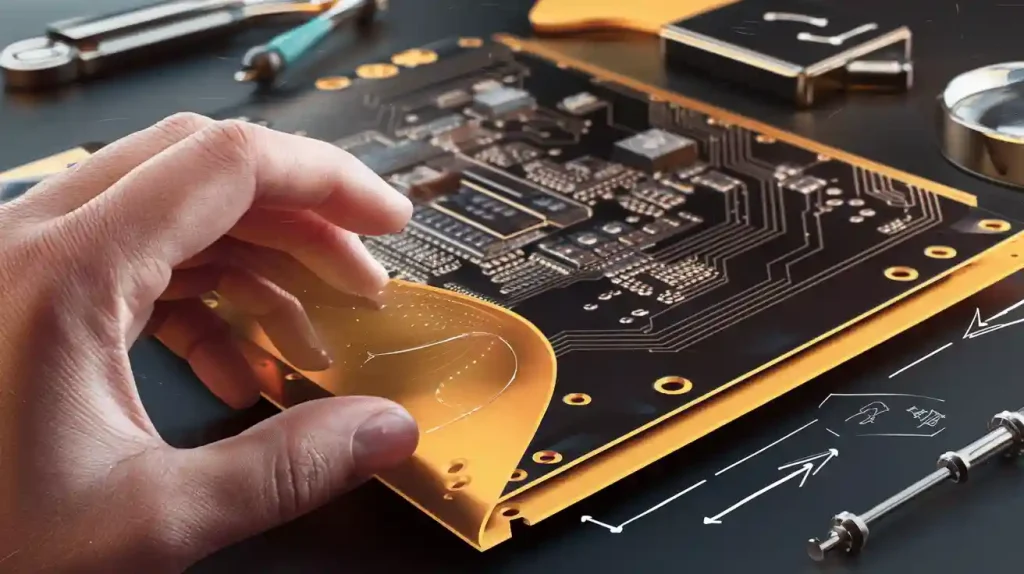
For beginners, there are many “layers” in PCB circuit boards, and many beginners are easily confused by the various PCB layers when learning PCB design. Below, let the engineer summarize the definition of various layers in PCB design for you to help beginners better understand and master. There are many different definitions of the specialized terminology of EDA software. The following is an explanation of the possible meanings of the words.
Mechanical: Generally refers to the dimensional marking layer of a plate machine.
Keep layer: Defines areas where wires, holes (via) or parts cannot be routed. These restrictions can be defined independently of each other.
Top overlay: defines the silkscreen characters on the top layer, which are the part numbers and some characters and silkscreen frames that we usually see on the PCB.
Bottom overlay: defines the bottom layer of silkscreen characters, which is the component number and some characters we normally see on the PCB, and the silkscreen frame.
Top paste: The top layer needs to expose the part of the solder paste on the copper skin.
Bottom paste: The bottom layer should be exposed to the solder paste on the copper.
Top solder : This should refer to the top layer of soldermask to avoid possible inadvertent short-circuiting during fabrication or future maintenance.
Mechanical: Generally refers to the dimensional marking layer of a plate machine.
Keep layer: Defines areas where wires, holes (via) or parts cannot be routed. These restrictions can be defined independently of each other.
Top overlay: defines the silkscreen characters on the top layer, which are the part numbers and some characters and silkscreen frames that we usually see on the PCB.
Bottom overlay : defines the bottom layer of silkscreen characters, which is the component number and some characters we normally see on the PCB, and the silkscreen frame.
Top paste: The top layer needs to expose the part of the solder paste on the copper skin.
Bottom paste: The bottom layer should be exposed to the solder paste on the copper.
Top solder : This should refer to the top layer of soldermask to avoid possible inadvertent short-circuiting during fabrication or future maintenance.
Top paste: This is what is used to open the stencil for top layer mapping.
Bottom paste: This is what is used to open the stencil for the bottom layer.
Top Layer: This is the top layer of the wire routing.
Bottom Layer: This is the bottom layer.
The names of the inner layers vary according to individual habits. Generally, the wiring layer is S1, S2 and so on, the power layer is Power, and the ground layer is Gnd.
Drl: Refers to the drilling layer, and the drilling holes are categorized into through holes, non-metallic holes and over holes. Drilling holes are classified as through holes, non-metallic holes and blind holes. Generally, the name of the layer is drl for through holes, Npth for non-metallic holes, and blind holes are named according to the layer they are connected to, e.g. 6-layer plates drl 1-2, drl 5-6 are blind holes, drl 2-5 are buried holes.