Author name: liangjingchao

Mark Points in PCB Design

The Importance of Mark Points in PCB Design for SMT

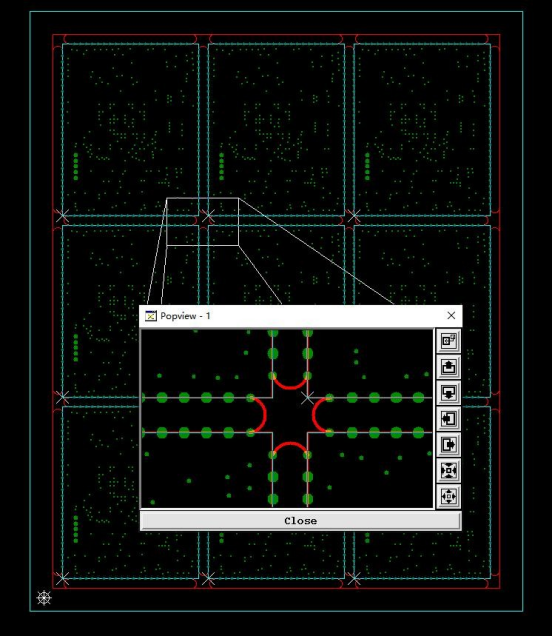
Mark points, also known as optical marks or reference points, are critical for component assembly in PCBs, particularly in the context of PCBA (Printed Circuit Board Assembly) for automatic placement machines. The choice and placement of Mark points directly impact the efficiency of the automatic pick-and-place machine, so it’s essential to carefully design these points […]

The Importance of Mark Points in PCB Design for SMT Read More »
PCB Edges in PCBA-5

The Importance of Component Layout Near PCB Edges in PCBA

The proper placement of electronic components on a PCB (Printed Circuit Board) is a critical factor in reducing soldering defects. A well-planned layout plays a significant role in the overall quality of the assembly. When designing the layout, components should be placed in areas with minimal bending and internal stress, and their distribution should be

The Importance of Component Layout Near PCB Edges in PCBA Read More »

PCB Test Fixture Design

Do You Understand the Four Major PCB Testing Methods?

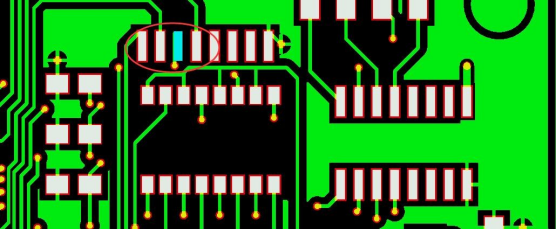
A PCB (Printed Circuit Board) is an essential electronic component, often referred to as a printed circuit or printed wiring board. The quality of the PCB largely determines the performance of electronic components, making testing a critical part of the PCB production process. Testing typically identifies functional defects, such as opens, shorts, and other issues

Do You Understand the Four Major PCB Testing Methods? Read More »

electrical-related safety distances

8 Safety Distances That Must Be Considered in PCB Design

There are many safety distance considerations in PCB design, including spacing between traces, character spacing, pad spacing, and more. Here, we classify them into two categories: electrical-related safety distances and non-electrical-related safety distances. 01 Electrical-Related Safety Distances Trace-to-Trace Spacing For the processing capabilities of mainstream PCB manufacturers, the minimum distance between traces should not be

8 Safety Distances That Must Be Considered in PCB Design Read More »

PCB hole spacing

Reliability Analysis of Hole Spacing in PCB Design

The production of single-sided or double-sided PCBs typically involves drilling non-conductive or conductive holes directly after the material is cut, while multi-layer boards are drilled after the lamination process. Holes are categorized based on their function, including component holes, tool holes, through holes (Vias), blind holes, and buried holes (blind and buried holes are a

Reliability Analysis of Hole Spacing in PCB Design Read More »

PCB Manufacturability

PCB Manufacturability Design and Case Analysis: Silkscreen, Outline, and Panelization

PCB design is a complex process that involves various unforeseen factors that can impact the overall outcome. To ensure high-quality PCB production on time—without extending design time or incurring costly rework—design and circuit integrity issues must be identified early in the process. However, there are many minor details in PCB design that, if overlooked, can

PCB Manufacturability Design and Case Analysis: Silkscreen, Outline, and Panelization Read More »

PCB Manufacturability Holes and Slots

PCB Manufacturability Design and Case Analysis: Holes and Slots

Vias are an unavoidable aspect of PCB design. During the layout process, avoiding all crossover lines is often challenging. To resolve this, vias are used to achieve interlayer connectivity, leading to the development of double-sided and multilayer PCBs. Consequently, vias have become a critical element of PCB design. From a design perspective, vias serve two

PCB Manufacturability Design and Case Analysis: Holes and Slots Read More »

PCB Inner Layer

Manufacturability Design for PCB Inner Layers

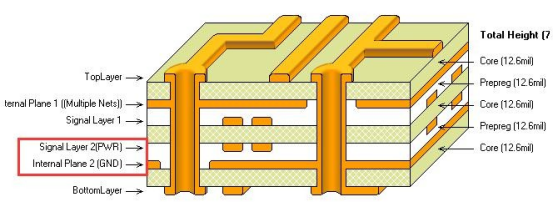
When a PCB engineer lays out a product, it involves more than just component placement and routing. Designing the power and ground planes in the inner layers is equally critical. Managing inner layers requires consideration of power integrity, signal integrity, electromagnetic compatibility, and Design for Manufacturability. Difference Between Inner Layers and Outer Layers Outer layers

Manufacturability Design for PCB Inner Layers Read More »

Importance of PCB Layout about Electronic Components in PCBA

Proper installation of electronic components on the PCB is crucial to reducing soldering defects. When arranging electronic components, avoid areas with high deflection values and high internal stress. Distribute components evenly, especially those with high thermal conductivity. Avoid using oversized PCBs to prevent expansion and contraction. Poor PCB layout design can affect the PCB’s manufacturability and

Importance of PCB Layout about Electronic Components in PCBA Read More »

Interconnect Point for Gold Finger

Entire Process of Gold Finger PCB in Design and Manufacturing

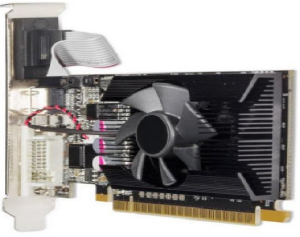
In computer memory modules and graphics cards, there is a row of golden conductive contact pads, commonly known as “gold fingers.” In the PCB design and manufacturing industry, the PCB gold finger (Gold Finger or Edge Connector) refers to the connector used as the external interface for the PCB to connect to external devices. In

Entire Process of Gold Finger PCB in Design and Manufacturing Read More »

PCBA

Assisting BOM Error Checking to Support Component Procurement

The Bill of Materials (BOM) for electronic products is a straightforward yet intricate task. With numerous components, even a minor oversight can lead to procuring the wrong components. Manual matching increases the risk of errors. If mistakes occur during the BOM matching stage, subsequent procurement inquiries and customer quotes are likely to be flawed as

Assisting BOM Error Checking to Support Component Procurement Read More »

PCB Design Safety Distances

8 Safety Distances to Consider in PCB Design

PCB design requires attention to numerous safety distances, including trace spacing, text spacing, and pad spacing. These considerations can generally be categorized into two types: electrical safety distances and non-electrical safety distances. 01 Electrical Safety Distances Trace-to-Trace Spacing For mainstream PCB manufacturers, the minimum spacing between traces must not be less than 0.075mm. The minimum

8 Safety Distances to Consider in PCB Design Read More »