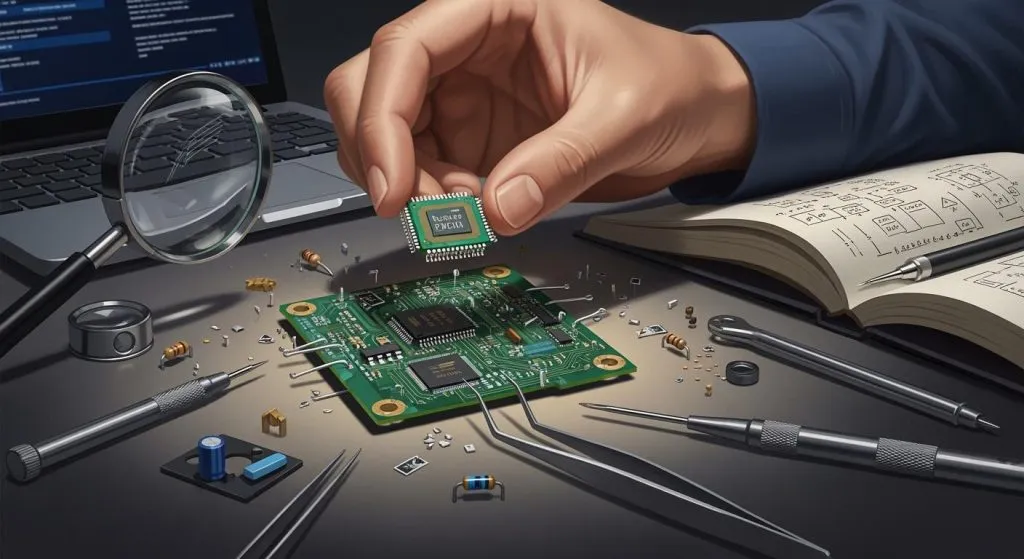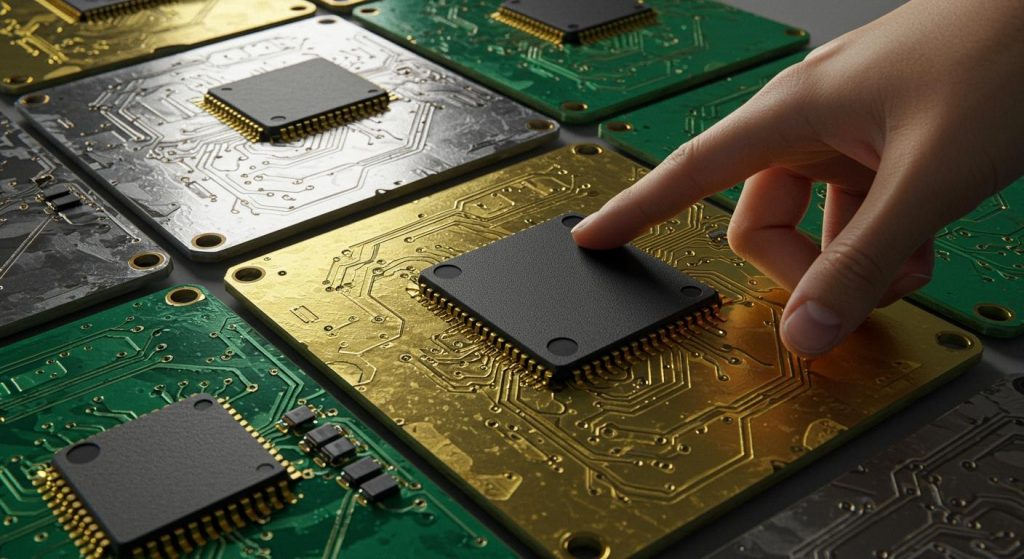
When you use circuit board surface finishes, you protect the copper on your pcb from harm and rust. The right surface finish keeps solder joints tough and helps your board stay good for a long time. Picking different pcb surface finishes can change how much money you spend to make it and how well your final product works. Good finishes also lower assembly mistakes and make things work better, so they are important for every project.
Key Takeaways
- PCB surface finishes keep copper safe from rust and harm. They help make strong solder joints and help boards last longer.
- Picking the right surface finish changes how well the board works. It also changes how much it costs and how long it lasts. Think about the environment and how you will solder when you choose.
- Different finishes like HASL, ENIG, and OSP do different jobs. Pick one that fits your project and the size of your parts.
- Talking to PCB manufacturing experts can help you choose the best finish. They can give advice for your special needs.
- Always pick a finish that matches how you will use your board. This helps your board last longer and work better.
PCB Surface Finishes Overview

What Are Circuit Board Surface Finishes
When you look at a pcb, you notice shiny spots. These shiny spots are called surface finishes. Surface finishes protect the copper on your board. They work like a shield. The shield keeps copper safe from air and water. It also protects copper from chemicals. This shield stops copper from rusting or getting hurt. Surface finishes help solder stick to the board. Soldering is how you put parts on the pcb. If copper is not covered, solder does not stick well. Surface finishes make solder join parts to the board easily. This helps your board last longer.
Tip: Always check which surface finish your pcb has before you start putting it together. The right finish makes soldering easier and helps your board stay strong.
Why Surface Finishes Matter
You need to pick the best surface finish for your pcb. The finish you choose changes how well your board works and how long it lasts. Some finishes protect better against water and heat. Some finishes make soldering easier, but others can cause trouble. You should think about the good and bad sides of each finish. For example, some finishes cost less but might not last long. Some finishes cost more but protect better.
Surface finishes act as a wall between copper and the outside. They stop copper from rusting and keep the board ready for soldering. The finish you pick affects how well solder sticks to copper. Good soldering means strong connections and fewer problems when you build your board.
Here is a table that shows how different finishes affect performance and reliability:
| Factor | Impact on Performance and Reliability |
|---|---|
| Environmental Factors | Surface finishes protect against humidity, temperature, and chemicals, keeping your board working for a long time. |
| Humidity | High humidity can cause rust; some finishes resist moisture better, keeping solderability and reliability high. |
| Temperature Fluctuations | Extreme temperatures can crack or break the finish; good finishes handle heat and cold without damage. |
| Chemical Exposure | Some finishes resist chemicals, while others may wear out, losing their protective power. |
| Mechanical Stress | Vibration and bumps can hurt the finish; strong finishes stay safe even with movement. |
| Electrical Performance | Different finishes change how signals move through the board, affecting power and signal quality. |
You should think about the good and bad sides of each surface finish before you choose. Picking the right finish helps your pcb work well and last longer.
Types of PCB Surface Finishes
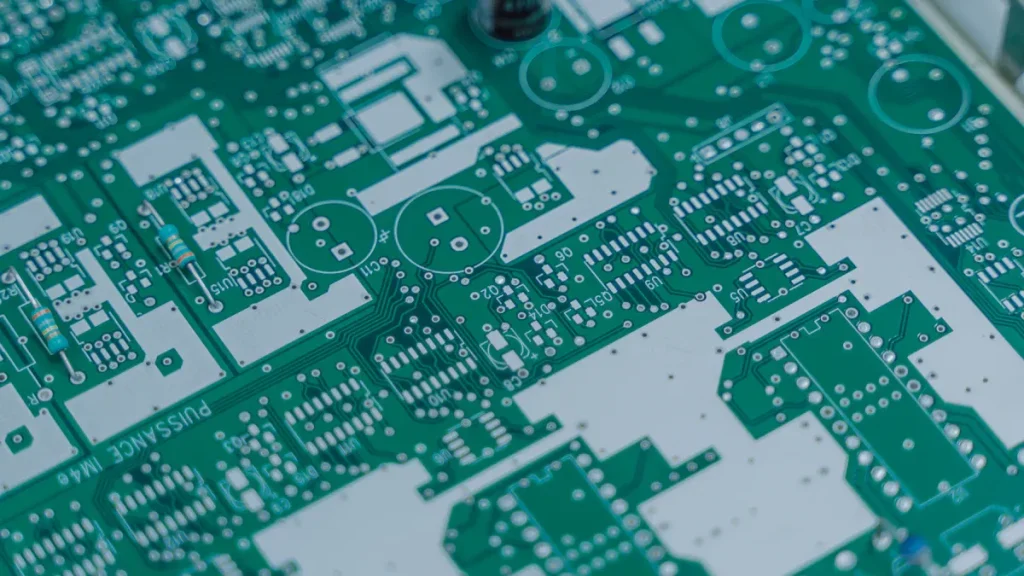

HASL (Hot Air Solder Leveling)
HASL is a very common pcb surface finish. The pcb gets dipped in melted solder. Hot air blows off the extra solder. This makes a surface that protects copper. It also helps solder joints stay strong.
Advantages:
- Copper gets good protection
- Simple to use in pcb making
- Costs less money
Disadvantages:
- Surface can be bumpy and cause issues with small parts
- Not good for tiny, close-together parts
HASL Lead-Free (Lead-Free Hot Air Solder Leveling)
Lead-free hasl is like regular HASL but uses no lead. People pick this finish to follow rules about the environment.
Advantages:
- Follows RoHS rules for printed circuit boards
- Better for the earth
- Costs about the same as regular HASL
Disadvantages:
- Needs more heat, which can hurt parts
- Surface can still be uneven
Note: If you want to sell your pcb where rules are strict, lead-free hasl is a smart pick.
ENIG (Electroless Nickel Immersion Gold)
ENIG means electroless nickel immersion gold. This finish gives a flat and smooth surface. It stops rust and works well with lead-free solder.
Advantages:
- Flat surface makes assembly easy
- Great for soldering and stops rust
- No problems with silver moving
Disadvantages:
- Costs more than HASL or OSP
- Making it is harder in pcb factories
ENEPIG (Electroless Nickel Electroless Palladium Immersion Gold)
ENEPIG puts a palladium layer between nickel and gold. People use this finish for high-performance pcb surface finishes.
Advantages:
- Stops rust and oxidation very well
- Good for wire bonding
- Works well for advanced uses
Disadvantages:
- Costs more than ENIG
- Needs more steps to make
Immersion Silver
Immersion silver gives a flat and shiny surface. You see it in fast pcb designs like 5G and medical tools.
Advantages:
- Good for signals in fast circuits
- Flat surface for tiny parts
- Cheaper than gold finishes
Disadvantages:
- Can get dull in wet air
- Needs careful storage and handling
Immersion Tin
Immersion tin covers copper with a thin tin layer. This finish is used for simple pcb making.
Advantages:
- Smooth surface that is easy to solder
- Good for tiny, close-together parts
Disadvantages:
- Does not last long on the shelf
- Can get damaged by air and dirt
OSP (Organic Solderability Preservative)
OSP uses a thin organic layer to keep copper safe. People pick OSP to save money and for eco-friendly pcb surface finishes.
Advantages:
- Cheap and easy to use
- Good for the environment and has no lead
Disadvantages:
- Not as strong as metal finishes
- Does not last long
Hard Gold (Electrolytic Gold)
Hard gold uses a thick gold layer for strong wear resistance. You see this finish on edge connectors and keypads.
Advantages:
- Very tough and lasts a long time
- Handles lots of use and rubbing
Disadvantages:
- Costs a lot
- Not easy to solder
Electrolytic Nickel Gold
Electrolytic nickel gold gives a thinner gold layer than hard gold. It is used for general pcb jobs.
Advantages:
- Easy to solder
- Cheaper than hard gold
Disadvantages:
- Not as tough for places that get used a lot
Carbon Ink
Carbon ink makes a surface that can carry electricity for special uses. You see it in keypads, sensors, and bendy electronics.
Advantages:
- Light and can bend
- Good for custom shapes
Disadvantages:
- Not as strong as metal finishes
- Only works for low power
Plated Silver
Plated silver gives a thick, safe layer. It is used when you need good flow of electricity and rust protection.
Advantages:
- Stops rust very well
- Good for electric signals
Disadvantages:
- Costs more than immersion silver
- Can get dull if not cared for
Plated Tin
Plated tin covers copper with more tin than immersion tin. It is used for simple, cheap pcb making.
Advantages:
- Costs less
- Easy to solder
Disadvantages:
- Can grow whiskers
- Not as strong as other finishes
Peelable Solder Mask
Peelable solder mask keeps some areas safe during soldering. You take it off after you finish assembly.
Advantages:
- Protects parts during wave soldering
- Good for boards with mixed parts
Disadvantages:
- Adds more steps to pcb making
- Not a finish that stays forever
Tip: Always pick the surface finish that fits your pcb’s needs for the best results.
Finish Pros & Cons
HASL
HASL is used a lot because it is cheap. It works for many jobs. Solder joints are strong, but the surface is not flat. This makes it hard to use with tiny parts. HASL is okay for most boards but not for crowded ones.
| Environmental Impact | HASL | Lead-Free HASL |
|---|---|---|
| Pros | – | No lead, so it follows RoHS rules. – Making it costs less than other finishes. |
| Cons | – | Needs a lot of heat, about 260°C. – Tin whiskers can grow and cause short circuits or more e-waste. |
HASL Lead-Free
Lead-free hasl is picked because it meets RoHS rules. It does not use lead, so it is safer for nature. It is still cheap, but you need more heat to use it. This can hurt some parts. Tin whiskers can also grow and cause shorts.
ENIG
ENIG gives a flat and smooth surface. It is easy to solder and very reliable. ENIG costs more than HASL but is better for small parts. The gold layer keeps soldering good even after long storage. ENIG also stops rust and helps signals.
| Surface Finish | Solderability | Reliability |
|---|---|---|
| ENIG | Excellent | High |
| HASL | Good | Moderate |
ENEPIG
ENEPIG adds a palladium layer for extra strength. It is good for advanced boards and wire bonding. But it costs more and is harder to make. ENEPIG can cost up to 30% more than ENIG and needs more steps.
Immersion Silver
Immersion silver gives a flat surface and good signals. It costs less than gold finishes. But in tough places, silver can tarnish fast. This hurts soldering if you wait too long to use the board.
Immersion Tin
Immersion tin is easy to solder and good for small parts. It gives a smooth finish and is cheap. But it does not last long and can get damaged by air or dirt.
OSP
OSP is cheap and good for the earth. It is easy to solder for a short time. But it does not last long and is not as strong as metal finishes.
Hard Gold
Hard gold is very tough and lasts a long time. You see it on edge connectors. But it costs a lot and is hard to solder for most parts.
Electrolytic Nickel Gold
Electrolytic nickel gold has a thin gold layer. It is easy to solder and costs less than hard gold. But it is not as strong for parts that get used a lot.
Carbon Ink
Carbon ink is light and bends easily. It is used for special shapes and low power. But it is not very strong and cannot be used for high power.
Plated Silver
Plated silver stops rust and helps signals move well. It costs more than immersion silver. You must handle it carefully or it will get dull.
Plated Tin
Plated tin is cheap and easy to solder. It is used for simple boards. But tin whiskers can grow and it is not very strong.
Peelable Solder Mask
Peelable solder mask keeps parts safe during assembly. You take it off after soldering. But it adds extra steps and does not stay on the board.
Tip: Always pick the surface finish that fits your pcb’s needs for the best results.
| Surface Finish | Cost per Square Inch |
|---|---|
| Gold Finger Plating | $0.50 to $2.00 |
| ENIG | $0.30 to $0.60 |
| Immersion Silver | $0.20 to $0.40 |
| Palladium-Nickel (ENEPIG) | $0.40 to $0.80 |
Choosing a Surface Finish

Key Factors
When you pick a surface finish for pcb manufacturing, you must think about many things. Each project is different and has its own needs. You want your printed circuit boards to work well and last a long time. Here are some main things to look at:
- Where your board will be used, like hot, wet, or chemical places.
- What kind of soldering you will use, such as lead-free hasl or regular solder.
- How long you need to store your pcb and how you will keep it safe.
- If your board needs to handle water or heat without problems.
- How strong the solder joints are when the board gets hot or cold.
- If your board needs to send signals fast or needs to be very accurate.
- If the finish works with your way of putting the board together.
- How much money you can spend and what you get for the price.
Tip: Always choose a surface finish that matches where your pcb will be used.
PCB Application Needs
What your pcb does changes what finish you should pick. Some finishes are better for certain jobs. For example, if you use small parts or need lead-free hasl, you must pick a finish that works for that. The table below shows how each finish fits special needs:
| Surface Finish | Fine-Pitch Parts | Lead-Free Compliance |
|---|---|---|
| ENIG | Excellent | Yes |
| ENEPIG | Excellent | Yes |
| Immersion Silver | Excellent | Yes |
| HASL | Poor | Yes (lead-free hasl) |
| OSP | Moderate | Yes |
| Immersion Tin | Excellent | Yes |
If you make boards for cars or medical tools, you need finishes that can take heat and stop rust. ENIG is a good choice for both jobs. Immersion tin works well in hot places. OSP is not great if your board will get wet. Immersion silver makes strong solder joints and keeps rust away.
When to Consult Experts
You should talk to pcb manufacturing experts early in your project. They help you pick the best surface finish for your needs. Experts know which finishes work best for your board’s place, how many you need, and what rules you must follow. They also help you avoid mistakes with lead-free hasl or other finishes.
| Aspect | Why It Matters |
|---|---|
| Early Consultation | Helps you pick a finish that fits your pcb’s real job |
| Operating Environment | Makes sure your finish can handle heat, water, or chemicals |
| Production Volume | Finds the best price for making a few or many boards |
| Regulatory Compliance | Makes sure your board follows all the rules |
| Assembly Process | Checks that the finish works with your way of building |
Note: No one surface finish is best for every pcb. You must choose based on what your project needs and ask for help if you are not sure.
You should know about PCB surface finishes to make good choices. The finish you choose can change the price and how long your board lasts. It also affects how well your board works. Different jobs use different finishes for their needs:
| Surface Finish Type | Solderability | Reliability |
|---|---|---|
| HASL | Good | Moderate |
| ENIG | Excellent | High |
| OSP | Good | Moderate |
- HASL is used in cars because it makes strong solder joints.
- ENIG is picked for planes and medical tools since it stops rust.
- Skilled PCB makers help you pick the right finish and follow the rules.
Tip: Always talk to experts so your PCB works its best.
FAQ
What is the most common PCB surface finish?
You usually see HASL as the most common finish. It costs less and works for many boards. You can use it for simple projects and large production runs.
How do I choose the right surface finish for my PCB?
You should look at your board’s job, the environment, and your budget. Ask experts if you feel unsure. The right finish helps your board last longer and work better.
Does the surface finish affect soldering?
Yes, the finish changes how easy soldering is. Flat finishes like ENIG help you solder small parts. Bumpy finishes like HASL can make soldering harder for tiny components.
Can I use leaded finishes for all PCBs?
You should not use leaded finishes for boards that must follow RoHS rules. Lead-free finishes are safer for health and the environment. Always check your project’s requirements.
How long does a PCB surface finish last?
You get different shelf lives with each finish. ENIG and hard gold last longer. OSP and immersion tin do not last as long. Store your boards in a dry, safe place for best results.