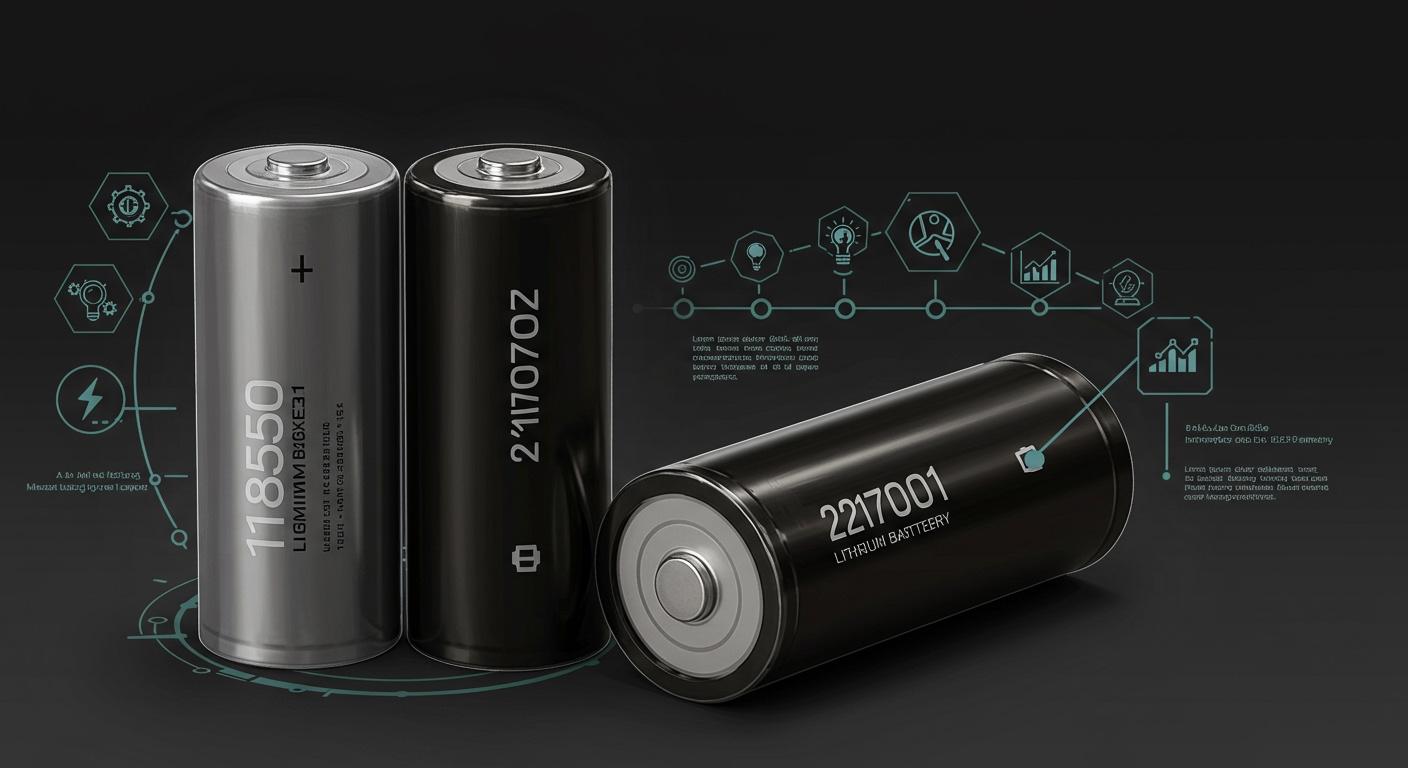
The 21700 battery cell is the top choice today, especially when comparing 18650 vs 21700 lithium battery cells. Many companies prefer the 21700 because it holds more energy, which helps meet the power needs of new devices. The worldwide market for 18650 and 21700 lithium battery cells was $15.92 billion in 2024 and is projected to grow to $45.60 billion by 2033. The 21700 cell is predominantly used in cars and larger devices, while the 18650 cell remains popular in smaller gadgets. Understanding the differences between 18650 vs 21700 lithium battery cells, their features, and uses helps consumers choose the right one.
Market highlights:
2024 market size: USD 15.92 billion
Projected 2033 market size: USD 45.60 billion
CAGR (2025-2033): 12.4%
Key Takeaways
The 21700 battery cell is good for high-power devices. It works well in electric vehicles because it holds more energy. It also lasts longer than some other cells.
The 18650 battery cell is still used in smaller gadgets. This is because it is small and costs less money.
When you pick between 18650 and 21700 cells, think about your device’s power needs. Also, check how much space you have. This helps your device work its best.
Both battery types have special benefits. The 21700 cell has more energy in the same space. The 18650 cell is lighter and cheaper for things you carry.
Keep learning about battery trends. New technology may give you better choices for your energy needs.
18650 vs 21700 Lithium Battery Cells
Current Preference
Most big companies now pick the 21700 battery cell instead of the 18650 battery cell. The 21700 battery cell has more energy packed inside. This means it can last longer and stays cooler. Companies use the 21700 battery cell in electric vehicles and power tools. These things need more power and must work for a long time. The 18650 battery cell is still used in things like flashlights and small electronics. These do not need as much power. Both types are still changing and getting better. But the 21700 battery cell is becoming more popular in fast-growing areas.
Tip: Think about how much power your device needs and how much space you have before picking between 18650 vs 21700 lithium battery cells.
Key Differences
When you compare 18650 vs 21700 lithium battery cells, you see they are different in size, how much energy they hold, and how well they work. The table below shows the main features:
Feature | 18650 Battery | 21700 Battery |
|---|---|---|
4000-5000mAh | ||
Energy Density | 280Wh/kg | Higher than 18650 |
Average Weight | ~45 grams | ~70 grams |
Best Use Case | Portable devices | High-power applications |
The 18650 battery cell is smaller and weighs less. It fits better in small gadgets and costs less at first. The 21700 battery cell is bigger and heavier. But it can hold more energy and lasts longer. This means you can use it longer and do not have to replace it as often. Over time, this could save money.
Advantages of 18650 battery cell:
Its small size helps stop overheating.
It costs less, which is good for people who want to save money.
It works well in devices that do not have much space.
Advantages of 21700 battery cell:
It holds more energy, so electric vehicles can go farther.
It has better safety parts, like stronger separators and special valves.
You do not have to replace it as often because it lasts longer.
Disadvantages to consider:
The 21700 battery cell can get hotter because it is bigger and makes more heat.
The 18650 battery cell might need to be replaced more often if you use it a lot.
Both battery types last through many charges, usually between 1000 and 3000 cycles. When you look at 18650 vs 21700 lithium battery cells, you see each one is good for different things. The 18650 battery cell is still liked for special uses. The 21700 battery cell is now the top pick for electric vehicles and storing energy.
Evolution Overview
18650 Battery Cell History
The 18650 battery cell came out in the 1990s. SONY made it for laptops first. It was reliable and worked well, so other industries used it too. Over time, companies made it safer and able to store more energy. They also made it charge faster and hold more power. In 2012, Panasonic made a version with more energy using NCA materials. By 2013, China made about 4.768 billion lithium-ion batteries each year. This showed how important the 18650 cell became around the world.
Applications | Motivations |
|---|---|
Power tools | Low cost per Wh |
Medical devices | Good reliability records |
Laptops | Adaptability to new demands (military, medical) |
E-bikes | Growth in electric vehicle market (Tesla) |
The 18650 cell got popular because it was a good size, stored lots of energy, and did not cost too much. Companies kept making it better to fit new needs.
Improvements over time:
More energy density
Better safety features
Higher capacity and faster charging
21700 Battery Cell Introduction
The 21700 battery cell was made to fix problems with the 18650 cell. Companies wanted less heat and easier ways to group cells. The 21700 cell could store more energy and power. This helped electric vehicles go farther. It also made better use of space in devices.
Feature | Advantage |
|---|---|
Longer runtimes for industrial uses. | |
Advanced Charging Mechanisms | Faster charging without hurting the battery. |
Precision Discharge Systems | Steady power for sensitive tasks. |
Customizable Configurations | Special designs for different needs. |
Key advancements:
More energy and power
Lasts longer and is tougher
Charges faster
Better size for building battery packs
Shift Drivers
Many things made companies switch from 18650 to 21700 battery cells. Electric vehicles became more popular and needed better batteries. Energy storage and electronics also needed stronger batteries. The price of lithium-ion batteries dropped from $137/kWh in 2022 to $89/kWh in 2025. This made it easier for people to use them. New materials like synthetic graphite made batteries work better.
Market and technology drivers:
More electric vehicles
More energy storage and electronics
21700 cells have more power and energy
Lower costs and better materials
Cities used 21700 battery cells for new ways to get around. E-bikes could go 20% farther. Cities saw 15% more people using e-mobility each year. Energy storage systems with 21700 cells grew by 30% every year. The 21700 battery market may reach $316.13 billion by 2033. Electric vehicle demand went up by 42%. About 60% of batteries are now used for moving people and things.
Note: The story of lithium battery cells shows how better energy and power help new technology grow. Companies keep making batteries better for today’s devices and vehicles.
Technical Comparison
Physical Specs
The size and weight of a battery cell are important for making devices. The 18650 and 21700 battery cells are not the same size or weight. The 18650 cell is 18 mm wide and 65 mm tall. The 21700 battery is bigger at 21 mm wide and 70 mm tall. The 18650 cell weighs about 45 grams. The 21700 battery weighs around 65 grams.
Battery Type | Diameter (mm) | Height (mm) | Weight (g) |
|---|---|---|---|
18650 | 18 | 65 | 45 |
21700 | 21 | 70 | 65 |
Both cells are shaped like a cylinder. This shape helps protect the battery and lets it store lots of energy. But, when you put many together, there can be empty spaces. These gaps can lower how much energy the pack can hold. This can also make electric cars go a shorter distance. Prismatic cells, which are not talked about here, use space better. But they need special cooling and safety steps. The bigger 21700 battery can hold more energy. This helps devices that need more power.
Electrical Performance
How well a battery works is very important. The 18650 cell usually holds between 1.5 and 3.4 ampere-hours. Its voltage is between 3.6 and 3.7 volts. The 21700 battery can hold more, from 3.75 to 5.00 ampere-hours. Its voltage is from 3.6 to 4.2 volts.
Cell Type | Capacity (Ah) | Voltage (V) |
|---|---|---|
18650 | 1.5 to 3.4 | 3.6 to 3.7 |
21700 | 3.75 to 5.00 | 3.6 to 4.2 |
The 21700 battery can store more energy. It is good for things that need lots of power. The normal voltage for the 21700 battery is about 3.7 volts. It can go up to 4.2 volts. The way these batteries charge and give off power is different. The 18650 cell charges and discharges at 1 ampere. The 21700 battery can charge at 1 to 2 amperes and discharge at 1 ampere.
Battery Type | Charge Rate | Discharge Rate |
|---|---|---|
18650 | 1A | 1A |
21700 | 1A – 2A | 1A |
The 21700 battery works better for devices that use lots of energy. It can charge faster and last longer before needing a new charge.
Energy Density
Energy density tells us how much energy a battery can store for its size and weight. The 21700 battery does better in this area. The 18650 cell holds between 1800 and 3500 milliampere-hours. Its energy density is 180 to 250 watt-hours per kilogram. The 21700 battery holds 3000 to 5000 milliampere-hours. Its energy density is 200 to 300 watt-hours per kilogram.
Feature | 18650 Battery | 21700 Battery |
|---|---|---|
Typical Capacity | 1800-3500mAh | 3000-5000mAh |
Energy Density | 180-250 Wh/kg | 200-300 Wh/kg |
Battery Type | Dimensions | Capacity | Energy Density |
|---|---|---|---|
18650 | 18 × 65 mm | 2000–3500 mAh | ~500 Wh/L |
21700 | 21 × 70 mm | 4000–5000 mAh | ~700 Wh/L |
The 21700 battery has about 20% more energy density than the 18650 cell. For example, Tesla’s old 18650 batteries had 250 Wh/kg. The new 21700 batteries reach 300 Wh/kg. This means the 21700 battery can give more power with fewer cells. This is important for electric cars. The bigger capacity of the 21700 battery lets cars go farther and work better.
21700 batteries can store more energy, which helps electric cars work better.
The 21700 battery’s higher energy density and capacity make it a top pick for electric cars, like Tesla.
The 21700 cells can give more power with fewer cells, which is important for electric cars that need strong power.
The bigger capacity of 21700 batteries lets electric cars travel farther and work better.
Protection Features
Safety is very important for batteries. Both 18650 and 21700 battery cells can have protection features. Protected 21700 batteries have a circuit inside. This stops overcharging, over-discharging, and short circuits. Unprotected 21700 batteries do not have these safety parts. They need an outside system to keep them safe.
Protected batteries use a Battery Management System (BMS) to stop overheating and other problems.
Unprotected batteries do not have these safety parts and must be handled with care.
New ways of making batteries have made both types safer. The 21700 battery uses stronger separators and special valves. These parts make the battery more reliable. They help stop accidents and make the battery last longer. Companies keep making safety features better for today’s devices and cars.
Note: Always check if a battery cell has built-in protection or needs an outside system. This helps keep things safe and makes the battery work better.
Industry Adoption
18650 Battery Cell Applications
The 18650 cell has been used for many years. Many companies pick this cell because it works well and gives steady power. You can find it in many different devices. The table below lists where it is used and what it does:
Application Type | Description |
|---|---|
Laptop Batteries | Used in laptops for lots of power and long use. |
High-End Flashlights | Powers bright flashlights for outdoor and emergency needs. |
Portable Power Banks | Chosen for portable chargers because it holds a lot of power. |
Wireless Data Transmitters | Helps devices work all the time in homes and factories. |
Electric Heating Clothing | Runs heated jackets, gloves, and shoes to keep people warm. |
Portable and Industrial Instruments | Gives steady power to handheld meters and tools. |
Medical Devices | Needed for medical equipment that must have steady power. |
The 18650 cell also runs cordless tools, smart trackers, and smart home devices. It is still very common in electronics and medical tools.
21700 Battery Cell Applications
The 21700 cell is newer and has changed how batteries are used. It stores more energy and works better than before. Many electric cars now use this cell for longer trips and better power. Companies like Tesla use the 21700 cell, which makes batteries 35% bigger and 20% stronger. E-bike makers also like this cell because bikes can go farther without bigger batteries.
Car makers use 21700 cells for more power and better cooling.
E-bike makers use 21700 cells for longer rides.
The cell is used in home and business energy storage, like solar and backup power.
The 21700 cell lets designers use fewer cells for the same power. This makes batteries lighter by 10%. It is good for cars and big energy storage.
Sector Trends
Both 18650 and 21700 cells are being used more and more. Electric cars are a big reason for this, as they need strong batteries. New battery technology, like higher energy and better safety, is changing the industry. Governments want more electric cars and cleaner energy, so more people use these batteries.
Many companies are looking at new battery types, like solid-state and graphene batteries. These new batteries could work even better and be safer. The industry keeps changing, and people want batteries that last long and work well in cars and gadgets.
Note: Using better battery cells helps the world use cleaner energy and smarter devices.
Manufacturing Trends
Production and Scalability
Manufacturers are making more lithium battery cells because people want them. The 21700 cell holds about 50% more energy than the 18650 cell. It also works better when used for strong power needs. This helps companies make battery packs that last longer. These packs also give more power. The 18650 cell cannot hold as much energy. This means cars may not go as far and may use power less well. Smaller cells like the 18650 need more pieces to build a battery pack. Using more cells makes the pack harder to put together and costs more money.
Making lots of batteries lets companies design packs in different ways. Using 18650 cells gives engineers choices. But it also makes building the pack harder and less efficient than bigger cells. Safety and reliability are still big problems for factories. Companies must use good systems to stop mistakes when making batteries.
The 21700 cell has over 20% more energy density.
The 18650 cell needs more pieces for the same power, so it costs more.
Safety and reliability are very important in making batteries.
Cell Type | Energy Density | Pack Complexity | Scalability |
|---|---|---|---|
18650 | Lower | Higher | Flexible |
21700 | Higher | Lower | Efficient |
Conversion and Costs
Making more batteries changes how much they cost. Prices for lithium-ion battery packs dropped 20% since 2023. In 2024, the price was $115 for each kilowatt-hour. This happened because factories made more batteries and had extra supply. When companies make more batteries, the cost goes down. More competition also lowers prices. This makes batteries cheaper for people to buy.
Making more batteries lowers costs.
Extra supply helps factories work better.
Lower prices mean more people can buy battery-powered things.
Factories work to make batteries safer and cheaper. They use new technology and better ways to make batteries. This helps keep prices low and makes batteries work better. The trend shows that making batteries well leads to lower prices and better products.
Tip: Companies that make lots of batteries and use smart systems can sell better batteries for less money.
Ongoing Innovations
New Cell Designs
Battery makers keep working on new lithium cell designs. They now try shapes that are not just round. Flat cells, prismatic cells, and pouch cells are used in many devices. Prismatic cells are shaped like rectangles. This shape helps save space in battery packs. Pouch cells use a soft bag instead of a hard shell. These cells are lighter and fit in thin devices like smartphones and tablets.
Cell Type | Shape | Main Use Cases |
|---|---|---|
Cylindrical | Round | Power tools, e-bikes, laptops |
Prismatic | Rectangular | Electric vehicles, storage |
Pouch | Flexible | Phones, tablets, wearables |
Engineers pick new cell shapes for different needs. Prismatic and pouch cells help make products lighter and thinner. These shapes also help spread heat better, which makes them safer. Many electric vehicles use prismatic cells for better space and cooling.
Note: New cell shapes show how battery makers keep improving. Each shape has special benefits for safety, size, and how well it works.
Future Market Shifts
The lithium battery cell market will keep changing as technology gets better. Companies think more people will want batteries for electric cars, green energy, and smart gadgets. Experts say prismatic and pouch cells will get even more popular. These cells help products last longer and charge faster.
Some scientists are working on solid-state batteries. These batteries might store more energy and be safer. If they work well, they could change the battery market later. Companies also try to recycle old batteries and use safer stuff. These changes will help the battery market grow and support clean energy.
Tip: People who watch battery changes can get ready for new products and market trends.
Selection Factors
Application Needs
Picking the right lithium cell depends on what the device does. Every device needs a certain amount of power, size, and time to work. Flashlights and small gadgets usually use smaller cells. The 18650 cell is good for these because it is small and light. Electric vehicles and energy storage systems need more power and longer use. The 21700 cell is better for these because it holds more energy and lasts longer.
Engineers think about a few things before they choose:
Device size: Small devices need small cells.
Power demand: Tools and vehicles that use lots of power need bigger cells.
Runtime: Devices that run a long time need cells with more energy.
Weight limits: Some things must be light, so they need lighter cells.
Tip: Pick the cell type that matches what the device does most. This helps the device work well and last longer.
Manufacturer Consultation
Manufacturers know about new trends and safety rules. They help people pick the best cell for each project. When a company makes something new, it should talk to the cell maker early. This helps stop problems with size, heat, or safety.
A simple table can help with questions:
Question to Ask | Why It Matters |
|---|---|
What is the device’s use? | Helps pick the right cell |
How much power is needed? | Makes sure there is enough energy |
What are the safety needs? | Stops overheating or fires |
Manufacturers can give tips to make batteries last longer and be safer. They might have special ideas for unique projects. By working together, companies and manufacturers can make better products.
The 21700 battery cell now leads the industry because it stores more energy and lasts longer. The 18650 cell still fits well in smaller devices. Users should always match the battery to the device’s needs and watch for new trends.
21700 suits electric vehicles and energy storage.
18650 works best in portable gadgets.
Tip: Always check the device’s power and size before choosing a battery cell.
FAQ
What is a lithium-ion battery?
A lithium-ion battery keeps energy using lithium ions. People use it in things like phones and laptops. It is also in electric cars. This battery charges fast and lasts a long time. It is lighter than old battery types. Many devices need this battery to work well.
Why do electric vehicles use lithium-ion battery cells?
Electric vehicles use lithium-ion battery cells because they hold lots of energy. These batteries help cars go farther with one charge. They also recharge faster than old batteries. The lithium-ion battery gives steady power, which helps keep driving safe.
How do 18650 and 21700 lithium-ion battery cells differ?
The 18650 cell is smaller and weighs less. The 21700 cell is bigger and can store more energy. Both are lithium-ion battery cells. The 21700 cell works better for things that need more power, like electric cars and big tools.
Are lithium-ion battery cells safe to use?
Most lithium-ion battery cells have safety parts. These parts help stop overheating and short circuits. Users should always follow the maker’s rules. With good care, a lithium-ion battery can last longer and stay safe.
Can you recycle a lithium-ion battery?
Yes, people can recycle a lithium-ion battery. Recycling helps keep the environment clean. Many stores and recycling centers take old batteries. Recycling right keeps bad materials out of landfills and saves resources.