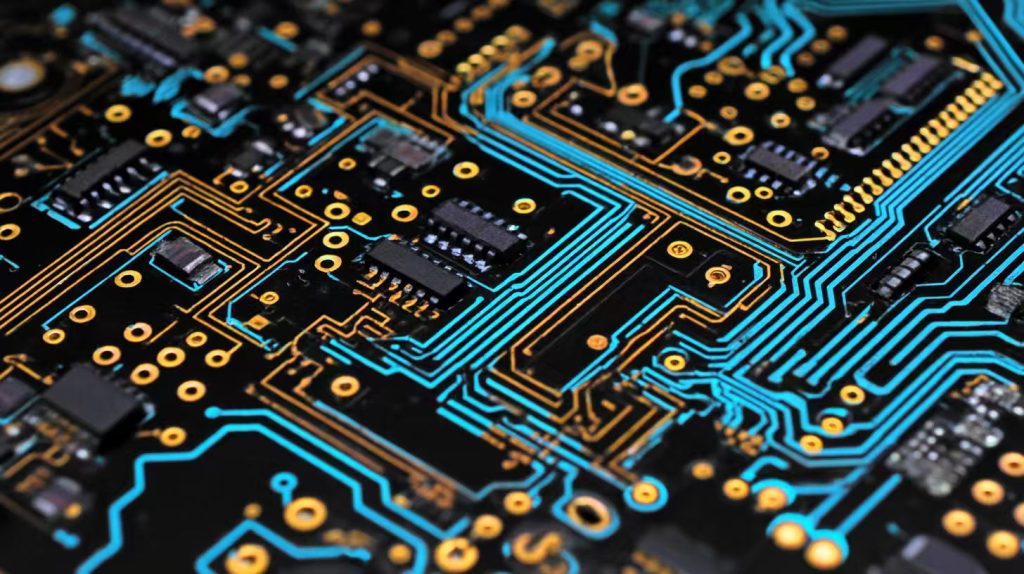
An RF PCB, or Radio Frequency Printed Circuit Board, is a special type of board made to work with high-frequency signals. These boards are very important for sending signals reliably in areas like phone networks and space systems. The market for RF and Microwave PCBs shows their value, worth $2.6 billion in 2023 and expected to grow to $4.8 billion by 2032. They are great at keeping signals strong even in tough conditions like very hot or cold places or when there’s shaking. This makes them a key part of today’s electronics.
Key Takeaways
RF PCBs handle high-frequency signals, making them vital for devices like phones and satellites.
They have features like low signal loss, heat stability, and controlled impedance to keep connections strong.
These boards are used in many fields, such as telecom, cars, medical tools, and space tech, for reliable work.
When choosing an RF PCB, check things like material and heat resistance for the best results.
The RF PCB market is growing fast, showing their value in new tech like 5G and smart devices.
What is an RF PCB?
Definition and purpose
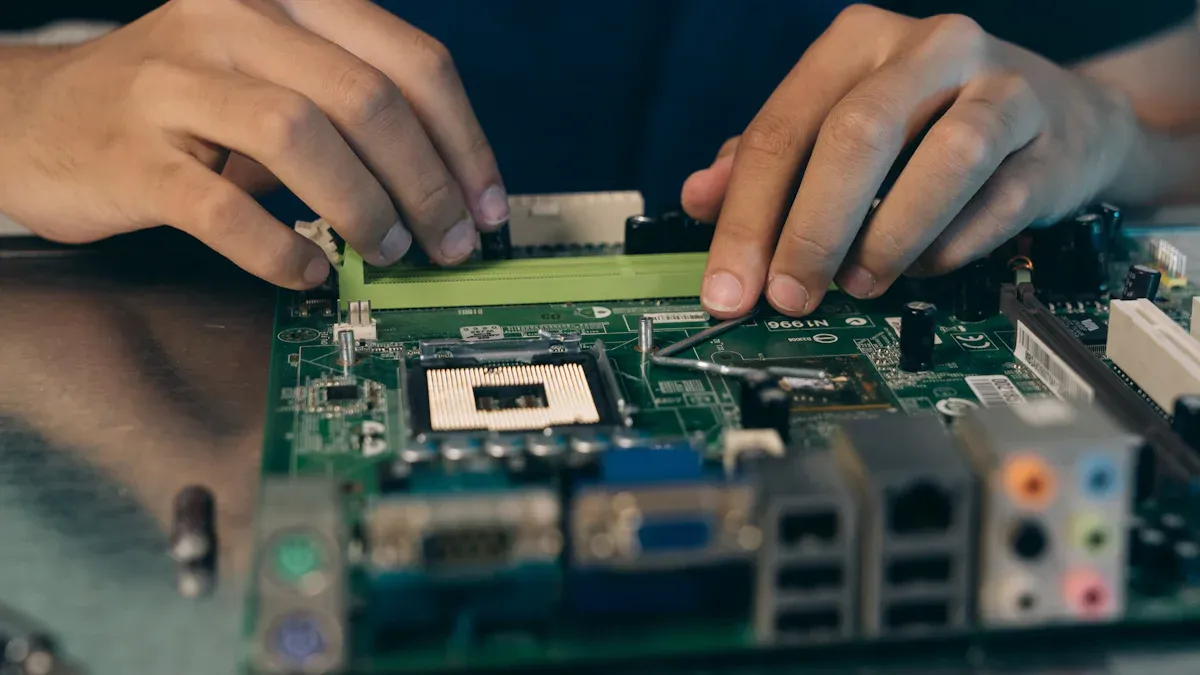
An RF PCB, or radio-frequency printed circuit board, is a special type of board. It is made to handle high-frequency signals. These boards are very important for things like phones, planes, and medical tools. Unlike regular PCBs, RF PCBs work in the frequency range of 500 MHz to several GHz. This makes them perfect for advanced wireless systems.
You might ask why RF PCBs matter so much. Their design helps reduce signal loss and distortion. This ensures strong connections even in tough conditions. By improving dielectric constants and loss tangents, RF PCBs keep signals clear. Whether it’s a smartphone or a satellite, RF PCBs help them work smoothly.
Key characteristics
RF PCBs have special features that make them better than regular PCBs. These features help them perform well with high-frequency signals:
Low Constant of Dielectric: Signals move faster and smoother with less loss.
Thermal Stability: They can handle very hot or cold temperatures.
Controlled Impedance: This reduces signal problems and keeps signals strong.
Low Loss of Signal: High-quality materials help signals stay clear.
High-Frequency Performance: They work well in the MHz to GHz range.
Mechanical Adjustment: Flexible designs make them great for wearables and portable gadgets.
Metric | Description |
|---|---|
Dielectric Constant | Shows how fast signals move; lower values mean faster signals. |
Loss Tangent | Measures energy loss; higher frequencies cause more loss. |
Coefficient of Thermal Expansion | Shows how materials handle heat; important for keeping performance steady. |
Electrical Strength | Tells how much electrical stress the material can handle. |
Thermal Management Properties | Helps keep performance steady in high-power uses. |
These features make RF PCBs very important for industries needing accuracy and dependability.
Importance in high-frequency applications
High-frequency signals can face interference, reflection, and noise. RF PCBs solve these problems with smart designs. For example, controlled impedance and low-loss materials keep signals clear. This is why RF PCBs are key for 5G, radar, and IoT devices.
Compared to regular PCBs, RF PCBs are better at handling high-frequency signals. They keep signals strong, reduce loss, and manage heat well. These benefits make them essential for modern communication systems. As technology grows, the need for RF PCBs will increase, leading to new ideas in their design and production.
Tip: When choosing an RF PCB, think about dielectric constant, thermal stability, and impedance control for the best results.
How RF PCBs Work
Basics of RF signal transmission
RF PCBs help send high-frequency signals without problems. These signals use electromagnetic waves to carry information. The waves move through the board’s paths to deliver data clearly.
Some key ideas about RF signal transmission are:
RF Basics: RF signals work between 500 MHz and several GHz. They need careful handling to avoid issues.
Modulation Techniques: Methods like AM and FM add information to RF signals. This makes data transfer smooth and efficient.
Matching Networks: Impedance matching reduces signal loss and keeps transmissions clear.
Knowing these basics shows why RF PCBs are vital for communication systems today.
Role of materials in RF performance
The materials in RF PCBs affect how well they work. Picking the right ones helps signals stay strong and reduces energy loss.
Property | Description |
|---|---|
Dielectric Constant (Dk) | Between 2.1 and 5.6, it controls signal speed and stability. |
Low Dissipation Factor (Df) | Keeps energy loss low, which is important for clear signals. |
Low Moisture Absorption | Less than 0.3%, it stops leaks and signal problems in wet places. |
Focus on these material traits to make sure your RF PCB works well, even in tough conditions.
Design considerations for RF boards
Making RF PCBs needs careful planning for good performance. You must think about frequency, impedance, and materials.
Steps for great RF PCB designs include:
Initial Requirements: Decide the frequency and impedance needs. For example, 5G boards often use 24-40 GHz.
Manufacturer Screening: Pick makers skilled in special materials and techniques like buried vias.
Evaluation Process: Test samples to check quality and performance.
Advanced tools also improve designs:
Method of Moments (MoM): Good for layered designs but works only for flat structures.
Finite Element Method (FEM): Works for 3D designs but needs lots of computing power.
Finite Difference Time Domain (FDTD): Handles big problems and uses parallel processing well.
By following these tips, you can design RF PCBs that keep signals clear and reliable.
Types of RF PCBs
Grouping by frequency range
RF PCBs are grouped by the frequencies they manage. This helps in picking the right board for your needs.
RF Circuit Boards: Work up to 2 GHz, good for lower frequencies.
Microwave PCBs: Handle over 2 GHz, great for radar and satellites.
High-frequency PCBs: Operate from 500 MHz to several GHz, perfect for advanced wireless systems.
Type | Frequency Range |
|---|---|
RF Circuit Boards | Up to 2 GHz |
Microwave PCBs | Above 2 GHz |
Knowing these ranges helps you pick the best PCB for your system.
Types by materials used
The material in an RF PCB affects how well it works. Think about dielectric constant, loss tangent, and heat properties when choosing.
FR-4: Cheap and good for low-frequency uses but not for high frequencies.
PTFE (Teflon): Works well at high frequencies with low signal loss.
Ceramic: Handles heat well, great for high-power RF systems.
Rogers Materials: Low loss and stable, ideal for high-frequency uses.
Material | Dielectric Constant (εr) | Loss Tangent (tan δ) | Thermal Conductivity (W/m·K) | Common Uses |
|---|---|---|---|---|
FR-4 | 4.3-4.7 | 0.020 | 0.2-0.3 | Low-frequency RF |
PTFE (Teflon) | 2.1-3.5 | 0.0002-0.002 | 0.25 | High-frequency RF, microwave |
Ceramic | 6-10 | 0.0001-0.001 | 20-30 | High-power RF |
Rogers 4350B | 3.66 | 0.0037 | 0.62 | High-frequency applications |
Picking the right material ensures your PCB works well in tough conditions.
Types by design complexity
RF PCBs differ in how complex their designs are. Complexity depends on layers, parts, and special features.
Single-layer RF PCBs: Simple and cheap, good for basic uses.
Multilayer RF PCBs: Have many layers, great for high-frequency and dense designs.
Hybrid RF PCBs: Use mixed materials for specific needs like 5G and IoT.
Tip: Match your PCB design to your project’s needs. Work with skilled manufacturers for the best results.
Advantages of RF PCBs
High signal integrity
RF PCBs keep signals clear and strong, which is very important. Signals can face problems like interference or loss when traveling. These boards are designed to reduce such issues. Features like controlled impedance help signals stay stable. Low-loss materials also keep signals from weakening. This makes RF PCBs great for systems needing perfect signal quality. For example, 5G networks and radar systems work better with these boards.
Compatibility with advanced systems
Modern devices need PCBs that handle complex, high-frequency tasks. RF PCBs are perfect for this because they work with advanced designs. They can manage a wide range of frequencies easily. This makes them useful for IoT devices, satellites, and car radar systems. RF PCBs also allow detailed layouts with many parts. They keep performance strong even with complicated designs. Choosing RF PCBs helps your system stay updated with new technology.
Reliability in demanding environments
RF PCBs are made to work well in tough conditions. Their materials can handle heat, shaking, and stress. For example, a company improved its handheld device by changing the PCB design. They added shock-resistant parts to make it stronger. This helped the device survive drops and rough use. RF PCBs are great for aerospace, defense, and factory systems. They offer the strength and reliability needed for hard jobs.
Note: Pick RF PCBs with the right materials and designs for your needs.
Applications of RF PCBs

RF PCBs are crucial in today’s technology. They help send high-frequency signals and work well in many industries. Let’s look at how they are used in telecommunications, cars, and medical tools.
Telecommunications
Telecommunications depend a lot on RF PCBs for wireless systems. These boards help process signals and send data reliably. They are key for Wi-Fi, Bluetooth, and mobile networks.
RF PCBs reduce energy loss with low dielectric materials.
They handle heat well, even in tough conditions.
Their strong signal abilities keep communication steady.
For example, Cisco uses RF ASICs to improve networks. This technology reduces noise and interference. It also makes signals clearer and more efficient. RF PCBs are very important for 5G networks. These networks need high-frequency boards with strong designs.
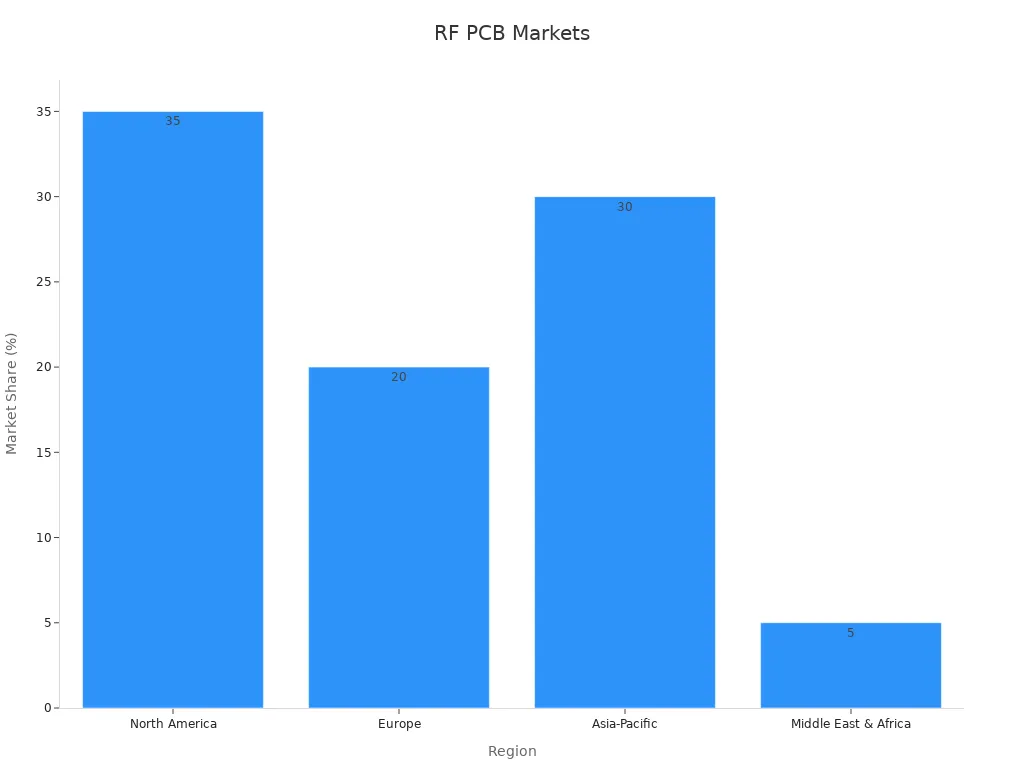
The RF PCB market shows their value in telecommunications. Reports say over 40% of the market comes from telecom use. This is due to 5G investments and network growth.
Automotive
RF PCBs are used in cars for advanced features. These include radar systems, vehicle communication, and self-driving tech. They ensure accurate and reliable performance in these systems.
Car radar systems use RF PCBs to detect objects and measure distances.
V2X communication depends on them for real-time data sharing.
Self-driving cars use RF PCBs to connect sensors, cameras, and modules.
Europe leads in using RF PCBs for cars. They focus on safe radar systems and self-driving tech. These improvements make cars safer and more efficient. RF PCBs are a key part of modern car designs.
Medical Devices
Medical tools now use RF PCBs for better diagnostics and treatments. These boards send high-frequency signals, which are important for accurate medical work.
MRI and CT scanners use RF PCBs for clear signal processing.
Wearable devices rely on them for wireless data sharing.
Telemedicine tools benefit from their strong and reliable performance.
In Europe, RF PCBs are vital for imaging and remote healthcare. They handle high-frequency signals well and stay reliable in tough conditions. This makes them perfect for medical uses.
Tip: Choose RF PCBs with low moisture absorption and good heat stability for medical tools.
Aerospace and Defense
The aerospace and defense fields depend a lot on RF PCBs. These industries need systems that work well in tough conditions. RF PCBs are used in radar, satellites, and electronic warfare tools. They handle high-frequency signals accurately, making them essential.
RF PCBs in these areas face extreme challenges. For example:
They endure strong vibrations during rocket launches and flights.
They survive sudden temperature changes in space.
They resist heavy mechanical stress to keep working under pressure.
To handle these demands, special materials like DuPont’s Pyralux® and Kapton® are used. These materials stay stable in heat and strong under stress, keeping the PCB reliable.
Testing is key to making sure RF PCBs are tough enough. Manufacturers run tests like:
Simulating real-world conditions with stress screening.
Checking long-term performance with reliability tests.
Following strict military and aerospace rules.
These tests ensure RF PCBs meet high standards. For instance, the CMM SMPM connector works in harsh places. It supports RF up to 40 GHz and data speeds of 50 Gbps. This helps block interference, which is crucial for success.
Aerospace and defense need electronics that are strong and reliable. Special laminates in RF PCBs provide the strength needed for extreme conditions.
RF PCBs also send signals clearly, which is critical for radar and communication. Whether guiding missiles or enabling secure satellite links, they are vital. Their ability to keep signals clear and survive tough environments makes them key to modern defense systems.
RF PCBs are important for handling high-frequency signals in many fields. They are used in telecommunications, cars, and aerospace systems. These boards keep signals clear and reliable, which is crucial for modern devices. As gadgets get smaller and stronger, RF PCBs are changing to fit these needs. By 2025, smaller devices will have more parts built into the PCBs. This will make them work better while saving space. New tech like IoT and self-driving cars need compact and efficient RF PCBs. Better materials, like advanced laminates, help these boards perform well. These improvements prepare RF PCBs for future high-frequency challenges.
FAQ
What makes RF PCBs different from regular PCBs?
RF PCBs work with high-frequency signals, unlike regular PCBs. They use special materials to keep signals clear and avoid interference. These features make them great for advanced uses like 5G, radar, and IoT devices.
Why are materials important in RF PCBs?
Materials affect how well RF PCBs work. Low dielectric constants and loss tangents help signals stay clear. Heat-resistant materials make them reliable in tough conditions. Picking the right material keeps signals strong and the PCB durable.
Can RF PCBs be used in wearable gadgets?
Yes, RF PCBs are great for wearables. Their flexible designs and low-loss materials fit small, portable devices. They ensure wireless communication works well for fitness trackers, smartwatches, and medical wearables.
How do RF PCBs help with 5G technology?
RF PCBs handle the high frequencies needed for 5G networks. They reduce signal problems like loss and interference. This ensures fast and steady data transfer, making them key for 5G devices and base stations.
Which industries use RF PCBs the most?
Telecommunications, cars, medical tools, aerospace, and defense depend on RF PCBs. These boards keep signals strong and reliable for uses like 5G networks, radar systems, medical imaging, and satellite links.
Tip: Talk to experts to pick the best RF PCB for your needs.