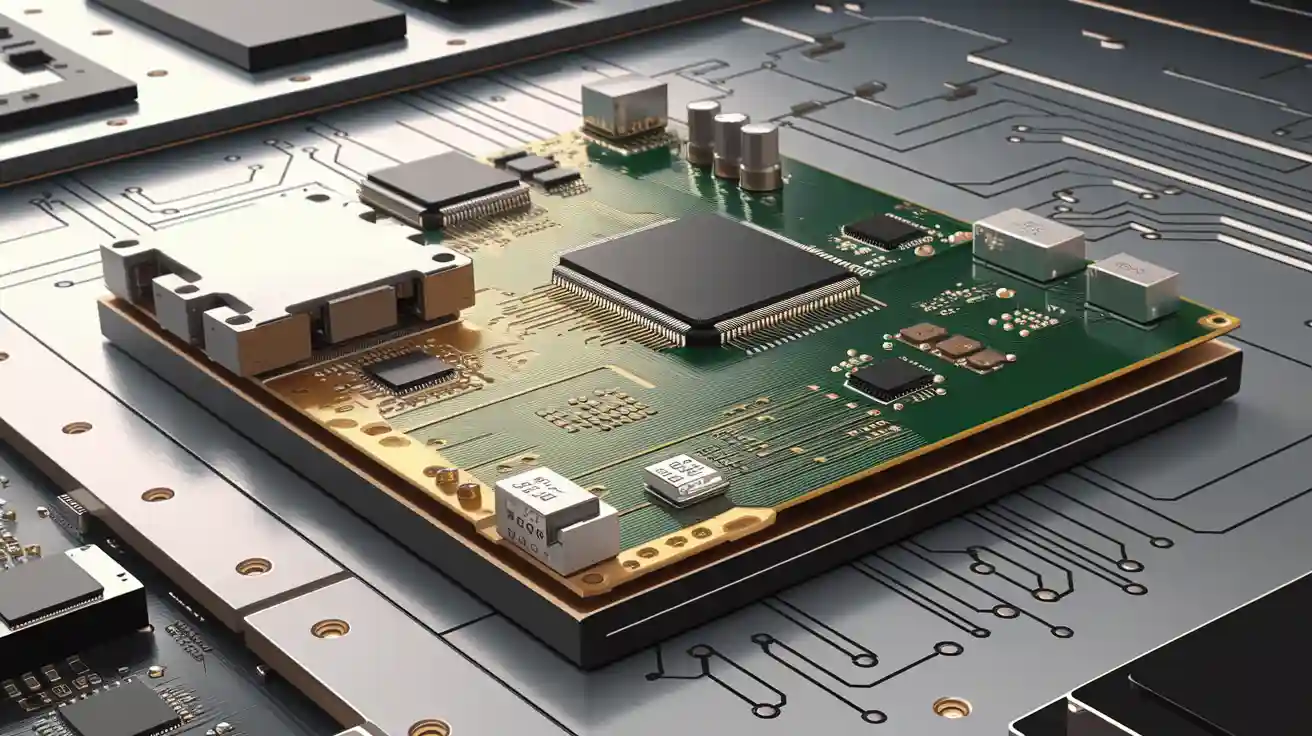
You will find several main types of hybrid pcbs, including rigid-flex, hybrid RF, metal-core, and ceramic hybrid pcb. These hybrid pcbs use different substrate materials, such as FR4 with polyimide, ceramic, or aluminum, to improve both performance and cost. By combining these materials, you can get better electrical, thermal, and mechanical properties in your pcb. Industry studies show that your choice of hybrid pcb materials affects how well the pcb manages heat, handles stress, and stays reliable in tough conditions. Each type of hybrid pcb helps you match the right features to your application needs.
Key Takeaways
Hybrid PCBs combine different materials to improve performance, heat management, and durability for various applications.
Choose the right hybrid PCB type—rigid-flex, hybrid RF, metal-core, ceramic, or flexible—based on your needs for flexibility, heat handling, or high-speed signals.
Common material pairs like FR4 with polyimide, ceramic, aluminum, or high-frequency materials balance cost and performance effectively.
Hybrid PCBs offer better signal integrity, thermal control, and mechanical strength but may cost more and need careful manufacturing.
Work closely with manufacturers and use design tools to match PCB features to your application and ensure reliable, high-quality results.
What Are Hybrid PCBs?
Definition
You can think of hybrid pcbs as printed circuit boards that combine two or more different materials in one stackup. Most often, you will see a standard FR4 laminate paired with a high-frequency material like PTFE. This mix lets you get the best properties from each material. For example, you can use FR4 for mechanical strength and PTFE for high-speed signal performance. Industry standards, such as IPC-PC-90, guide the quality and process control for these boards, but they do not give a strict definition for hybrid pcb. You need to work closely with your fabricator because mixing materials can create challenges, like different expansion rates and special drilling needs.
Structure
Hybrid pcbs have a layered structure. You might see a multi-layered hybrid pcb with both FR4 and high-frequency layers, such as Rogers 4350B. A typical 4-layer hybrid pcb could include:
A top signal layer with controlled impedance (often 50 ohms for high-speed circuits)
An inner ground plane for shielding and integrity
An inner power plane
A bottom signal or auxiliary layer
You will find that total thickness can range from 0.8 mm to 3.0 mm, with copper weights around 1 oz. The stackup and bonding methods help maintain signal integrity and reduce loss. Multi-layered boards use prepreg bonding and lamination pressure to keep all layers stable.
Key Features
Hybrid pcbs give you a unique set of features that boost both performance and reliability.
Feature | Description | Application Examples |
|---|---|---|
High-frequency signal handling | Low dielectric loss and low insertion loss for high-speed signal transmission | RF amplifiers, radar, satellite communications |
Thermal management | High thermal conductivity for better heat dissipation | Harsh environments, power electronics |
Mechanical strength | Strong outer layers for durability | Industrial and automotive pcbs |
Electrical insulation | Good isolation between layers | Complex multi-layered pcb designs |
Material combination | Mixes high-speed materials with standard FR4 to balance cost and performance | High-speed and high-frequency applications |
You will notice that hybrid pcbs help you manage loss, improve signal integrity, and support high-speed circuits. These features make them a top choice for advanced pcb design and demanding applications.
Types of Hybrid PCBs
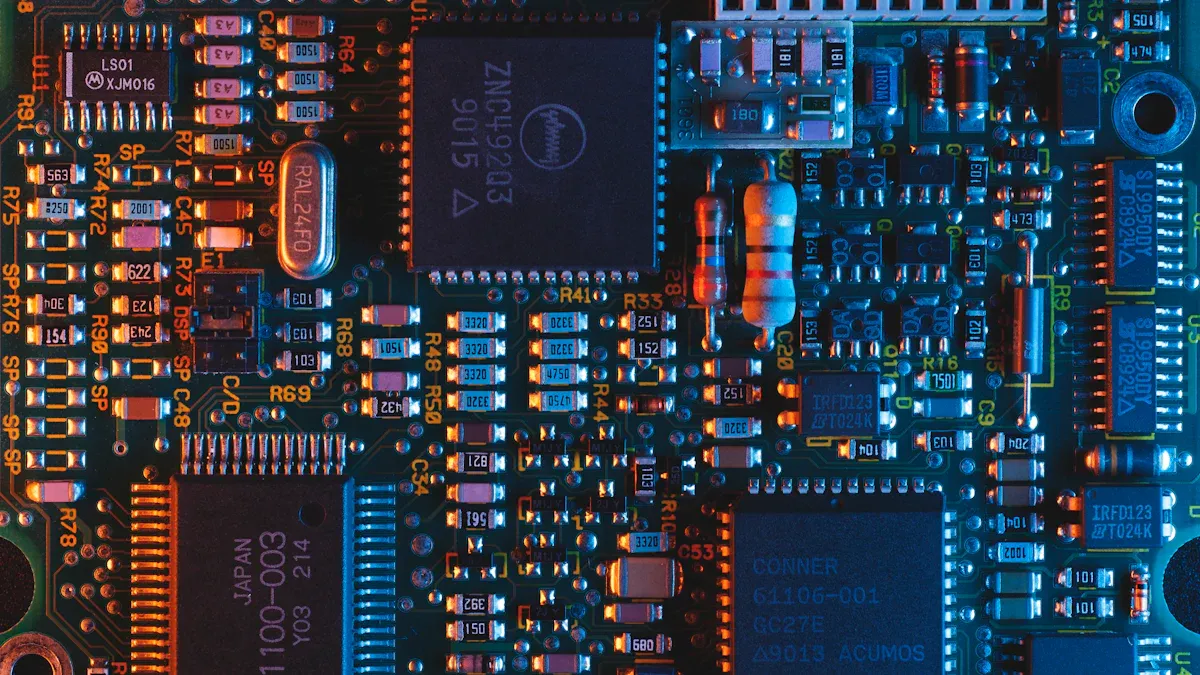
Hybrid PCBs come in several main types. Each type uses different materials and construction methods to meet specific needs. You can choose the right hybrid pcb by understanding how each type works and what benefits it offers.
Hybrid RF PCB
Hybrid RF PCBs combine materials for both RF (radio frequency) and non-RF sections. You will often see these boards in devices that need high-speed and high-frequency operation, such as telecom equipment and aerospace systems. By placing RF and standard materials together, you can shorten signal paths. This design reduces signal loss, noise, and interference. You get more compact and efficient systems. Hybrid RF PCBs help you improve coordination between different parts of your device. These features make them a top choice for applications where high-speed and power and high-frequency functionality matter most.
Hybrid RF PCBs allow you to balance cost and performance by using expensive high-frequency materials only where needed.
Rigid-Flex Hybrid PCB
Rigid-flex hybrid PCBs combine rigid sections with flexible sections. You can bend or fold the flexible parts, while the rigid areas provide strength. This design works well in devices that need to fit into tight spaces or move during use, like cameras or medical tools. The flexible layers use polyimide, which can handle repeated bending. The rigid layers use FR4 for stability.
Parameter | Value / Description |
|---|---|
Board Thickness Tolerance | ±10% (for ≥1.0 mm) |
Contour Tolerance | ±0.1 mm |
Strain Fillet Width | 1.5 ± 0.5 mm |
Bow and Twist | 0.05% |
Layer Count | Up to 20 (general), up to 30 (advanced) |
Flex Types | Single fold, Dynamic flex (thousands of cycles) |
Materials | Flexible: Polyimide (Kapton); Rigid: FR4 |
You can rely on rigid-flex hybrid pcbs for mechanical reliability and durability. These boards keep working even after many bends and twists.
Metal-Core Hybrid PCB
Metal-core hybrid PCBs use a metal layer, usually aluminum or copper, as the core. This metal core helps move heat away from hot components. You will find these boards in high-power LED lighting, electric vehicles, and power electronics. Metal-core hybrid pcbs offer better cooling than standard boards.
Thermal vias transfer heat from components to the metal core.
Thinner dielectric layers improve heat transfer.
Heat sinks and thermal pads draw heat away from the pcb.
Copper trace design prevents heat trapping.
Symmetrical multilayer stack-up keeps the board stable during heating and cooling.
Metal-core hybrid pcbs lower thermal impedance. This means less heat builds up, and your components last longer. You can use these boards when you need strong cooling and high reliability.
Ceramic Hybrid PCB
Ceramic hybrid PCBs use ceramic materials for some or all layers. Ceramic offers high thermal conductivity and strong electrical insulation. You will see these boards in aerospace, military, and medical devices. Ceramic hybrid pcbs handle high temperatures and harsh environments.
Reliability studies show that solder joint fatigue life depends on both material and structure.
Failures can happen from thermal cycling or vibration, but you can predict and improve reliability with careful design.
Mechanical strength varies with design, but ceramic hybrid pcbs often last longer in tough conditions.
Ceramic hybrid pcbs give you a stable platform for high-speed and high-frequency circuits. You can trust them in critical applications where failure is not an option.
Flexible Hybrid PCB
Flexible hybrid PCBs use flexible materials for all or most layers. You can bend, twist, or fold these boards to fit unique shapes. Flexible hybrid pcbs work well in wearable devices, foldable phones, and medical sensors.
Performance Indicator | Description / Observed Result |
|---|---|
Detection Reliability | Improved reliability for defect detection in production |
Environmental Performance | Lower pollutant emissions and energy use |
Manufacturing Performance | High productivity and controlled production rates |
Optimization Methodology | Simulation and analysis for better process control |
Flexible hybrid pcbs help you reduce signal loss and improve reliability. You can also make your products lighter and more compact. These boards support high-speed circuits and multi-layered hybrid pcbs for advanced designs.
Each type of hybrid pcb is defined by its unique material combinations and construction methods. You can match the right type to your application for the best performance and cost.
Hybrid Material PCB Combinations

When you design a hybrid material pcb, you can select from several popular substrate combinations. Each pairing brings unique strengths to your pcb, helping you meet specific performance or cost goals. Let’s look at the most common combinations and see how they work in real applications.
FR4 and Polyimide
You often see FR4 and polyimide combined in hybrid material pcb designs. FR4 gives you good mechanical strength and low cost. Polyimide adds flexibility and better performance at high temperatures. When you use both, you get a board that can bend and survive harsh conditions.
Polyimide laminates improve your pcb’s temperature range, electrical properties, and resistance to expansion. This makes your board last longer and work better in tough environments.
Here’s a quick comparison of their properties:
Property | FR4 (Typical) | Polyimide (Typical) |
|---|---|---|
Dielectric constant | 4.5 to 5.0 (at 1 MHz) | 3.7 to 3.9 (at 1 MHz) |
Dielectric loss | 0.02 to 0.03 (at 1 MHz) | 0.0015 to 0.0025 (at 1 MHz) |
Temperature range | 0 to 100°C | -100°C to 200°C |
Trace-to-trace resistance | >100MΩ or <100nA @ 5V | >100MΩ or <100nA @ 5V |
Trace-to-trace capacitance | <5.0 pF | <5.0 pF |
Leakage current | 2 nA/V | 2 nA/V |
You choose this combination for flexible circuits, aerospace, and medical devices. Polyimide’s lower dielectric loss helps your signals stay strong, even at high speeds. FR4 keeps your costs down and adds strength. This mixed material lamination lets you build reliable, high-performance boards for demanding jobs.
FR4 and Ceramic
When you need better heat management, you can use FR4 and ceramic together in a hybrid material pcb. Ceramic substrates move heat away from hot components much faster than FR4. This helps your board run cooler and last longer.
Ceramic gives you high thermal conductivity and strong temperature resistance.
You can shrink your system size because ceramic handles more heat in less space.
You save money over time by reducing the need for extra cooling and cutting down on repairs.
New manufacturing methods let you combine ceramic and FR4 more easily, making your designs more compact and efficient.
Hybrid material pcb designs with FR4 and ceramic work well in power electronics, automotive, and high-frequency devices. You get the reliability of ceramic where you need it most, while FR4 keeps the board affordable and easy to make.
FR4 and Aluminum
If your pcb needs to handle a lot of power or heat, you can combine FR4 with aluminum. Aluminum acts as a metal core, pulling heat away from your components. FR4 provides the electrical insulation and structure.
You see this combination in LED lighting, power supplies, and automotive electronics. The aluminum core keeps your board cool, so your parts last longer. FR4 layers let you route signals and keep costs under control.
Tip: When you use FR4 and aluminum together, you improve both thermal management and mechanical stability. This helps your hybrid material pcb survive in harsh or high-power environments.
High-Frequency Material and FR4
For high-speed or high-frequency circuits, you can mix high-frequency materials like PTFE or Rogers with FR4. High-frequency materials have a lower dielectric constant and loss tangent than FR4. This means your signals travel faster and lose less energy.
Property | FR4 | Rogers (High-Frequency) |
|---|---|---|
Dielectric Constant (Dk) | 3.4 to 4.8 (variable) | Less than 3 to 10 (stable) |
Dielectric Loss / Loss Tangent | 0.012 to 0.02 | Less than 0.01 |
Dissipation Factor (%) | Around 0.02 | Around 0.004 |
Thermal Conductivity (W/m-K) | 0.1 to 0.3 | 0.69 to 1.7 |
You use this hybrid material pcb combination in RF circuits, antennas, and communication devices. The high-frequency material keeps your signals clean and fast. FR4 lowers the cost and adds mechanical support. By combining these materials, you get better signal integrity and less loss, even at high speeds.
Note: High-frequency materials help you control impedance and reduce signal distortion. This makes your pcb more reliable in advanced electronics.
Benefits and Challenges of Hybrid PCBs
Performance
You get strong performance advantages when you use hybrid PCBs. By combining materials like PTFE, FR-4, and polyimide, you can achieve better impedance control and support high-speed signals. This mix helps you minimize signal loss and reduce transmission delay. You can also integrate RF and digital circuits on one board, which gives you more design flexibility and allows for miniaturization.
Hybrid PCBs improve thermal management by using materials that move heat away from hot spots. This helps your device last longer.
You can optimize electrical characteristics, so your circuits work well even in extreme conditions.
Testing methods like Time Domain Reflectometry (TDR) and Vector Network Analyzer (VNA) help you check for signal integrity and impedance matching.
Tip: When you design for high-speed functionality, always pay attention to impedance and layer separation to avoid signal loss.
Cost
Hybrid PCBs can cost more than traditional boards, especially if you need custom designs or advanced materials. The price depends on where you make your PCB. Manufacturing in North America or Europe usually costs more than in Asia because of higher labor and operational expenses. If you produce large volumes, you can lower the unit cost, but small runs of custom hybrid PCBs often have higher tooling and setup fees.
Material choice affects cost. Standard FR-4 is cheaper, but advanced substrates raise the price.
Prototyping and testing add to expenses, especially when you need several iterations.
You can save money by simplifying your circuit, using fewer layers, and choosing standard components.
Note: Automation and new manufacturing methods may increase initial costs but can lower long-term expenses.
Manufacturing
PCB fabrication for hybrid boards brings unique challenges. You must bond different materials, each with its own expansion rate. If you do not control temperature and pressure during lamination, you risk delamination, warpage, or even board breakage. These issues can hurt the integrity of your PCB and cause signal loss.
Quality control is key. You need strong inspection tools and testing, such as Automated Optical Inspection (AOI) and functional circuit tests, to catch defects early.
Standard operating procedures and process controls help you keep production consistent.
Advanced equipment, like automated placement machines and special soldering tools, improve reliability.
You should always work with experienced engineers during pcb fabrication to avoid problems with material bonding and to maintain high performance.
Application Suitability
Selection Tips
When you choose a hybrid PCB for your project, you need to match the board’s features to your application’s needs. Start by listing your main requirements. Do you need flexibility, high-frequency performance, or strong thermal management? Each type of hybrid PCB offers different strengths.
For wearable devices, select flexible or rigid-flex hybrid PCBs. These boards bend and fit into small spaces.
If your design needs to handle high power or heat, use metal-core or ceramic hybrid PCBs. These materials move heat away from sensitive parts.
For high-speed signals, pick a hybrid RF PCB. These boards use special materials to keep signals clear and fast.
You should also consider the environment where your PCB will work. If your device faces vibration, sweat, or temperature changes, choose materials that resist these stresses. Custom hybrid PCB designs let you combine features for unique applications. Always check with your manufacturer about material compatibility and production limits.
Tip: Use simulation tools during PCB design to test signal integrity and thermal performance before you build the board.
Industry Examples
You can find applications of hybrid PCBs in many industries. These boards help you solve real-world challenges and improve product performance.
Wearable health monitors like smartwatches and fitness bands use flexible hybrid PCBs. These boards make devices lightweight and comfortable. They also last longer because they resist sweat and movement.
The SINTEC project in Europe showed that flexible PCBs use less raw material and energy. This helps the environment.
Medical implants, such as eye probes and brain devices, use biocompatible flexible PCBs. These boards fit safely inside the body and collect data without causing harm.
Robotics and advanced materials use custom hybrid PCB designs. These boards bend and stretch with moving parts. They also measure strain and support dynamic motion.
Aerospace and defense systems use hybrid PCBs for better power density, signal integrity, and thermal management. These boards reduce size and weight, which is important for space-constrained applications.
Aspect | Details / Measurable Performance |
|---|---|
Performance Benefits | Lower insertion loss, better signal integrity, high power density |
Environmental Features | Lead-free, less material waste |
Typical Applications | Routers, antennas, medical devices, robotics, wearables |
You can see that hybrid PCBs support many advanced applications. They give you the flexibility, reliability, and performance needed in today’s technology.
You have many options when choosing hybrid PCBs. Each type—rigid-flex, hybrid RF, metal-core, and ceramic—offers unique benefits. The right material combination helps you meet your project’s needs. Check the table below to see why matching PCB design to your application matters:
Design Aspect | Importance for Matching PCB Type to Application Requirements |
|---|---|
PCB stack-up | Balances cost, reliability, and fabrication for your needs |
Via types | Affects connections and current capacity |
Design rules | Ensures manufacturability and performance |
Breakout strategy | Supports routing and signal integrity |
Hybrid PCBs work best when you follow design guidelines and select materials for your application.
For complex projects, talk to PCB experts. They help you solve technical and quality challenges.
Tip: Consulting with experienced manufacturers improves your project’s success and reliability.
FAQ
What makes a PCB “hybrid”?
A hybrid PCB uses two or more different materials in one board. You get the best features from each material. This helps you improve performance, reliability, and cost for your project.
Can you use hybrid PCBs in high-temperature environments?
Yes, you can use hybrid PCBs in high-temperature environments. Materials like polyimide and ceramic handle heat well. You should choose the right combination for your needs.
Why do you combine FR4 with other materials?
You combine FR4 with other materials to balance cost and performance. FR4 gives strength and low price. Other materials, like PTFE or aluminum, add flexibility, heat resistance, or better signal quality.
Are hybrid PCBs more expensive than standard PCBs?
Hybrid PCBs usually cost more than standard boards. You pay extra for special materials and complex manufacturing. You save money by using expensive materials only where needed.
How do you choose the right hybrid PCB for your application?
Start by listing your needs. Think about flexibility, heat, and signal speed. Match these needs to the strengths of each hybrid PCB type. You can ask your manufacturer for advice.