Key Differences Between Wave and Reflow Soldering
Compare wave and reflow soldering for PCB assembly methods.
Features | wave-soldering | reflow soldering |
|---|---|---|
Component type suitability | Best for through-hole components. | Ideal for surface-mount devices. |
Process method | Board passes over molten solder wave. | Solder paste melts in heated oven. |
Production speed | Fast for large, simple batches. | Slower setup, better for complex boards. |
Heat control precision | Less precise heat application. | Precise temperature control protects parts. |
Equipment cost | Lower cost for high-volume runs. | Higher cost, especially for small projects. |
Joint quality | Consistent for through-hole joints. | Superior for small, delicate parts. |
Component mix handling | Limited with mixed component types. | Supports mixed and double-sided boards. |
Space requirements | Equipment can be bulky. | Generally more compact setup. |
You want to learn the real difference between wave soldering and reflow soldering. Wave soldering is best for joining many through-hole parts at the same time. Reflow soldering is good for surface-mount parts and lets you control heat better. You should pick one based on your project’s parts and how you plan to make it.
Key Takeaways
Wave soldering is good for boards with many through-hole parts. It can solder many joints at the same time. This makes it fast for big, simple batches.
Reflow soldering is best for surface-mount devices and hard boards. It gives careful heat control to keep small parts safe.
Pick wave soldering for lots of simple boards. Use reflow soldering for boards with many parts or mixed types.
Think about your project’s parts, how many you need, and your budget. This helps you choose the best soldering method. It saves time and makes strong connections.
Many factories use both ways together. They do reflow soldering first for surface-mount parts. Then they use wave soldering for through-hole parts.
Wave soldering process
How it works
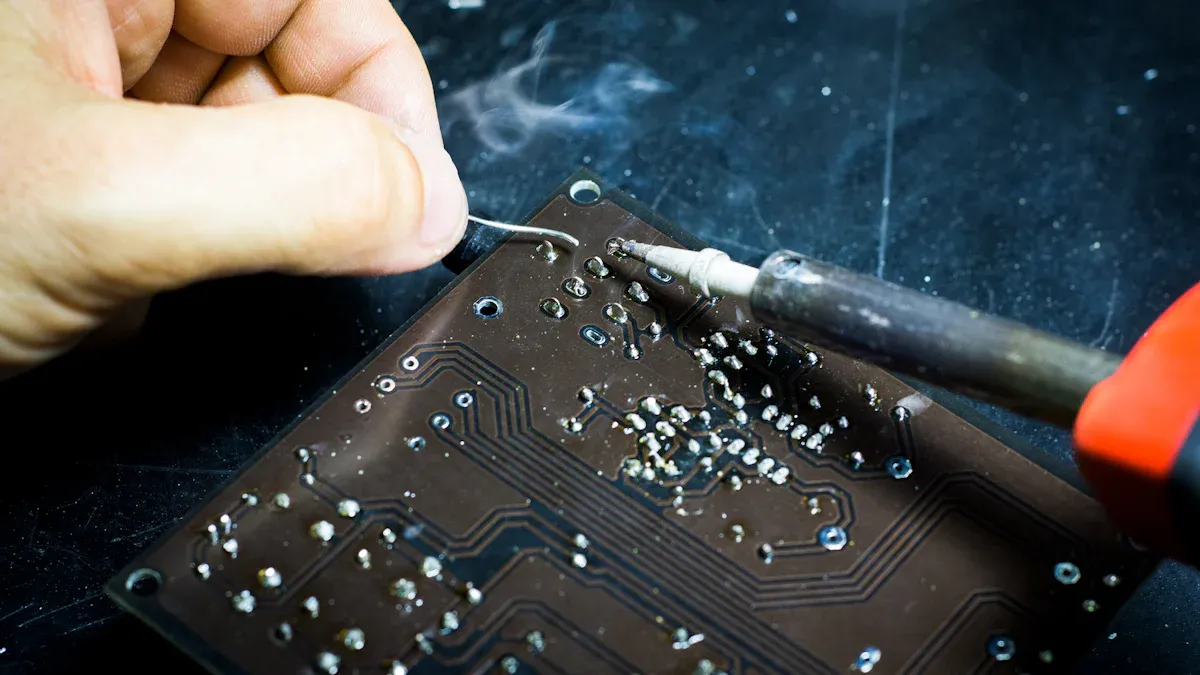
You use wave soldering to attach electronic components to a printed circuit board (PCB). First, you place the components into holes on the board. Next, you move the board over a wave of molten solder. The solder touches the exposed metal parts and creates strong electrical connections. The process works best for boards with many through-hole components. You do not need to solder each joint by hand. The machine does it all at once.
Main uses
You often choose wave soldering for large production runs. It works well when you have many boards with similar layouts. Factories use this method for products like power supplies, consumer electronics, and industrial equipment. If your project uses mostly through-hole parts, wave soldering gives you fast and reliable results.
Pros
You can solder many joints at the same time, which saves time.
The process works well for high-volume manufacturing.
You get consistent results across many boards.
You do not need to handle each joint individually.
Tip: If you want to speed up production for through-hole PCBs, wave soldering is a strong choice.
Cons
You cannot use wave soldering for most surface-mount components.
The process may not suit boards with mixed component types.
You might need extra steps to protect sensitive parts from the solder wave.
The equipment can take up a lot of space.
When you compare wave soldering to other methods, you see that it excels with simple, high-volume, through-hole assemblies. For mixed or surface-mount projects, you may want to consider other options.
Reflow soldering process

How it works
You use reflow soldering to attach surface-mount components to a PCB. First, you apply solder paste to the pads on the board. Then, you place the components on top of the paste. After that, you move the board through a special oven. The oven heats the board in stages. The solder paste melts and forms strong connections between the parts and the board. The oven then cools the board so the solder hardens. This process gives you precise control over temperature, which helps protect sensitive parts.
Main uses
You often choose reflow soldering for boards with many surface-mount devices (SMDs). This method works well for smartphones, computers, and other modern electronics. If your project uses small or complex components, reflow soldering gives you the accuracy you need. You can also use it for mixed-technology boards, where you have both SMDs and some through-hole parts.
Note: Reflow soldering is the standard for most high-density and miniaturized electronics.
Pros
You get excellent results with small and delicate components.
The process supports high-density layouts and double-sided boards.
You can control the heat profile to protect sensitive chips.
The method works well for both prototypes and large production runs.
Comparison Tip:
If you need to solder many surface-mount parts, reflow soldering gives you more flexibility than wave soldering.
Cons
You need precise placement of components before soldering.
The process may require more setup time for new designs.
Solder paste can dry out if you do not use it quickly.
The equipment can be costly for small projects.
When you compare reflow soldering to wave soldering, you see that reflow is better for complex, high-density boards. Wave soldering works best for simple, through-hole assemblies. You should match the method to your project’s needs for the best results.
Comparison
Process differences
You use different steps for each soldering method. In wave soldering, you place components into holes on the PCB. Then, you move the board over a wave of molten solder. The solder connects all the exposed metal parts at once. In reflow soldering, you first apply solder paste to the pads. You place the components on top of the paste. After that, you heat the board in an oven. The solder paste melts and forms the connections.
Tip: If you want to solder many joints at once, wave soldering works best. If you need careful heat control, choose reflow soldering.
Component types
You should match the soldering method to your component types. Wave soldering works well for through-hole components. These parts have leads that go through the board. Reflow soldering is better for surface-mount devices (SMDs). These parts sit on top of the board. If you have a mix of both types, you may need to use both methods or pick one that fits most of your parts.
Soldering Method | Best for Component Type | Can Handle Mixed Types? |
|---|---|---|
Wave soldering | Through-hole | Limited |
Reflow soldering | Surface-mount (SMD) | Yes (with some limits) |
Speed and efficiency
You want fast and efficient production. Wave soldering can solder many joints at the same time. This makes it very fast for large batches of simple boards. Reflow soldering takes more time for setup and placement. However, it can handle complex boards and double-sided assemblies. For high-volume runs with simple layouts, wave soldering saves time. For detailed or high-density boards, reflow soldering gives you better results.
Wave soldering: Fast for large, simple batches.
Reflow soldering: Efficient for complex, high-density boards.
Cost
You need to think about cost when choosing a method. Wave soldering equipment can cost less for large runs of simple boards. It uses less labor because the machine solders all joints at once. Reflow soldering equipment may cost more, especially for small projects. You also need to buy solder paste and use precise placement machines. For high-mix or low-volume projects, reflow soldering may cost more per board.
Note: For simple, high-volume production, wave soldering often gives you lower costs.
Quality
You want strong, reliable solder joints. Wave soldering gives you consistent results for through-hole parts. However, it may not work as well for tiny or sensitive components. Reflow soldering gives you better control over temperature. This helps protect delicate chips and makes strong connections for small parts. If you need high-quality joints for surface-mount devices, reflow soldering is the better choice.
Feature | Wave soldering | Reflow soldering |
|---|---|---|
Joint Consistency | High (through-hole) | High (SMD, mixed) |
Heat Control | Less precise | Very precise |
Small Parts | Not ideal | Excellent |
If you need to build modern electronics with many small parts, reflow soldering gives you the best quality.
Choosing the right method
Project needs
You should start by thinking about your project’s size and type. If you plan to make many boards with the same design, you want a process that works fast and gives the same results every time. For high-volume runs, you may prefer a method that handles lots of boards at once. If you build prototypes or small batches, you need flexibility. Reflow soldering works well for both small and large runs, especially when you use surface-mount parts. For simple boards with only through-hole parts, you can choose a process that finishes many joints in one step.
Tip: Match your soldering method to your production volume and the type of electronics you build.
Component mix
Look at the types of parts you use. Boards with only through-hole parts need a different approach than boards with many surface-mount devices. If you have a mix of both, you may need to use two methods or pick the one that fits most of your parts. The mix of components also affects how the solder behaves. Different solder alloys change how well the solder melts, spreads, and bonds to the board. For example, some alloys melt at lower temperatures, which helps protect sensitive chips. Others spread better, making stronger joints.
Performance Factor | How Component Mix Affects Soldering Outcomes |
|---|---|
Melting Temperature | Different alloys melt at different temperatures, so you must match them to your process and equipment. |
Wetting Characteristics | Some alloys spread better, making stronger connections with certain parts. |
Solder–Substrate Interactions | The right alloy improves how solder bonds to the board, which helps joints last longer. |
Mechanical Properties | Alloys with better strength resist stress from heating and cooling. |
Electrical Properties | Some alloys conduct electricity better, which helps your board work well. |
Note: Always check your component list and choose a soldering method and alloy that fit your parts.
Budget
You need to balance quality and cost. For large runs of simple boards, you can save money by picking a process that finishes many boards quickly. If you work with complex boards or small batches, you may spend more on setup and materials. Reflow soldering equipment can cost more at first, but it gives you better control for high-density boards. Think about your long-term needs. Spending more now may save you time and money later if you plan to make many boards.
Make a list of your project needs.
Check your component types and mixes.
Set your budget before you choose a method.
Choosing the right soldering process helps you get strong, reliable boards without spending more than you need.
You have learned the main ways these two soldering methods are different. Wave soldering is good if you need to make many boards quickly with through-hole parts. Reflow soldering is better for surface-mount devices or when you must control heat carefully. Think about what your project needs, what parts you use, and how much money you can spend before choosing. This guide can help you pick the best way to build your next PCB assembly.
FAQ
What is the main difference between wave soldering and reflow soldering?
Wave soldering is best for through-hole parts. Reflow soldering works for surface-mount devices. Wave soldering is good for simple boards made in big numbers. Reflow soldering is better for complex or crowded boards.
Can you use both methods on one PCB?
Yes, you can use both methods together. Many factories use reflow soldering first for surface-mount parts. After that, they use wave soldering for through-hole parts. This way works well for boards with both types of parts.
Which method gives better results for small components?
Reflow soldering is better for small or delicate parts. It uses careful heat, so it protects sensitive chips. Wave soldering does not work well for tiny surface-mount devices.
Is wave soldering or reflow soldering faster for large batches?
Wave soldering is usually faster for big batches. The machine can solder many joints at the same time. Reflow soldering takes longer to set up and place parts, but it is better for complex boards.