An application-specific integrated circuit (ASIC) is a chip made for one job. Unlike general-purpose chips that do many tasks, ASICs work on just one thing. They are becoming popular because industries need faster and energy-saving tools. These industries include electronics, telecom, and cars.
Key Takeaways
ASICs are made for specific jobs, so they work faster and use less energy than regular chips.
Using ASICs can save money when making many products because they need fewer parts.
There are different kinds of ASICs, like full custom, semi-custom, and programmable, to fit different industries like electronics and communication.
Types of Application-Specific Integrated Circuits
Full Custom ASIC
Full custom ASICs are made completely from the ground up. They are built for one specific job and are very efficient. These chips work best for tasks needing special features or high performance, like fast processors or advanced graphics.
When creating a full custom ASIC, engineers focus on these areas:
Functional Metrics: Making sure the chip does its job correctly.
Physical Metrics: Designing the chip to be small and well-organized.
Electrical Metrics: Using less power and running faster.
Economic Metrics: Keeping costs low while staying profitable.
To make more good chips, manufacturers fix errors, improve layouts, and add backup systems like repairable memories. Full custom ASICs are powerful but take a lot of time and effort to make.
Semi-Custom ASIC
Semi-custom ASICs mix custom design with ready-made parts. These chips use pre-built sections that can be adjusted for specific needs. This saves time and money, making them great for quick projects.
Semi-custom ASICs are the most popular, with 51.4% of the market in 2023. They are widely used in consumer electronics, which made up 36.8% of the ASIC market that year. By using existing parts, you can create a custom chip without starting from zero. This makes semi-custom ASICs a smart choice for many industries.

Programmable ASIC
Programmable ASICs can be changed after they are made. This makes them useful for industries like cars, telecom, and factories. For example, they are important in driver-assistance systems and 5G networks.
The demand for programmable ASICs is growing fast. In 2024, the market was worth USD 13.18 billion and is expected to reach USD 27.41 billion by 2034, growing at 7.59% CAGR. Companies like Menta are improving this field with tools like eFPGA IP. This lets you adjust logic, memory, and signals. Programmable ASICs are flexible and work well for many uses.
Design and Fabrication of ASICs
Overview of the Design Process
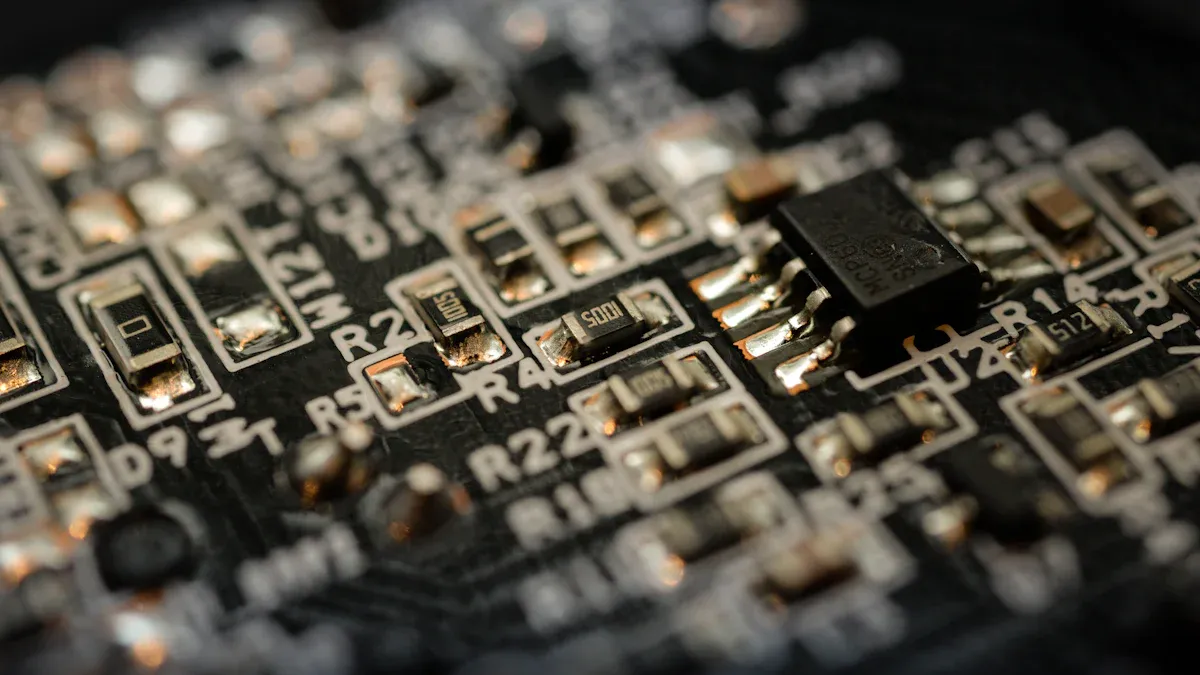
Designing an ASIC follows important steps to meet its purpose. First, you decide what the chip must do. This includes its speed, power use, and size. After that, engineers make a basic design. They use software to plan how the chip will work.
Next, they create a detailed layout. This step ensures all parts fit in the chip. Special tools help make the design faster and use less power. Then, they test the design using simulations. These tests check if the chip works in different situations.
Finally, all parts are combined into one chip. This step makes the ASIC ready to be built. By following these steps, engineers create chips that work well for specific tasks.
Overview of the Fabrication Process
Making an ASIC turns the design into a real chip. It starts with preparing silicon wafers as the base. Tiny designs are made using advanced tools like EUV lithography. Special materials like SiC and GaN improve how the chip works.
Keeping defects low is very important. Less than 0.5 defects per square centimeter means more good chips. AI helps by improving processes and predicting problems. This reduces waste and saves money.
Yield is also key. It shows how many good chips are made. Higher yields lower costs, which is helpful in industries like Bitcoin mining. Using smart tools, materials, and AI makes ASIC production better and more reliable.
Advantages of Application-Specific Integrated Circuits
High Performance
ASICs are super fast because they are made for one job. Unlike regular chips, ASICs do tasks quickly and exactly. For example, AI ASICs handle neural networks faster than CPUs. This makes them great for things like self-driving cars, where speed is key.
ASICs also make signals stronger and more reliable. Their small size cuts down on signal problems. Fewer connections mean fewer chances of breaking. These features make ASICs perfect for industries needing steady and strong performance.
Performance Aspect | ASICs Benefits |
|---|---|
Signal Integrity | Better due to smaller size and less signal interference. |
Size and Weight | Smaller chips replace many parts, making devices lighter. |
Power Efficiency | Uses less power because of shorter signal paths. |
Reliability | Fewer connections mean fewer breaks, improving reliability. |
Power Efficiency
ASICs save energy, making them great for power-hungry tasks. They use less power by moving signals better and wasting less energy. For example, AI ASICs help data centers work faster while saving electricity.
In crypto mining, ASICs give more power for less energy. They are measured by how much work they do per watt. Models like the Bitmain Antminer S19 Pro are very efficient, using only 29.5 J/TH. This lowers costs and saves energy.
Hashrate per watt shows how much work is done per energy unit.
More work per watt means lower costs and higher profits.
Efficient chips waste less energy and perform better.
ASIC Model | Hash Rate (TH/s) | Power Efficiency (J/TH) |
|---|---|---|
Bitmain Antminer S19 Pro | 110 | 29.5 |
MicroBT Whatsminer M30S++ | 112 | 31 |
Canaan AvalonMiner 1246 | 90 | 38 |
Cost Efficiency for Large-Scale Production
ASICs cost less per chip when made in big numbers. While starting costs are high, making many chips lowers the price per chip. This makes ASICs a smart choice for industries like electronics and telecom.
Semi-custom ASICs are popular because they mix custom design with low cost. In 2024, they made up 49.9% of the market and earned billions. This shows how ASICs save money and help industries grow.
Year | Segment | Market Share | Revenue (USD) | Growth Rate (CAGR) |
|---|---|---|---|---|
2023 | Semi Custom ASICs | Significant | N/A | N/A |
2024 | Semi Custom ASICs | 49.9% | N/A | N/A |
2022 | Semi Custom ASICs | Over 45% | Over 8 billion | N/A |
Using ASICs gives you speed, saves energy, and lowers costs. They are a must-have for today’s industries.
Applications of ASICs
Consumer Electronics
ASICs are used in many everyday devices. They help run smartphones, tablets, and gaming consoles. These chips are made for specific jobs like processing images or decoding audio. This makes devices work better and use less energy. For example, ASICs in AI make machine learning faster and smarter.
ASICs offer great benefits for electronics. They perform tasks quickly, save energy, and are cheaper to produce in large amounts. This makes them perfect for gadgets like wearables and IoT devices that need to save power.
Benefit/Area of Application | Description |
|---|---|
Superior Performance | Built for specific tasks, making them faster. |
Lower Power Consumption | Uses less energy than regular processors. |
Cost Efficiency in Mass Production | High initial cost but cheaper per unit later. |
Telecommunications
ASICs are very important in telecom systems. They make networks faster, reduce delays, and connect more devices. For example, ASICs in 5G networks allow quick and energy-saving data processing. This is crucial for IoT and edge computing.
Metric | Description |
|---|---|
Enhanced Throughput | Speeds up data transfer rates. |
Reduced Latency | Cuts down on delays in communication. |
Increased Client Density | Handles more connected devices at once. |
Energy Efficiency | Saves power, lowering running costs. |
ASIC Mining for Cryptocurrency
ASICs are the best choice for mining cryptocurrency. They are made for specific algorithms, giving more power and using less energy than other hardware. This makes them essential for mining setups.
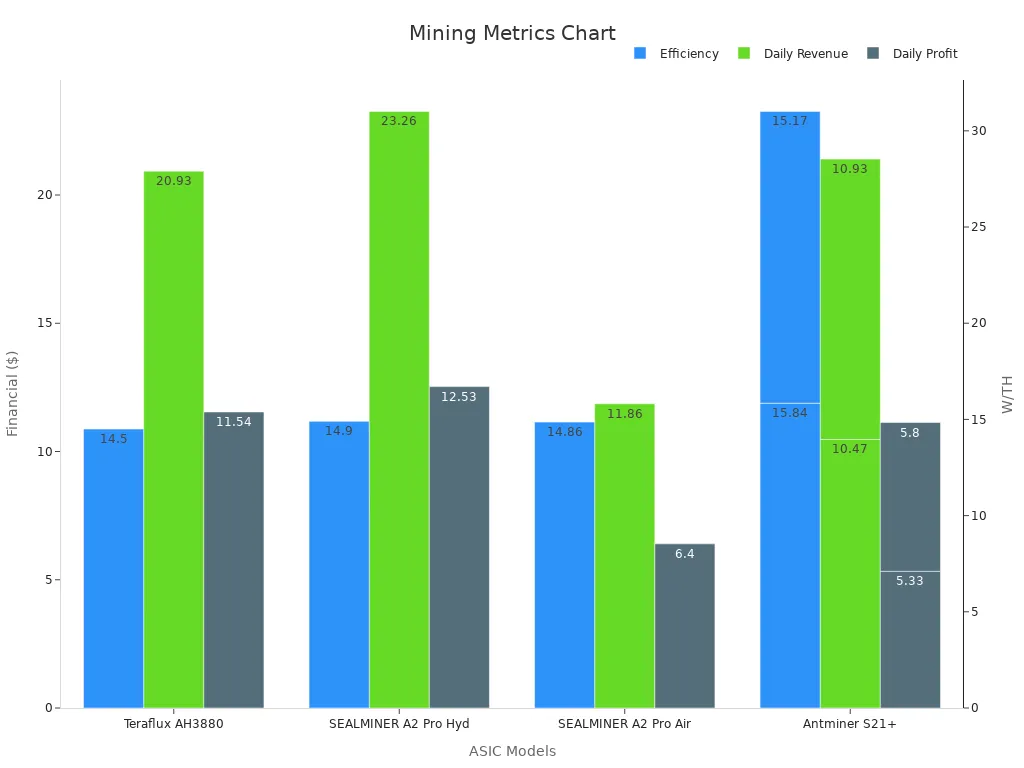
For instance, the Teraflux AH3880 has a hashrate of 450 TH/s and uses 14.50 W/TH. It earns $11.54 daily in profits. These numbers show why ASICs are so important in mining.
Model | Hashrate (TH/s) | Power (W) | Efficiency (W/TH) | Daily Revenue ($) | Daily Profit ($) |
|---|---|---|---|---|---|
Teraflux AH3880 | 450 | 6525 | 14.50 | 20.93 | 11.54 |
SEALMINER A2 Pro Hyd | 500 | 7450 | 14.90 | 23.26 | 12.53 |
Automotive and Industrial Applications
ASICs are key in cars and factories. They improve safety and reliability. In cars, they power systems like ADAS, which help drivers and make vehicles safer. In factories, they make robots and machines work better.
Car ASICs meet strict rules like AEC-Q100 for heat and reliability. Tests like HALT and HASS check how they handle real-world conditions. Following ISO 26262 ensures they are safe to use. These steps make ASICs trusted for important jobs.
Evidence Type | Description |
|---|---|
Manufacturing Standards | Car ASICs follow AEC-Q100 rules for heat and reliability. |
Testing Protocols | HALT and HASS test how they work in tough conditions. |
Safety Compliance | ISO 26262 ensures they are safe for cars. |
Reliability Analysis | FMEA finds and fixes possible problems in ASIC designs. |
Comparing ASICs with Other Technologies
ASICs vs FPGAs
ASICs and FPGAs are different in how they work. ASICs are great for specific tasks. They are fast and use less power. This makes them perfect for things like mining cryptocurrency or running AI systems. FPGAs, however, can be changed after being made. You can reprogram them for new tasks, which is useful for testing or jobs that need updates.
ASICs are better at doing one job very well. But FPGAs are better when you need flexibility. For example, FPGAs are used in real-time tasks because they respond quickly. Here’s a simple comparison:
Metric | ASICs | FPGAs |
|---|---|---|
Efficiency | Best for specific tasks | Less efficient for fixed tasks |
Flexibility | Cannot be changed | Can be reprogrammed |
Bandwidth | Higher for specific tasks | Lower unless upgraded with HBM |
ASICs vs GPUs
ASICs and GPUs are made for different purposes. ASICs are built for one job, like mining Bitcoin or speeding up AI tasks. GPUs, on the other hand, are made for handling many tasks at once. They are often used for graphics and data-heavy jobs.
Tests show how much faster ASICs can be. For example, ELSA-moderate is up to 157 times faster than GPUs. It also uses much less energy. Another example, SpAtten, is 162 times faster than a TITAN Xp GPU and 347 times faster than a Xeon CPU. These results show ASICs are better for specific tasks. But GPUs are more flexible and can handle many different jobs.
Choosing ASICs for Specific Use Cases
Picking the right chip depends on what you need. ASICs are best for tasks that need high speed and low power, like mining or 5G networks. If you need a chip that can change, FPGAs are a good choice. GPUs are great for jobs like AI or making graphics.
Think about what matters most, like speed, power use, or cost. ASICs are the most efficient for specific tasks. FPGAs and GPUs are better for general needs. By knowing your goals, you can pick the best chip for your project.
ASICs, or application-specific integrated circuits, are made for one job. They work faster and use less energy than other chips. In big projects, they save money by lowering parts and assembly costs. ASICs are used in areas like AI and telecom because they handle tough tasks well. Even though they are made for specific jobs, they can be adjusted for other uses too.
Benefit/Application | Description |
|---|---|
Saves Money | ASICs cut costs in large projects by using fewer parts. |
Better Performance | Designed for one task, they work faster and more efficiently. |
Can Be Used in Many Ways | Even though specific, ASICs can be changed for other tasks. |
Worth the Cost for Big Projects | High starting costs are okay if many chips are made. |
ASICs help industries grow by making technology faster and more efficient.
FAQ
How are ASICs different from general-purpose chips?
ASICs are made for one job and do it well. General-purpose chips can do many jobs but are slower and use more power.
Why do ASICs use less energy?
ASICs save energy by focusing on one task only. They avoid wasting power like chips that handle many tasks.
Can an ASIC be changed after it’s made?
No, you can’t change an ASIC once it’s built. They are fixed for one job. Use FPGAs if you need something flexible.
💡 Tip: Pick ASICs for jobs needing speed and low energy, like mining or AI work.