

A Programmable Logic Controller (PLC) is a specialized industrial computer designed to control machinery and processes. You’ll find PLCs at the heart of modern factories, ensuring operations run smoothly and efficiently.
The demand for PLCs continues to grow due to advancements in technology and the rise of smart manufacturing.
Here are some key facts about their prevalence:
The global PLC market is projected to grow from USD 16.3 billion in 2024 to USD 24.6 billion by 2033.
Industry 4.0 practices and IoT connectivity are driving adoption.
Modular PLCs are expected to capture 65% of the revenue share by 2037.
These numbers highlight the critical role PLCs play in automating industrial processes and optimizing operations.
Key Takeaways
PLCs help automate work, make it faster, and reduce mistakes.
They work quickly, connect easily, and handle tough jobs well.
PLCs repeat a cycle: read inputs, follow instructions, and send outputs.
Industries like cars, food, and energy use PLCs for safety and control.
However, PLCs can be expensive and need trained people to manage.
What is a Programmable Logic Controller?
Definition and purpose.
A Programmable Logic Controller (PLC) is a digital computer specifically designed for industrial environments. It monitors inputs, executes programmed instructions, and controls outputs in real-time. You can think of it as the brain behind automated systems, ensuring machines and processes operate efficiently. PLCs are essential in industries like manufacturing, energy, and transportation, where precision and reliability are critical.
PLCs simplify complex operations by automating repetitive tasks, reducing human error, and improving productivity.
For example, in a bottling plant, a PLC can monitor sensors to detect empty bottles, control robotic arms to fill them, and manage conveyor belts to move them along the production line.
Key features and characteristics.
PLCs come with several features that make them indispensable in industrial automation. These include:
Built-in communication support: PLCs can connect to other devices and systems seamlessly.
PID capability: They can handle proportional-integral-derivative control for precise process adjustments.
Fast scan time: PLCs process instructions quickly, ensuring real-time control.
Motion support capability: They can manage complex movements in robotics and machinery.
Rank | Feature/Characteristic |
|---|---|
1 | Built-in communication support |
2 | PID capability |
3 | Fast scan time |
4 | Total memory capability |
5 | Motion support capability |
6 | Removable memory cartridge |
7 | Wireless capability |

These features ensure PLCs can adapt to various industrial needs, making them a versatile choice for automation.
Importance in industrial automation.
PLCs play a vital role in modern industrial automation. They provide reliability, flexibility, and efficiency, which are essential for controlling complex processes. By automating tasks, PLCs help you reduce costs, improve safety, and increase production speed. Their ability to operate in harsh environments and handle multiple inputs and outputs makes them indispensable in industries like automotive, food processing, and oil and gas.
Without PLCs, many of the automated systems you rely on daily would not function as efficiently or reliably.
How Does a Programmable Logic Controller Work?
Overview of the operational cycle.
A Programmable Logic Controller operates in a continuous loop to manage industrial processes. This loop, known as the operational cycle, ensures the system responds to changes in real time. The cycle begins by reading input signals from devices like sensors or switches. Next, the PLC processes these inputs based on the programmed instructions stored in its memory. Finally, it sends output signals to control devices such as motors, valves, or lights.
This repetitive cycle allows the PLC to monitor and adjust operations efficiently. For example, in a conveyor belt system, the PLC might detect an object using a sensor, calculate its position, and activate a robotic arm to move it to the correct location.
Explanation of the scan cycle.
The scan cycle is the core process that defines how a PLC operates. It consists of three main steps:
Reading inputs: The PLC collects data from connected input devices.
Executing the control program: It processes the data using the programmed logic.
Updating outputs: The PLC sends signals to output devices based on the results of the program.
The time it takes to complete one scan cycle depends on several factors:
The complexity of the control program.
The number of input and output points.
The type of instructions used, such as simple logic or complex calculations.
You can monitor the scan time using the PLC’s programming software. This helps identify bottlenecks and optimize performance by fine-tuning the program or hardware configuration.
Example of a real-world application.
Imagine a food processing plant where products move along a conveyor belt. A PLC can control the entire operation. It reads input signals from sensors to detect the position of each product. Based on this data, it executes a program to determine when to activate a robotic arm. The arm then places the product into a packaging machine. Finally, the PLC updates the outputs to ensure the conveyor belt continues moving smoothly.
This example highlights how a PLC simplifies complex tasks, ensuring accuracy and efficiency in industrial processes.
Key Components of a Programmable Logic Controller

Central Processing Unit (CPU)
The Central Processing Unit (CPU) is the brain of a Programmable Logic Controller. It processes all the instructions and makes decisions based on the programmed logic. The CPU reads input data, executes the control program, and sends output signals to connected devices. It also manages communication between the PLC and other systems.
Modern CPUs are designed to handle complex tasks efficiently. They feature high-speed processing capabilities, ensuring real-time control of industrial processes. Many CPUs also include built-in memory for storing programs and data. This memory can be expanded with removable cartridges, offering flexibility for larger applications.
Without the CPU, the PLC would not function, as it is responsible for executing every operation.
Power supply
The power supply provides the necessary energy for the PLC to operate. It ensures that all components, including the CPU and input/output modules, receive a stable and reliable power source. Most PLCs can run on either AC or DC power, with common operating voltages being 24V DC, 120V AC, and 240V AC.
A stable power supply is critical for preventing malfunctions. For example, fluctuations in voltage can disrupt the PLC’s operations, leading to errors or downtime. High-quality power supplies are designed to maintain efficiency and reliability, even in harsh industrial environments.
Always ensure your PLC’s power supply matches the system’s requirements to avoid performance issues.
Input/output modules
Input/output (I/O) modules act as the communication bridge between the PLC and external devices. Input modules collect data from sensors, switches, or other input devices, while output modules send signals to actuators, motors, or lights. These modules enable the PLC to interact with the physical world.
Digital I/O modules are essential for handling on/off signals, while analog modules manage variable signals like temperature or pressure. For example, a digital output module might control a conveyor belt motor, while an analog input module monitors the temperature of a furnace.
Feature | Specification |
|---|---|
High-speed digital outputs | Four |
External load power | Yes |
Single-ended outputs | Up to 500-kHz (5-V), 100-kHz (24-V) |
Power consumption | 210-mW (backplane), 300-mW (5-V load) |
Transition time | Less than 100-ns with 15-m cable |
These modules are designed for flexibility and scalability, making them suitable for various industrial applications.
Communication modules.
Communication modules in a Programmable Logic Controller (PLC) allow you to connect the PLC to other devices and systems. These modules enable seamless data exchange, making it possible to monitor and control processes remotely. They play a critical role in ensuring your automated systems operate efficiently and stay connected to the broader industrial network.
Modern communication modules support various protocols, such as Ethernet/IP, Modbus, and Profibus. These protocols ensure compatibility with different devices and systems. For example, Ethernet/IP is widely used for high-speed data transfer, while Modbus is ideal for connecting legacy equipment. By selecting the right communication module, you can integrate your PLC with existing systems and future-proof your automation setup.
Communication modules are essential for industries that require real-time data sharing and remote monitoring.
To meet industry standards, communication modules must comply with strict regulations. For instance, in industries like pharmaceuticals or food processing, PLCs must adhere to FDA requirements. This includes documenting and validating communication modules to ensure safety and quality. Automating the generation of wiring diagrams and reports can help you achieve compliance more efficiently. Additionally, protocols like Title 21 CFR Part 11 govern electronic records and signatures, ensuring your PLC systems meet regulatory expectations.
Protocol | Use Case | Speed |
|---|---|---|
Ethernet/IP | High-speed data transfer | Up to 1 Gbps |
Modbus | Legacy equipment integration | 10 Mbps |
Profibus | Field device communication | 12 Mbps |
Communication modules not only enhance connectivity but also improve system reliability. They allow you to monitor operations in real time, troubleshoot issues remotely, and optimize performance. By leveraging these modules, you can ensure your PLC systems remain efficient and compliant with industry standards.
Role of Input/Output Devices in PLC Operations
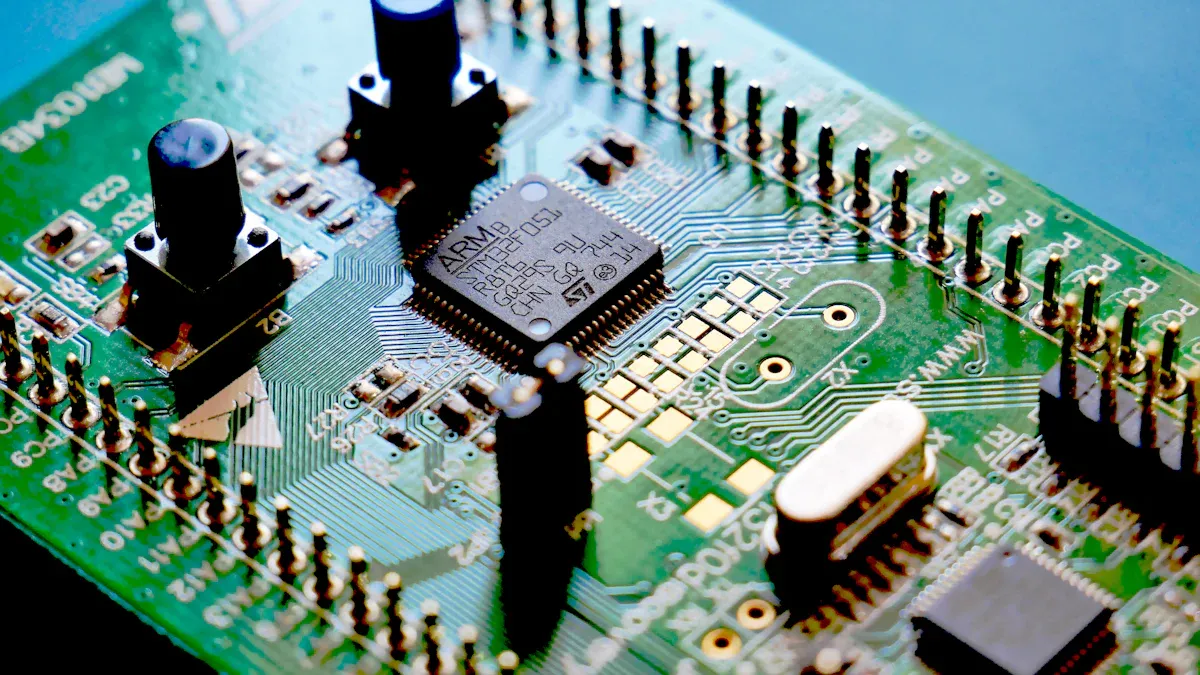
Types of input devices.
Input devices play a critical role in feeding data to a Programmable Logic Controller. These devices monitor physical conditions and convert them into electrical signals that the PLC can process. Common types of input devices include:
Discrete input devices: These devices provide binary signals, such as ON/OFF states. Examples include push buttons, limit switches, and proximity sensors.
Analog input devices: These devices measure variable signals like temperature, pressure, or voltage. Examples include thermocouples, RTDs (Resistance Temperature Detectors), and pressure sensors.
Specialized input devices: These include devices like encoders, which provide precise position or speed data, and barcode scanners for inventory tracking.
Type of Input Device | Description | Example |
|---|---|---|
Discrete I/O Module | Provides ON/OFF status for inputs and outputs. | Push buttons, limit switches. |
Analog I/O Modules | Reads or provides voltage/current levels. | Thermocouples, RTDs. |
Specialized Devices | Offer specific data for unique applications. | Encoders, barcode scanners. |
These devices ensure the PLC receives accurate and timely data, enabling efficient process control.
Types of output devices.
Output devices execute the commands issued by the PLC, converting electrical signals into physical actions. The most common types include:
Actuators: These devices perform mechanical actions, such as opening a valve or moving a robotic arm.
Motors: PLCs control motors to drive conveyor belts, fans, or pumps.
Indicators: Lights, alarms, or displays provide visual or auditory feedback about system status.
Component | Description |
|---|---|
Output Devices | Control devices like motors, pumps, and valves, executing commands from the PLC. |
Actuators | Convert electrical signals into physical actions, such as moving a valve or robotic arm. |
Indicators | Provide feedback through lights or alarms, ensuring operators stay informed about system operations. |
These devices ensure the PLC can interact with the physical world, completing the automation loop.
Interaction between PLCs and input/output devices.
The interaction between a PLC and its input/output devices forms the backbone of industrial automation. Input devices send real-time data to the PLC, which processes the information using its programmed logic. The PLC then sends commands to output devices to perform specific actions.
For example, in a steel manufacturing plant, sensors (input devices) monitor the temperature of molten metal. The PLC processes this data and adjusts the flow of coolant through valves (output devices) to maintain the desired temperature. This seamless interaction ensures precision and efficiency.
Device Type | Function |
|---|---|
Sensors | Provide status of a device or process as inputs to the PLC by converting physical information into electrical signals. |
Actuators | Convert received electrical signal outputs into physical actions (e.g., valves, motors). |
Other Devices | Include industrial robots, elevators, etc., that perform physical operations controlled by PLCs. |
By integrating input and output devices effectively, you can optimize operations and improve system reliability.
Applications, Advantages, and Limitations of PLCs
Common industrial applications.
Programmable Logic Controllers are widely used across various industries to automate processes and improve efficiency. In manufacturing, PLCs control assembly lines, robotic arms, and conveyor belts. In the automotive sector, they manage tasks like welding, painting, and quality checks. The food and beverage industry relies on PLCs for packaging, sorting, and temperature control.
Energy and utility companies use PLCs to monitor and control power distribution systems. In HVAC systems, they regulate temperature, airflow, and energy consumption. Pharmaceutical companies depend on PLCs for precise mixing, filling, and labeling of products.
Report Title | Description |
|---|---|
Programmable Logic Control Systems Market Report 2025 | Forecasts revenue growth for the PLC industry globally and regionally, analyzing trends and opportunities across sectors like automotive, HVAC, and energy. |
Programmable Logic Controllers (PLC) Market | Segments the market by type, component, industry vertical, and region, providing insights into applications in sectors such as food & beverage and pharmaceuticals. |
These applications demonstrate the versatility of PLCs in automating complex tasks across industries.
Advantages of using PLCs.
PLCs offer several advantages that make them indispensable in industrial automation. They handle intricate tasks with precision, ensuring accuracy in every step of the production process. This improves quality control and reduces errors.
You can rely on PLCs to enhance efficiency and flexibility in operations. They adapt to various industrial needs, allowing you to modify processes without significant downtime. Automation with PLCs also increases worker safety by reducing exposure to hazardous environments.
Key benefits of PLCs:
Increased efficiency in manufacturing processes.
Enhanced flexibility and adaptability.
Improved safety for workers.
Significant cost savings for businesses.
By streamlining operations, PLCs help you achieve better productivity and operational outcomes.
Limitations and alternative solutions.
Despite their advantages, PLCs have some limitations. They can be expensive to implement, especially for small-scale operations. Programming and maintenance require skilled personnel, which may increase costs. Additionally, PLCs may struggle with highly complex tasks that demand advanced computing power.
In such cases, alternative solutions like Distributed Control Systems (DCS) or Industrial PCs (IPCs) might be more suitable. These systems offer greater computational capabilities and are better suited for large-scale or highly intricate processes.
However, for most industrial applications, the benefits of PLCs outweigh their limitations. Their reliability, adaptability, and efficiency make them a preferred choice for automation.
A Programmable Logic Controller is the backbone of industrial automation, designed to control and optimize processes with precision. It operates through a scan cycle, reading inputs, executing logic, and sending outputs to devices. Key components like the CPU, power supply, and I/O modules ensure seamless operation. You’ll find PLCs in industries such as automotive, food processing, and electronics, where they manage tasks like motion control, safety monitoring, and data acquisition. As industries embrace flexible and efficient manufacturing, PLCs remain essential for meeting modern automation demands.
FAQ
What programming languages do PLCs use?
PLCs typically use ladder logic, function block diagrams, or structured text. These languages are designed for simplicity and ease of use in industrial settings. Ladder logic resembles electrical relay diagrams, making it intuitive for engineers familiar with traditional control systems.
Can you connect a PLC to the internet?
Yes, modern PLCs support internet connectivity through communication modules. This allows you to monitor and control processes remotely. Ethernet/IP and Modbus TCP are common protocols for enabling this functionality.
Tip: Secure your PLC network to prevent unauthorized access.
How do you troubleshoot a PLC?
Start by checking the power supply and connections. Use the PLC’s diagnostic tools to identify errors. Review the program logic for issues. If needed, consult the manufacturer’s manual for guidance.
Note: Regular maintenance reduces the likelihood of troubleshooting.
Are PLCs suitable for small-scale operations?
Yes, compact PLCs are ideal for small-scale operations. They offer cost-effective solutions for automating simple tasks. You can expand their capabilities by adding modules as your needs grow.
What is the lifespan of a PLC?
A PLC typically lasts 10–20 years, depending on usage and maintenance. Regular updates and proper care can extend its lifespan. Harsh environments may reduce durability, so choose a PLC designed for your specific conditions.
Reminder: Replace aging PLCs to avoid unexpected downtime.
Un guide clair et bien documenté sur les bases du PLC, très instructif ! Merci pour cette ressource précieuse. 😊