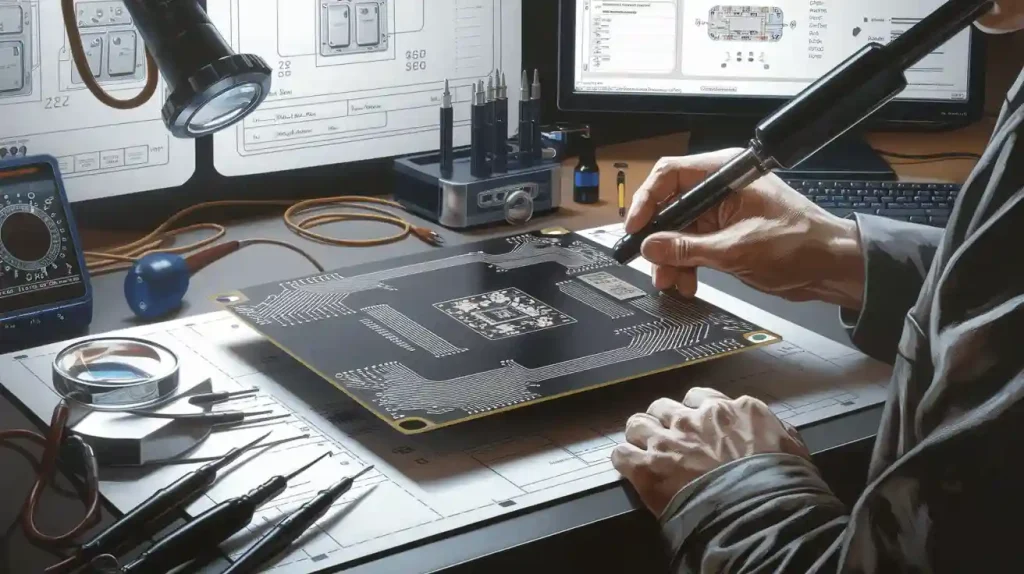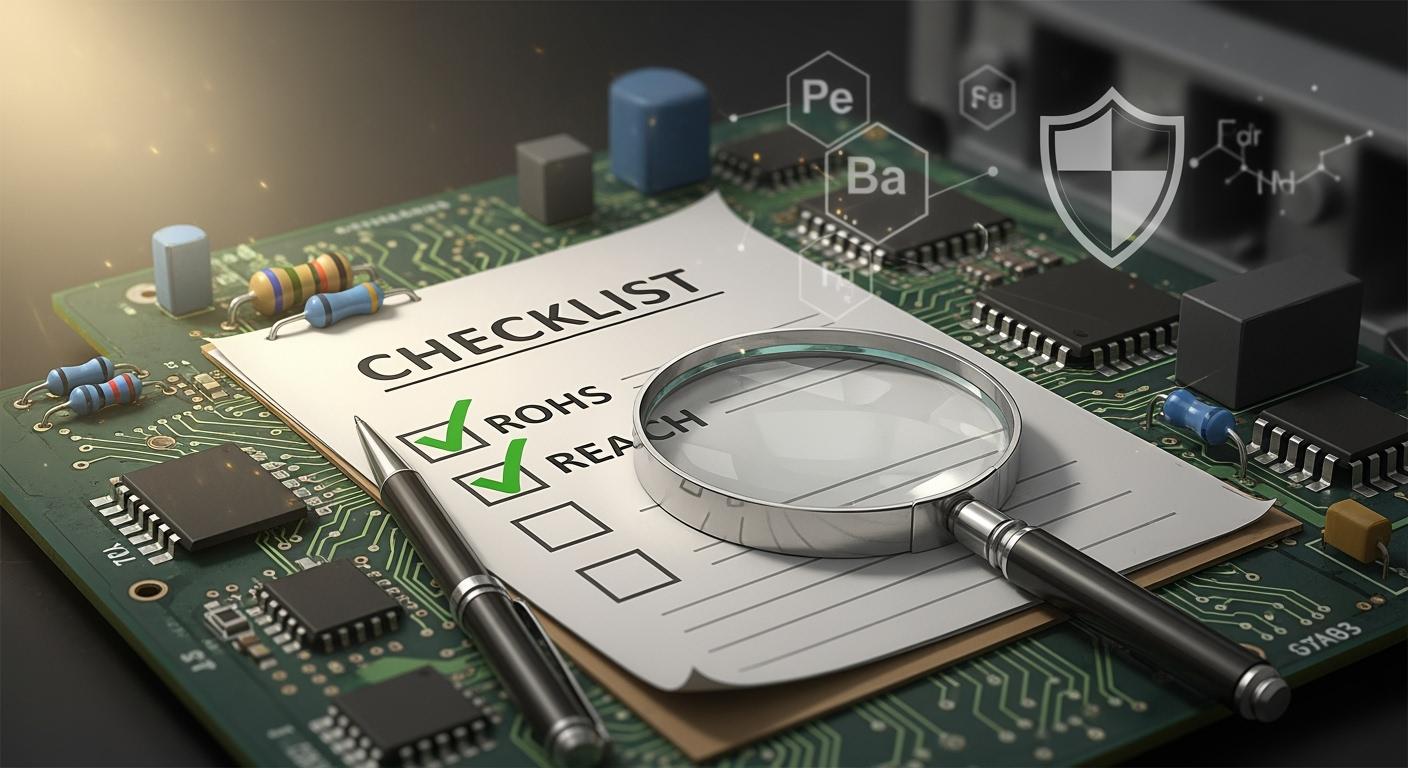
You face strict rules when you design or sell electronics in the EU. ROHS and REACH set limits on hazardous substances and demand clear records. You must talk with your supply chain, gather material data, and check substances in your products. You need to test materials and keep a Declaration of Conformity. Regular risk checks help you spot problems early. You must review updates and track changes.
Key Takeaways
Learn about ROHS and REACH rules. This helps your products follow EU safety laws. Knowing this stops fines and product recalls.
Check your products for banned substances often. Following new lists keeps people and nature safe.
Keep good records and technical papers for rules. This helps you show you follow the rules during checks.
Talk with your suppliers to get material details. Good communication helps you follow the rules well.
Watch for changes in ROHS and REACH rules. Checking updates helps your products stay legal and ready to sell.
ROHS Compliance Requirements
ROHS Scope
You need to know what ROHS covers before you start. ROHS is about electrical and electronic products sold in the EU. It includes many types of equipment. You should check if your product fits in one of these groups:
Large household appliances
Small household appliances
IT and telecommunications equipment
Consumer equipment
Lighting equipment
Electrical and electronic tools
Toys, leisure and sports equipment
Medical devices
Monitoring and control instruments, including industrial monitoring and control instruments
Automatic dispensers
Other electrical and electronic equipment not listed above
ROHS rules apply to finished products and parts. You need to look at the eu rohs directive to see if your parts are affected. ROHS has changed over time. The table below shows how the rules grew:
Year | Directive | Changes Made |
|---|---|---|
2011 | RoHS 2 | Added more rules and more product types. |
2019 | RoHS 2.1 | Four new restricted substances were added: DEHP, BBP, DBP, DIBP. |
ROHS rules keep changing. You need to watch for updates to follow eu rohs rules.
ROHS Restricted Substances
ROHS sets strict limits for dangerous substances in products. You must check your products for these substances. They cannot go over the allowed amounts. The table below lists the substances and their limits:
Substance | Maximum Allowable Concentration |
|---|---|
Lead (Pb) | 0.1% by weight |
Mercury (Hg) | 0.1% by weight |
Cadmium (Cd) | 0.01% by weight |
Hexavalent Chromium (Cr6+) | 0.1% by weight |
Polybrominated Biphenyls (PBBs) | 0.1% by weight |
Polybrominated Diphenyl Ethers (PBDEs) | 0.1% by weight |
Bis(2-Ethylhexyl) Phthalate (DEHP) | 0.1% by weight |
Benzyl Butyl Phthalate (BBP) | 0.1% by weight |
Dibutyl Phthalate (DBP) | 0.1% by weight |
Diisobutyl Phthalate (DIBP) | 0.1% by weight |
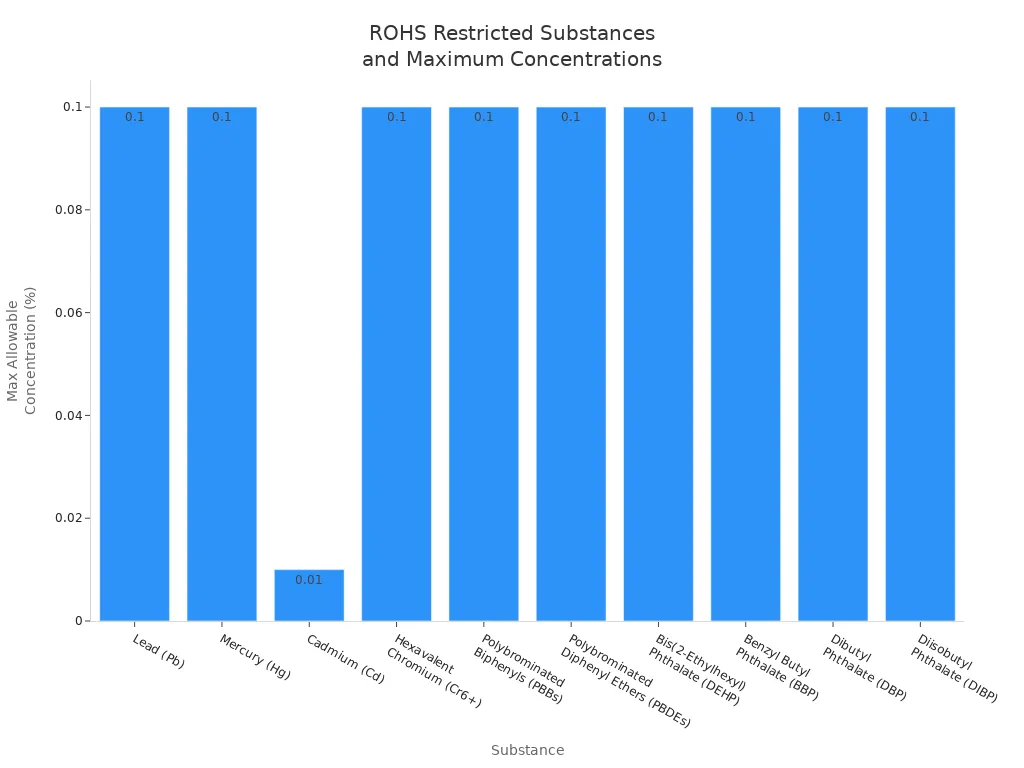
You must test your products for these substances. The eu rohs directive can add new substances. Four new ones were added in 2015 and started in 2019. The list and limits can change, so check for updates often. These rules help keep people and nature safe.
ROHS Compliance Steps
You need to do several things to meet rohs rules. First, gather facts about your products and materials. Get data from suppliers and check all parts for restricted substances. The steps are:
Find out what information you need.
Collect the information to show you follow the rules.
Check the information to make sure it is good and true for your technical documents.
Keep your technical documents up to date.
You must make a technical file for each product. The file should have:
A basic description of the product
Papers for materials, parts, and assemblies/sub-assemblies
Information that links technical papers to the right materials, parts, or assemblies/sub-assemblies
List of standards used for technical documents
You need to write a Declaration of Conformity (DoC). The DoC must include:
An ID number for the product, like its name and model
The legal name and address of the maker
The statement: “This Declaration of Conformity is issued under the sole responsibility of the manufacturer”
A way to identify the product, like a description or picture
The rules the product follows
The date the DoC was made
The signature and job title of the person in charge
Every product must have the CE marking to show rohs compliance. You cannot use other marks like “lead-free” or “ROHS label” because they can confuse buyers. You must keep your papers correct and current. You need to work with suppliers and check materials often. Common problems are collecting data, managing suppliers, and keeping up with new rules. The table below shows these problems:
Challenge | Description |
|---|---|
Data Collection | Getting good data is hard, especially when rules change. |
Supplier Management | Managing suppliers takes a lot of work and checking. |
Keeping Up with Regulations | Rules change a lot, so it is hard to keep up without help. |
You must solve these problems to keep rohs compliance and follow eu rohs rules.
ROHS Exemptions
ROHS rules have exemptions for some products and uses. You need to see if your products can get an exemption. The main exemption groups are:
Category | Description |
|---|---|
Military | Equipment used for defense or national security |
Space | Equipment sent into space like satellites or telescopes |
Automotive/Transportation | Vehicles for transport (not 2-wheeled vehicles) |
R&D | Equipment for research and development, including nuclear energy |
Non-road mobile machinery (NRMM) | Machines for farming, trains, boats, building work |
Large-scale fixed installations (LSFI) | Electrical systems, HVAC, big robots, and power lines over 250V |
Large-scale stationary industrial tools (LSIT) | CNC, milling, metal machines, testing machines, cranes |
Active Implantable Medical Devices (AIMDs) | Pacemakers, implanted defibrillators, insulin pumps |
Spare parts or replacements | For equipment sold before RoHS started – not for Category 11 products. |
You must check the eu rohs directive to see if your products fit the exemption rules. Exemptions are checked every four years. Each exemption has an end date and can be changed or removed. You need to ask for renewal at least 18 months before it ends. Renewal requests must meet strict deadlines.
Tip: Always look at the newest eu rohs rules for changes to exemptions and substance limits. Staying updated helps you avoid problems and makes sure your products follow all rules.
ROHS rules help protect people and the earth from dangerous substances. You must follow the rules and keep your papers up to date. The eu rohs directive gives clear rules for electrical and electronic products. You need to watch for rule changes and substance limits to keep following the rules and sell in the eu.
REACH Regulation Overview
REACH Scope
You need to know about the reach regulation before you work with products for the eu market. Reach covers almost every chemical in products, not just electronics. You must check if your products have any hazardous substances. The eu reach regulation applies to many industries and product types. You will see reach rules for:
Electronics
Furniture
Kitchen products
Pet products
Sports accessories
Stationery accessories
Watches
Footwear
Jewellery
Equipment and machinery
You must follow reach rules if you make, import, or use substances in the eu. The regulation affects companies inside and outside the eu. If you are a non-eu manufacturer, you can choose an Only Representative (OR) in the EEA or Northern Ireland. The OR needs to know about the substances you use. Importers in the eu become downstream users if you pick an OR. You must register substances with ECHA if you bring in more than one tonne each year, unless you get an exemption. Reach makes sure all chemical substances, whether made or imported, meet the same rules.
REACH Restricted Substances
You must check the svhc candidate list to see if your products have any restricted substances. The reach regulation updates the svhc list often. You need to know the newest additions. The table below shows some new substances added to the svhc candidate list:
Substance Name | EC Number | CAS Number | Reason for Proposing | Examples of use(s) in Electronics |
|---|---|---|---|---|
1,1,1,3,5,5,5-heptamethyl-3-[(trimethylsilyl)oxy]trisiloxane | 241-867-7 | 17928-28-8 | Very persistent and very bioaccumulative (vPvB) | Used as a silane coupling agent/adhesion promoter for organic-inorganic hybrid materials and in electronic materials like self-assembly materials and contact printing materials. |
decamethyltetrasiloxane | 205-491-7 | 141-62-8 | Very persistent and very bioaccumulative (vPvB) | Used as a heat transfer fluid and dielectric material in electronics. |
Reactive Brown 51 | 466-490-7 | – | Toxic for reproduction | Used as a textile treatment product and dye; not typically found in electronics. |
You must look at the svhc candidate list often. The reach regulation says you must tell your supply chain about any svhc in your products. You must also check for hazardous substances that may be restricted or banned. The reach regulation helps protect people and nature from dangerous chemicals. You need to stay updated on changes to the svhc list and reach rules.
REACH Compliance Steps
You must follow several steps to meet reach rules. The reach regulation sets strict rules for registration, evaluation, authorization, and restriction. You need to:
Collect and study product information for substances made or imported above one tonne each year.
Register substances with ECHA by sending a dossier with hazard information and risk checks.
Wait for ECHA to look at your registration and check if you meet reach rules.
Respond to ECHA decisions, which may restrict or ban some substances.
Get a reach certificate after ECHA approves your registration.
You must keep your papers up to date. The table below shows the main papers you need for reach compliance:
Requirement | Description |
|---|---|
Safety Data Sheet (SDS) | Must be up-to-date and include the Authorisation number. |
Compliance Check | Ensure use corresponds to the Authorisation dossier. |
Notification | Notify ECHA within three months of first supply of the substance. |
Compliance Report | Summarizes data collected to demonstrate compliance during inspections. |
You must also make a chemical safety report, look for safer options to hazardous substances, and plan to replace substances if safer choices are found. Member States’ authorities check reach rules. You must show you follow the rules during inspections. You need to tell your supply chain about any svhc in your products. Reach compliance helps you avoid penalties and makes sure your products meet eu reach rules.
Tip: Always check the newest reach regulation updates and look at the svhc candidate list. You need to keep your papers current and work closely with your suppliers.
REACH Exemptions
You may get exemptions under reach rules. You must check if your substances meet the rules for total or partial exemptions. The table below lists common exemptions and their rules:
Type of Exemption | Criteria |
|---|---|
Total Exemptions | Radioactive substances, substances in temporary storage under customs supervision, transport of hazardous substances, non-isolated intermediates, waste (not products recovered from waste) |
Partial Exemptions | Scientific research and development, food and feedstuffs, medicinal products |
Registration Not Required | Substances presenting minimal risk, previously registered substances, naturally occurring substances, substances recovered from waste recovery processes |
You must follow reach rules even if you get an exemption. You need to do your homework and follow all laws. You must tell your supply chain about any svhc in your products. The eu reach regulation checks exemptions often. You must send renewal requests at least 18 months before the review ends. Your report must include updates to your first application and any other needed parts.
You need to know that reach regulation affects almost every product and industry in the eu. You must check your products for hazardous substances, follow reach compliance steps, and keep your papers up to date. The eu reach regulation helps protect people and nature. You must stay informed and look at the svhc candidate list often to meet all reach rules.
ROHS and REACH Compliance Comparison
Key Differences
It is important to know how rohs and reach are not the same. Reach covers almost every product and chemical you use or sell. RoHS only looks at electrical and electronic equipment. Reach works for all industries, but rohs is just for electronics. If you work with electronics or chemicals, you need to check both rules.
Reach is a rule that covers many things.
RoHS is a rule for electrical and electronic equipment.
Reach covers almost all products and chemicals.
RoHS limits 10 dangerous substances.
Reach keeps adding more restricted substances.
The table below shows how reach and rohs are different:
Regulation | Scope | Restricted Substances | Specific Limits |
|---|---|---|---|
Reach | All products | Many chemical substances | Limits change for each substance |
RoHS | Electronic and electrical equipment | 10 specific substances | Less than 1000 ppm for most, less than 100 ppm for Cadmium |
Overlapping Requirements
Many products need to follow both rohs and reach rules. Both rules control dangerous substances in electronics and other goods. Both help keep people and nature safe. You see both rules in electronics and car parts. You need to check your products for both reach and rohs.
Both rohs and reach control dangerous substances.
Both want you to track substances in your supply chain.
Both help keep products safe for people and nature.
You must follow both rules for electronics and other products.
Note: Always check if your product needs rohs and reach rules. Sometimes both rules apply, so you need to pay attention.
Compliance Process
You need a simple plan to follow rohs and reach rules. Start by checking for dangerous substances in your products. Look at your supply chain to make sure chemicals follow reach rules. Use a system to track and watch compliance. Work with labs to test and get certificates. Check your compliance often and update your records.
Check for dangerous substances in your products.
Look at your supply chain for reach rules.
Track and watch compliance with a system.
Work with labs for testing and certificates.
Check your compliance and update records when needed.
You may have problems with rohs and reach rules. You need to handle lots of data and keep up with new rules. You must talk clearly with suppliers. You need good information about substances. Suppliers may use different names or CAS numbers for the same thing. You should ask vendors to confirm compliance. If you cannot get it, you need to check suppliers or look at old audits.
Use organized data to follow rules.
Make sure suppliers give you needed papers.
Use systems like ECLASS to sort product data.
Talk clearly with your supply chain.
Ask vendors to confirm they follow the rules.
Tip: Always keep your compliance records up to date. Regular checks and good talks with suppliers help you avoid problems with reach and rohs.
Impact of ROHS and REACH on Electronics Manufacturing

Influence on Product Design and Material Selection
You need to change how you design electronics because of ROHS and REACH. These rules do not allow some dangerous chemicals. You cannot use things like lead, mercury, or cadmium. You have to pick safer materials for your products. Reach asks you to check chemical risks and find better choices. RoHS makes you use materials that fit strict limits. You must plan your products to follow these rules from the start.
ROHS and REACH make you avoid some chemicals.
You need to choose safe materials that follow the rules.
Reach wants you to use options that are better for the environment.
Supply Chain and Sourcing Challenges
You have many problems when you manage your supply chain for ROHS and REACH. You must keep track of every part and material. You need to work with suppliers to make sure they follow the rules. You must keep papers that show you follow the rules at every step. Regular checks help you find problems early. You need to teach your team and learn about new rules.
Teach your team about the rules.
Work with suppliers to meet ROHS and REACH.
Check your supply chain often to find problems.
Track all parts and keep papers about compliance.
Use good systems to manage your compliance data.
Challenge Type | Description |
|---|---|
Compliance at material level | You must check every part for compliance, even small ones. |
Constant updates to regulations | You need to change quickly when ROHS or REACH rules change. |
Complex supply chains | It is hard to manage compliance with many suppliers. |
Financial burden | Following the rules can cost a lot, especially for small companies. |
Substitution of substances | Finding new materials can change how your product works. |
Manufacturing Process Adjustments
You need to change how you make electronics to follow ROHS and REACH. You must test materials and use safer ones. You need to check suppliers and keep records so you can trace parts. Special tests like X-ray fluorescence help you find banned chemicals. You must update your steps to avoid restricted substances. Testing and certificates help you avoid fines and recalls. You need to think about cost and the environment when you pick new materials.
Adaptation Aspect | Description |
|---|---|
Material Substitutions | You must find and test new materials that follow ROHS and REACH. |
Supply Chain Management | You need to work with suppliers and keep compliance papers. |
Product Testing & Certification | You must test products and get certificates to show compliance. |
Sustainability & Cost Management | You need to watch costs while meeting rules and helping the environment. |
Market Access and Global Trade Implications
You must follow ROHS and REACH to sell electronics in the EU. If you do not follow the rules, your products can be recalled, and you may pay fines. You need to keep papers ready for checks. You must test products and show they follow the rules before you ship them. If you break the rules, you can lose money and hurt your reputation. Following the rules helps you sell in new places and makes customers trust you.
Consequence | Description |
|---|---|
Product Recalls | Products that do not follow the rules get taken off shelves, and you lose money. |
Fines and Testing Costs | You may need extra tests and pay fines in EU countries. |
Loss of Market Access | You cannot sell in the EU if you do not follow ROHS and REACH. |
Tip: Always keep your compliance papers up to date and check the rules often. This helps you avoid trouble and keeps your products in global markets.
You must follow ROHS and reach rules to keep your products safe. Check your materials for restricted substances. Keep your records up to date. Work with your suppliers to get the right information. Test your products often. Train your team to understand reach and ROHS.
Tip: Review new updates every year. Good records help you pass inspections and avoid fines.
FAQ
What products must follow ROHS rules?
You must check electrical and electronic equipment. ROHS covers items like computers, toys, tools, and medical devices. If you sell these in the EU, you need to follow ROHS.
How do you know if a substance is restricted under REACH?
You should look at the SVHC candidate list. The European Chemicals Agency updates this list often. If your product contains a listed substance, you must inform your supply chain.
Tip: Always review the latest SVHC list before you launch new products.
What happens if you do not follow ROHS or REACH?
You may face fines, product recalls, or lose access to the EU market. You must keep records and test your products to avoid these problems.
Risk | Result |
|---|---|
Fines | Lose money |
Recalls | Remove products |
Market loss | Cannot sell in EU |
How can you prove ROHS and REACH compliance?
You need to keep technical files, test reports, and declarations of conformity. You should update these documents regularly. You must share them with authorities if asked.