Printed Circuit Boards (PCBs) utilize PCB Conformal Coating to shield against moisture and dust. This coating also provides protection from various environmental damages. When repairing or upgrading, it is essential to remove the PCB Conformal Coating carefully. Each type of coating requires a specific removal method, as using the incorrect technique can harm the board or its components. Always prioritize safety by employing the appropriate tools and safety gear. With diligent care, you can safeguard the PCB and complete your tasks successfully.
Key Takeaways
PCB coatings keep circuit boards safe from water, dust, and chemicals. This helps them last longer.
Pick the right way to remove the coating. Options include using chemicals, tools, heat, or tiny abrasive materials.
Stay safe by wearing gloves, goggles, and working in fresh air when removing coatings.
Once the coating is off, clean the PCB well. Check for damage before adding a new coating.
Testing often and using strong materials can keep the PCB working well and make it last longer.
What Are PCB Conformal Coatings and Why Remove Them?
Purpose and Benefits of PCB Conformal Coatings
PCB conformal coatings protect circuit boards from harm. They block moisture, dust, and chemicals from damaging the board. This helps stop corrosion and keeps the board working well. The coating makes the board tougher, so it works in rough conditions. Devices used outdoors or in factories benefit from this protection.
Another benefit is stopping electrical shorts. The coating insulates parts of the board. This lowers the chance of wires touching accidentally. It helps the device work safely and smoothly. Overall, these coatings help electronics last longer.
Common Reasons for Reworking or Removing Coatings
Sometimes, you need to remove PCB coatings. One reason is fixing or replacing broken parts. To reach the parts, the coating must be taken off carefully.
Another reason is problems with the coating itself. If the board isn’t cleaned before coating, it may not stick well. This can make the coating peel or fall off, leaving the board unprotected. Dirt left on the board can cause issues like tiny metal growths, which may lead to short circuits. Removing the coating fixes these problems.
You might also need to fix uneven or incomplete coatings. A smooth coating is important to keep the board safe and working properly.
Methods for Removing PCB Conformal Coatings
Chemical/Solvent Removal
Chemical removal is a common way to take off coatings. It uses special liquids to dissolve the coating for easy removal. This works well for acrylic, silicone, and urethane coatings. Acrylic coatings dissolve fast, but silicone and urethane need stronger chemicals and more time.
Pick a solvent based on its safety and how it works. Some popular solvents include:
Solvent | Uses and Features | Best Concentration |
|---|---|---|
Isopropyl Alcohol (IPA) | Removes oils and dirt; dries quickly. | 99% or higher |
Methyl Ethyl Ketone (MEK) | Stronger than IPA; removes tough coatings; handle with care. | N/A |
Toluene | Powerful; removes paints and coatings; dries slower. | N/A |
Xylene | Similar to toluene; dries at a medium speed. | N/A |
Trichloroethylene (TCE) | Strips hardened coatings without harming copper. | N/A |
To use this method, put the solvent on the coating and let it soak. Then, gently scrape or wipe off the softened coating. Always wear gloves and goggles, and work in a space with good airflow to stay safe.
Mechanical Removal
Mechanical removal scrapes or grinds the coating off the board. It’s good for hard coatings like epoxy or parylene that resist chemicals. Use tools like scrapers, rotary devices, or fine sandpaper for this method.
This method can damage the board if done carelessly. Scraping and grinding work well but may harm delicate parts. Use this method only if chemical or heat methods won’t work.
To avoid damage, use tools with adjustable settings and apply light pressure. Work on small areas to stay in control and protect the board. Mechanical removal is best for small fixes or coatings that can’t dissolve with chemicals.
Thermal Removal
Thermal removal uses heat to soften or burn the coating. This makes it easier to scrape off. It works well for tough coatings like epoxy that resist chemicals. Tools like heat guns, soldering irons, or special thermal devices are used.
Different coatings need specific heat levels to remove them. For example:
Coating Type | Heat Range (°C) | Features |
|---|---|---|
Silicone | -65 to 200 | Resists moisture and shock; flexible and easy to apply. |
Epoxy | N/A | Hard and chemical-resistant; tough to remove without damage. |
Acrylic | -59 to 132 | Cheap and strong; easy to apply but scratches easily. |
Urethane | N/A | Durable and solvent-resistant; hard to apply. |
Paraxylene | N/A | Very uniform; covers pins well; expensive and needs vacuum application. |
To remove coatings with heat, apply it until the coating softens. Then, scrape or brush it off. Be careful not to overheat the board, as too much heat can damage parts. Thermal removal works well for tough coatings but needs careful heat control to keep the board safe.
Micro-Abrasive Removal
Micro-abrasive removal is a careful way to take off coatings. It uses tiny abrasive materials, like aluminum oxide or baking soda, to gently remove the coating. A special tool sprays these particles onto the coated area. This lets you focus on specific spots without harming the board underneath.
This method is great for tough coatings like epoxy or parylene. These coatings don’t come off easily with chemicals or heat. It’s also safe for fragile boards where other methods might cause damage. Micro-abrasive removal lets you take off the coating bit by bit, keeping the board safe.
Tools for Micro-Abrasive Removal
You’ll need a micro-abrasive blasting system for this method. These systems usually include:
A blasting nozzle: Aims the abrasive material exactly where needed.
An air compressor: Pushes the abrasive particles with enough force.
A containment system: Collects used materials to keep the area clean.
You can change the pressure and abrasive type based on the coating. Softer abrasives, like baking soda, work for thin coatings. Harder ones, like aluminum oxide, are better for thick or tough coatings.
Advantages of Micro-Abrasive Removal
This method has many benefits:
Precision: Removes coating from small areas without touching nearby parts.
Versatility: Works on many coatings, even those resistant to heat or chemicals.
Minimal damage: The process is gentle and protects the board and its parts.
But, this method needs special tools and practice. Try it on a test board first. Always wear safety gear, like goggles and gloves, to protect yourself from the particles.
Using this method, you can safely remove coatings while keeping your PCB intact. It’s a great option for tricky repair jobs.
Tools and Techniques for Each Removal Method
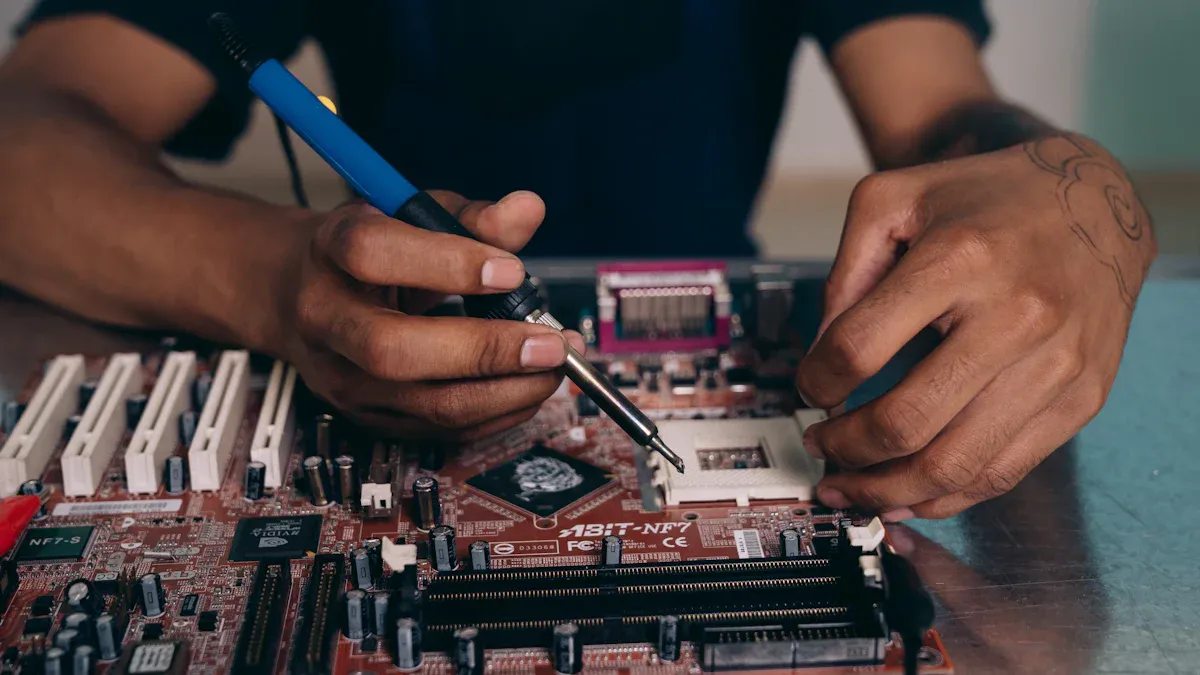
Tools for Chemical/Solvent Removal
Chemical methods dissolve conformal coatings like acrylic, silicone, and urethane. You need these tools and safety steps:
Solvents: Use strong ones like toluene or acetone for tough coatings. For acrylic, isopropyl alcohol (IPA) works well.
Container: Use a stainless steel container for soaking. Avoid plastic as it may break down.
Ventilation: Good airflow removes harmful fumes.
PPE: Wear gloves and goggles to protect your skin and eyes.
UV Inspection Lamp: A UV lamp helps find coatings and check removal.
Brushes and Compressed Air: These clean leftover residue after dissolving the coating.
Always follow the solvent instructions and stay safe.
Tools for Mechanical Removal
Mechanical removal scrapes or grinds coatings off the PCB. It works best for hard coatings like epoxy. You’ll need:
Scrapers and Dental Picks: These tools remove coatings in small areas.
Rotary Tools: Use these to grind tough coatings. Adjustable speed prevents PCB damage.
Fine Sandpaper: Smoothly removes coatings without harming the board.
Magnifying Glass or Microscope: Check closely to avoid damaging the PCB.
Use light pressure and work on small spots to stay in control.
Tools for Thermal Removal
Thermal removal uses heat to soften or burn coatings. This works for epoxy and silicone coatings. Tools you’ll need include:
Heat Guns: Start with low heat (about 100°C) and increase slowly.
Soldering Irons: Heat small areas precisely.
Thermal Parting Devices: These tools control heat better.
Sharp Blades: Cut softened coatings carefully to peel them off.
Test heat on a less important area first. Avoid overheating to protect the PCB.
Tools for Micro-Abrasive Removal
Micro-abrasive removal uses special tools to protect the PCB. These tools help focus on small areas without harming nearby parts. Knowing how they work ensures better results.
Important Tools for Micro-Abrasive Removal
Blasting Nozzle: Aims abrasive particles exactly where needed. It spreads the material evenly for smooth removal.
Air Compressor: Pushes abrasive particles with adjustable pressure. This lets you control how hard the coating is hit.
Containment System: Collects used materials to keep your workspace clean and safe.
Abrasive Media: Materials like aluminum oxide or baking soda are used. Aluminum oxide removes tough coatings, while baking soda is safer for delicate surfaces.
Features and Challenges of Micro-Abrasive Tools
Micro-abrasive tools are precise and flexible. Studies show they work well for fragile PCBs. But, they can wear out quickly and have limits in deep drilling.
Feature/Challenge | Details |
|---|---|
Cutting Temperature | Stays low, around 127~143℃ for drilling 20-layer PCBs. |
Tool Wear | Hard fillers in PCBs cause tools to wear down fast. |
Common Coatings | Diamond, DLC, TiN-based, and CrN-based coatings are often used. |
Diamond Coating Benefits | Resists wear and reduces friction effectively. |
Lifespan of Diamond Coated Tools | Lasts up to 20,000 holes, much longer than uncoated tools. |
Limits of Diamond Coating | Brittle edges may break during deep drilling tasks. |
Helpful Tips for Best Results
Adjust air pressure based on the coating type. Use lower pressure for thin coatings and higher pressure for tough ones.
Pick the right abrasive media. Baking soda is gentle and protects sensitive parts.
Check your tools often for wear. Worn tools can lower accuracy and performance.
Using proper tools and methods keeps your PCB safe during coating removal. Micro-abrasive removal is a dependable way to handle difficult coatings.
Safety Precautions During Removal
Safe Handling of Chemicals and Solvents
Be careful when using chemicals and solvents. Always wear gloves and safety glasses to protect your skin and eyes. For stronger chemicals, use respirators and aprons for extra safety. Work in a space with good airflow to avoid breathing harmful fumes.
Store chemicals properly. Label containers with names and warnings. Keep solvents in fire-safe cabinets, away from anything that could react dangerously. Follow rules when throwing away solvents. Clean up spills to avoid contamination.
Tip: Have a spill kit ready to clean up accidents quickly.
Protecting the PCB from Damage
Keep the PCB safe while removing coatings. Use tools with adjustable settings to control heat or pressure. Be gentle when scraping or grinding to avoid breaking small parts.
Don’t overheat the board when using heat tools. Too much heat can bend the PCB or harm sensitive parts. Test solvents on a small area first to check if they’re safe for the board.
Check the PCB often while working. Use a magnifying glass to spot damage early. Work on small areas to stay in control and avoid mistakes.
Note: Cover nearby parts with tape to protect them from chemicals or tools.
Personal Protective Equipment (PPE) Requirements
Wearing the right PPE keeps you safe while working. Gloves protect your hands from chemicals and tools. Safety glasses keep your eyes safe from splashes and flying bits. Use a respirator to avoid breathing harmful fumes from strong solvents.
Pick PPE based on the method you’re using. For scraping, wear gloves with a good grip. For chemicals, use gloves and aprons that resist chemicals. Make sure your workspace has good airflow or use a fan to remove fumes.
Reminder: Check your PPE before using it. Replace anything that’s broken or worn out.
Choosing the Best Removal Method for Your Coating Type
Acrylic Coatings
Acrylic coatings are cheap and easy to apply. Removing them is simple because they dissolve fast in solvents like isopropyl alcohol or acetone. Think about how well the coating sticks and the environment before picking a method.
Solvent Removal: Solvents work great for acrylic coatings since they dissolve easily. Apply the solvent, let it soak, and then remove the coating. This method is best for boards in cold places because acrylic coatings handle temperature changes well.
Mechanical Removal: Use scrapers or small rotary tools for tiny spots. Be careful not to harm the board, as acrylic coatings are softer than others.
Thermal Removal: Heat guns can soften acrylic coatings, but this method isn’t common because they melt at low temperatures.
Tip: Acrylic coatings stick well to flux residues, making them less likely to peel. This makes them good for areas with changing temperatures.
Silicone Coatings
Silicone coatings are flexible and resist water and shocks. Removing them takes planning because they are tough and chemically unique.
Chemical or Solvent Removal: Use a solvent that matches the coating’s makeup to swell and remove it.
Micro-Abrasive Removal: Tiny particles like baking soda or aluminum oxide can safely take off silicone coatings without harming the board. This is great for delicate boards.
Mechanical Removal: Tools like drills or grinders can scrape off silicone coatings but might damage sensitive parts.
Thermal Removal: You can de-solder through the coating, but control the heat to avoid damage.
Silicone coatings work well in tough conditions. For example, some silicone coatings survive over 500 thermal shocks without cracking. This makes them perfect for extreme environments.
Note: Micro-abrasive removal is often the safest and most precise way to rework silicone coatings.
Urethane Coatings
Urethane coatings are strong and resist solvents, making them hard to remove. Their stiffness can cause peeling, especially with heat stress.
Chemical or Solvent Removal: Strong solvents like methyl ethyl ketone (MEK) or toluene are needed. These dissolve the coating slowly, so be patient and careful.
Mechanical Removal: Use rotary tools or fine sandpaper for small areas. This works for hard coatings but needs precision to avoid damaging the board.
Thermal Removal: Heat guns can soften urethane coatings, but too much heat can harm the board.
Micro-Abrasive Removal: Aluminum oxide particles can remove urethane coatings effectively. This method is best for boards with detailed designs.
Tip: Stiff urethane coatings are more likely to peel. Use flexible ones for projects needing more give.
Other Coating Types
When working with PCB conformal coatings, you might find other types. These include epoxy, parylene, and hybrid blends. Each has special features and challenges. Knowing how to remove them helps you handle any task.
Epoxy Coatings
Epoxy coatings are very strong and durable. They resist chemicals, water, and physical damage. But their toughness makes them hard to remove. Removing epoxy takes care and patience.
Removal Methods:
Mechanical Removal: Use tools like rotary devices or sandpaper. Apply gentle pressure to avoid harming the PCB.
Thermal Removal: Heat guns can soften epoxy, but too much heat can damage the board.
Chemical Removal: Strong solvents like methylene chloride may work. Handle these carefully as they can be toxic.
Tip: Always test a small spot first to find the best method for your epoxy coating.
Parylene Coatings
Parylene coatings are applied as a thin, even layer. They stick tightly to the PCB and are great for high-performance uses. They resist water and have strong electrical insulation. However, they are hard to remove due to their application process.
Removal Methods:
Micro-Abrasive Removal: This is the best way to remove parylene. Use abrasives like aluminum oxide to gently take off the coating without harming the board.
Chemical Removal: Special solvents with fluorinated compounds can dissolve parylene. These are costly and need good ventilation.
Plasma Etching: This advanced method uses ionized gas to break down the coating. It’s precise but needs special equipment.
Note: Parylene coatings are often used in medical and aerospace devices. Removing them may need professional tools.
Hybrid Coatings
Hybrid coatings mix features from different types, like silicone and urethane. They aim to combine flexibility, strength, and chemical resistance. Their mixed nature can make removal tricky.
Removal Methods:
Chemical Removal: Use a solvent that works on the main material in the blend. For example, use MEK for urethane-heavy hybrids.
Mechanical Removal: Scrapers or rotary tools can help, but work carefully to avoid damaging the PCB.
Thermal Removal: Heat can soften some hybrid coatings. However, uneven heating might leave residue behind.
Coating Type | Best Removal Method | Challenges |
|---|---|---|
Epoxy | Mechanical or Thermal | Very tough; may harm the PCB. |
Parylene | Micro-Abrasive or Plasma | Needs special tools. |
Hybrid | Chemical or Mechanical | Hard to predict due to mix makeup. |
Reminder: Always check the coating type before starting. Hybrid coatings may need trial and error to find the best removal method.
Final Thoughts on Other Coating Types
Each coating type has its own challenges. By learning their features and removal methods, you can handle any PCB project confidently. Always focus on safety and accuracy to protect yourself and the PCB.
Recoating and Keeping PCB Safe After Removal
Steps to Recoat the PCB
Once the coating is removed, a new layer is needed. Follow these simple steps to recoat the PCB properly:
Clean the PCB Well
Get rid of any leftover coating residue. Use isopropyl alcohol or a similar cleaner to wipe the board. Make sure it’s fully dry before moving on.Check for Damage
Look for any harm caused during removal. Check for broken parts, loose pieces, or scratches. Fix these problems before adding a new coating.Pick the Right Coating
Choose a coating that fits where the PCB will be used. Acrylic coatings are good for normal conditions, while silicone works better in tough environments.Apply the Coating Evenly
Use a brush, spray, or dip to cover the board. Make sure the coating spreads evenly over all parts. Avoid thick spots, as they can cause uneven protection.Let the Coating Dry
Follow the instructions for drying the coating. Some need air drying, while others need heat. Proper drying helps the coating stick well and protect better.
Tip: Use a UV lamp to spot areas you might have missed.
Keeping the PCB Protected and Working Well
To keep the PCB safe and working for a long time, focus on testing and using strong materials. Try these ideas:
Test Regularly
Run tests like peel strength or bending tests to check the coating. These tests help find weak spots early.Use Durable Materials
Pick coatings that last. Tests like heat stress and aging tests show how well the coating handles tough conditions.Take Extra Precautions
Shield the PCB from things like water and dust. Use covers or extra layers if the PCB is in a harsh environment.
Test Type | What It Checks |
|---|---|
Peel Strength | Makes sure the coating stays strong under heat, vibration, and long use. |
Flexural Testing | Tests how flexible boards hold up when bent repeatedly. |
Thermal Stress Testing | Checks stability under high heat, focusing on solder joints and connections. |
High-Temperature Aging Test | Measures how well the coating lasts in long-term heat exposure. |
Accelerated Life Testing (ALT) | Predicts failures under stress to improve design and durability. |
By following these steps and tips, you can make sure the PCB coating lasts and keeps the board working well.
Taking off PCB conformal coatings needs good planning and proper tools. You can pick chemical, mechanical, thermal, or micro-abrasive methods. The right method depends on the coating type. Knowing the coating’s features helps you get better results.
Stay Safe: Always wear safety gear and work in a space with airflow. Protect the PCB by testing on small spots and using gentle methods.
Check for damage after removing the coating to keep the PCB working. Add a new coating that fits the board’s needs. Regular checks and care will make your board last longer. Follow these tips to handle any PCB project with confidence.
FAQ
What is the safest way to remove PCB coatings?
Chemical removal is usually the safest option. Use solvents like isopropyl alcohol for acrylic coatings. Always test the solvent on a small spot first. Wear gloves, goggles, and work in a ventilated area to stay safe.
Can tools be reused for different removal methods?
Yes, but clean tools well before switching methods. For example, brushes used for chemical removal should be free of residue before mechanical use. This avoids contamination and gives better results.
How can you tell what type of coating is on a PCB?
Use a UV lamp to check for glowing spots. Acrylic coatings shine under UV light. For harder coatings, ask the PCB maker or test small areas with solvents to see how they react.
Is micro-abrasive removal good for all coatings?
No, it works best for tough coatings like epoxy or parylene. Don’t use it on soft coatings like acrylic, as it might harm the PCB surface. Pick the right abrasive material based on the coating type.
What if the PCB gets damaged during removal?
Check the board for broken parts or scratches. Fix damaged pieces before adding a new coating. Use soldering tools for electrical repairs and epoxy for structural fixes. Test the PCB after repairs to make sure it works properly.