You have probably seen foldable phones in many places. These foldable devices are not just cool. They change how you use your phone every day. Think about opening a foldable smartphone. The screen can go from 6.5 to 7.5 inches. Most regular phones only reach 6.2 inches. Here is a quick comparison:
Type of Smartphone | Average Screen Size (inches) |
|---|---|
Foldable Smartphones | 6.5 – 7.5 |
Traditional Smartphones | 6.2 |
Foldable mobile phones help you do many things at once. You can watch movies and work while moving. You get a new experience that makes regular phones seem old.
Key Takeaways
Foldable phones have bigger screens. This helps you do more things at once. You can watch videos and chat at the same time.
These phones are small when closed but have big screens when open. They are easy to carry and use every day. They fit in your pocket but feel like a tablet.
New hinge technology and strong materials make foldable phones tough. They are built to last and still look good.
Foldable smartphones are changing what people want in phones. More companies are making them, so features get better and prices go down. You will see more options and new ideas soon.
Split-screen features on foldable phones help you get more done. You can learn faster by watching lessons and taking notes at the same time.
Foldable Phones: New Form Factors
Compact Size, Larger Screens
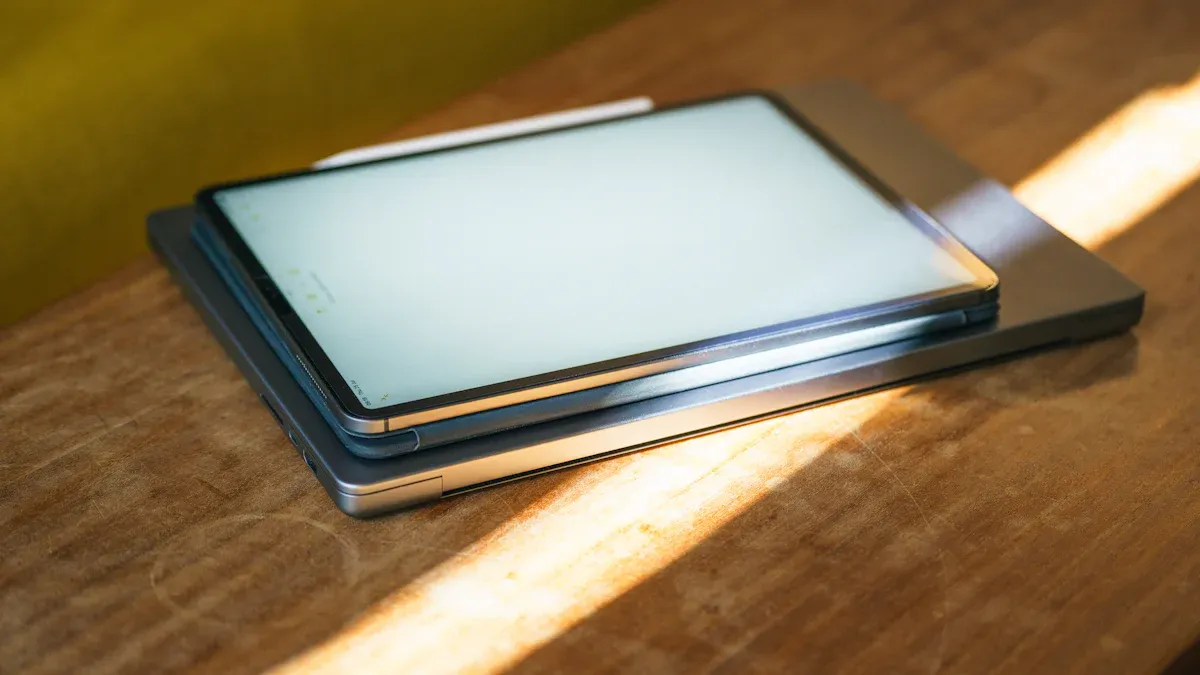
Have you ever wanted a phone that fits in your pocket but has a big screen? Foldable phones let you have both. They feel small and light when closed. When you open them, the screen gets much bigger. This is possible because of flexible display technology and smart hinges.
Let’s check out the two main foldable shapes you see today:
Feature | Book-Style (Tablet Fold) | Flip-Style (Clamshell) |
|---|---|---|
Examples | Samsung Galaxy Fold, Huawei Mate X | Motorola Razr (2019), Samsung Galaxy Z Flip (2020) |
Form Factor | Opens like a book – phone to tablet | Folds vertically – small to full phone |
Strengths | Large display, great for multitasking, tablet-like use | Compact, pocket-friendly, nostalgia factor |
Weaknesses | Bulkier, heavier, and very high prices | Smaller main screen, less power in early models |
Target Users | Productivity-focused users, tech enthusiasts | Style-driven users, fans of portability, and flip nostalgia |
These designs give you more options. If you want a big screen for games or work, pick the book-style foldable. If you like style and want a phone that fits anywhere, the flip-style is a good choice.
Engineers had to solve hard problems to make foldable screens. They needed displays that bend many times and do not break. Now, companies can make lots of these flexible screens. The screens are thinner and have fewer layers, so the phone stays slim when folded.
Hinge technology is much better now. For example, the Galaxy Z Fold7 uses a third-generation Armor FlexHinge. This hinge is 27% thinner and 43% lighter than before. It uses new metals to make it stronger and last longer. The teardrop hinge, used in the Galaxy Z Fold 5 and Flip series, lets the phone fold flatter and makes the crease smaller. These upgrades make the foldable phone feel smooth and strong every time you open or close it.
Portability and Ergonomics
Foldable phones give you a big screen for videos or work. You can fold them up and put them in your pocket when you finish. Phones like the nubia Flip 5G show you can have a full screen and still carry your phone easily.
Here’s a quick look at how foldable phones compare to regular smartphones:
Feature | Foldable Phones | Traditional Smartphones |
|---|---|---|
Screen Size | Larger when unfolded, enhancing viewing experience | Fixed screen size limits viewing experience |
Multitasking | Better multitasking capabilities with split-screen | Restricts simultaneous app usage |
User Experience | More spacious screen for activities like reading | Less comfortable for extended use |
Foldable phones help you do more things at once. You can read, watch, and chat on one device. The bigger screen is easier on your eyes, especially if you use your phone a lot.
Foldable designs also think about how you hold and use your phone. Sometimes you use one hand, sometimes two. Good foldable phones put buttons where your thumbs can reach. This makes the phone feel easy and comfortable, even when you change between folded and open.
Tip: If you want a phone that fits your busy life, a foldable can help you stay productive and comfortable, wherever you go.
Foldable phones are changing what people expect from their devices. You get more screen, more comfort, and more ways to use your phone every day.
User Experience with Foldables
Multitasking and Multi-Window Features
Have you ever wanted to do two things at once on your phone? Foldable phones make this simple. You can open more than one app at the same time. For example, you can watch a video and chat with friends. You can also check your calendar while writing an email. The wide screen gives you lots of space. You do not feel crowded when you work or play.
Here’s a quick look at how foldable smartphone features compare to regular phones:
Feature | Foldable Phones | Standard Smartphones |
|---|---|---|
Screen Size | Larger screens for multitasking | Smaller screens limit multitasking |
Side-by-Side Functionality | Multiple apps can be used simultaneously | Limited to one app at a time |
Split-Screen Capability | Enhanced split-screen functionality | Basic split-screen options available |
Foldable smartphones help you do more things at once. You can use three apps at the same time. It is easy to switch between tasks. You can join a video call without holding your phone. FlexMode lets you set your phone on a table. You can use it like a small laptop. You can edit documents, look up facts, and chat all at once. This makes school and work much easier.
Tip: Try using split-screen to watch a lesson and take notes. You will learn faster and remember more!
Immersive Media and Content Creation
Foldable phones change how you watch movies and play games. The big screen feels like a small tablet. You see more details and enjoy a better experience. When you open your foldable, videos look brighter. Games feel more exciting. You can read comics or e-books without squinting.
If you like taking photos or making videos, foldable smartphone features help you create and edit anywhere. Devices like the Pixel Fold give you a big screen to review and edit your pictures. The Galaxy Z Fold7 has a strong camera for sharp, clear photos. You can switch between phone and tablet modes. This makes it easy to work wherever you are.
Here are some ways foldable phones improve user experiences for creators:
Review and edit photos on a bigger screen.
Switch between modes for more flexibility.
Use high-resolution cameras for better pictures.
Foldable smartphones make media and creativity easy and fun. You get more space, better tools, and a smoother experience every time you open your phone.
Innovation in Foldable Smartphone Design
Materials and Engineering Advances
Have you ever wondered why foldable phones can bend? It is because of new materials and smart design. Flexible display technology uses polyimide substrates and copper foil. These materials let the screen bend easily and smoothly. Some foldable smartphone technology uses a liquid metal called amorphous alloy. This metal is stronger than titanium. It goes back to its shape after bending. This helps stop the screen from getting creases.
Manufacturers want foldable devices to be strong. The Galaxy Z Fold6 uses Armor Aluminum for its frame and hinge. This makes the phone tougher if you drop it. Water resistance is also important. Phones now have an IP48 rating. You do not need to worry about splashes or rain. Engineers add metal parts to make the phone last longer.
Here’s a table that shows some improvements:
Improvement Type | Description |
|---|---|
Enhanced Materials | Armor Aluminum frame and hinge for better durability. |
Water Resistance | IP48 rating protects against water and corrosion. |
Structural Durability | Reinforced metal design increases strength and wear resistance. |
These new ideas mean you can use your foldable every day. Your device feels strong and looks cool.
Software and AI Integration
Software makes foldable smartphone technology even smarter. You get features that change to fit how you use your phone. AI learns what you do and changes the interface for you. For example, AI saves battery by turning off parts of the screen when folded. It also lets you search by circling things on the screen.
Here are some cool things AI does for foldable phones:
Suggests tone and translations in chats.
Edits photos with smart tools.
Gives live translations during calls.
Summarizes notes and helps you stay productive.
Customizes the interface based on your actions.
Optimizes display settings for multitasking.
Foldable devices can be used folded or unfolded. The software changes so you can use one hand or two. When you open your phone, the screen gets bigger. You can use more than one app at once. The UI goes from simple to advanced with more features.
Features | Folded State | Unfolded State |
|---|---|---|
App Interaction | Regular phone experience | Immersive, larger screen |
Single app | Multiple apps at once | |
Screen Continuity | No special handling | Seamless transition |
App Design | Simple UI | Advanced features for big screens |
AI and software make your foldable phone feel personal and easy. Your device learns from you and helps you do more.
Tip: Try using gesture search and multi-window features. You will see how foldable smartphone technology makes life easier!
Popular Foldable Phones on the Market
Samsung Galaxy Z Series
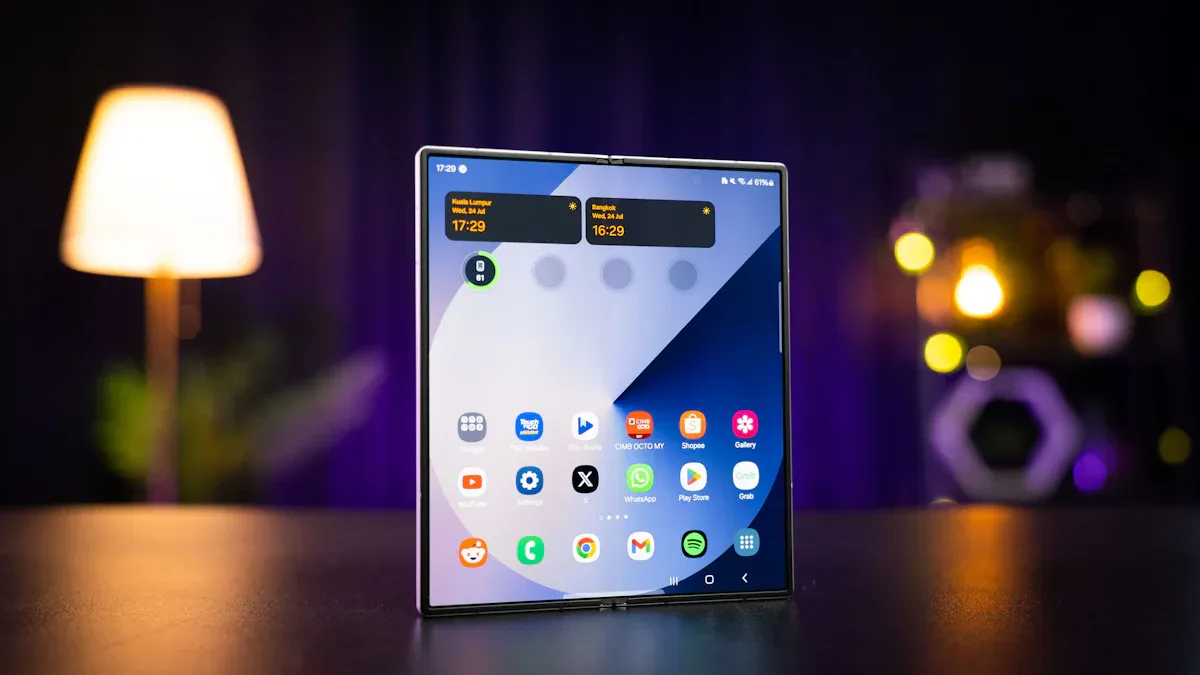
Samsung is a leader in foldable smartphones. The Galaxy Z Fold and Z Flip started the trend. The Z Fold opens like a book. You get more screen space for multitasking. The Z Flip folds into a small square. It is easy to carry anywhere. Both phones let you use split-screen features. You can switch between apps fast. These devices feel new and flexible.
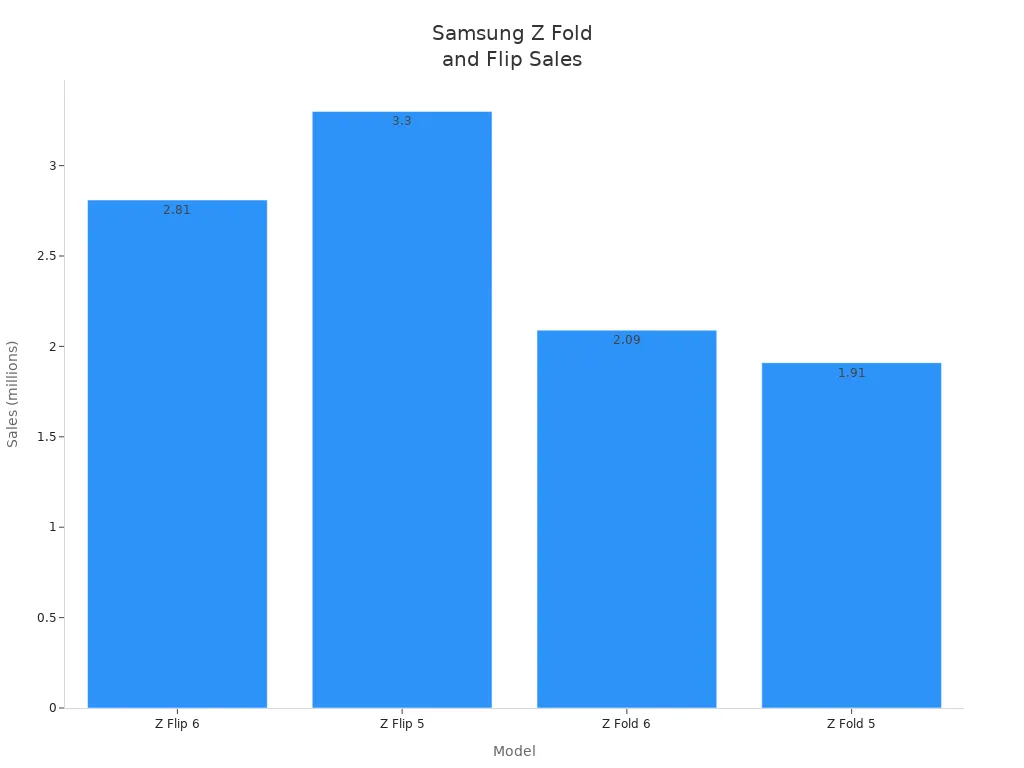
Samsung’s foldable phones changed how people use their devices. The Z Fold works like a tablet. The Z Flip brings back flip phone fun. You can watch videos and chat at the same time. These models make other companies improve their designs. Here are their sales numbers:
Model | Sales (millions) |
|---|---|
Z Flip 6 | 2.81 |
Z Flip 5 | 3.3 |
Z Fold 6 | 2.09 |
Z Fold 5 | 1.91 |
Total | 4.9 |
Previous Total | 5.2 |
Change | -5.76% |
Huawei Mate X Series
Huawei’s Mate X series has an outward-folding design. When you open it, the screen wraps around the outside. You get more space to work or play. The phone feels like a tablet but stays slim and light.
Huawei’s foldable phones are popular in the market. In 2023, Huawei had 32.9% of the foldable segment. By 2025, it may reach 48%. The Mate X series made display and hinge technology better. The phones are stronger and smoother. You see fewer creases and better durability.
Other Notable Foldables: Motorola Razr, Oppo Find N, and More
There are more foldable phones to choose from now. The Motorola Razr brings back the classic flip style. The Oppo Find N has a nearly creaseless display and strong build. These phones show that foldable technology keeps improving.
Here is a quick comparison:
Phone Model | Display Type | Camera Setup | Unique Features |
|---|---|---|---|
Motorola Razr | 7-inch folding | 50MP wide, 13MP ultrawide | Best cover screen experience with three panels |
Oppo Find N5 | Nearly creaseless | Ultrawide camera | Excellent build quality, Snapdragon 8 Elite chip |
Motorola Razr Ultra | 7-inch folding | 50MP wide, 50MP ultrawide | Premium design with Gorilla Glass Ceramic |
Foldable phones help designers think in new ways. They mix small size with bigger screens. This sets new standards for mobile design. You get more choices and better usability. You also see what the future of phones might look like.
Note: Foldable smartphones keep changing how you use your device. You will see even more creative designs soon!
Market Impact and Future of Foldables
Industry Trends and Competition
Foldable phones are showing up everywhere now. The market for these phones is growing very fast. Experts think the global foldable smartphone market will grow by 39.26% each year from 2024 to 2035. In the second quarter of 2025, the market grew by 45% in just three months. That is a big jump! Foldable mobile phones are changing what people want in a phone.
Regular phone companies are not giving up. They are making their own foldable models and making them better every year. Phones like Motorola’s Razr and Google’s Pixel 9 Pro Fold show how brands try to beat each other. This makes designs better and prices lower. You get more choices and cool features because of this.
Top brands use smart ideas to get noticed. Here are some ways they do this:
They add new features to make their foldable phones special.
They work with famous people and run big ads to get your attention.
They join with other companies to reach more people around the world.
This competition helps you. You see better foldable mobile phones and lower prices.
The Road Ahead for Foldable Smartphones
The future for foldable smartphones looks really good. Experts think shipments will go up by 50% in 2026. Look at this table to see how the market value is going up:
Year | Market Value (in billion USD) | CAGR (%) |
|---|---|---|
2021 | 14.4 | N/A |
2022 | 25.0 | N/A |
2027 | 85.3 | 27.8 |
You will see new ideas soon. Companies are working on rollable displays and screens that fix themselves. Some foldables will connect with things like AR glasses. You might see phones made with eco-friendly materials. Faster 5G and smarter AI will make your phone feel more personal.
Prices will go down as it gets easier to make these phones. By 2030, basic foldable mobile phones could cost the same as regular mid-range phones. Big brands like Apple and Samsung are spending money on foldable technology. This means the future of foldable smartphones is exciting. More people will pick these phones, so their impact will keep growing.
Note: Right now, foldable phones are changing how you use technology. Get ready for even more awesome features and designs!
You can see that foldable phones are changing what people want. These phones have bigger screens and let you do more things at once. You can use your phone in new ways every day. More people are buying foldable smartphones now. The market is getting bigger each year. Here are some cool new things you might see soon:
Advancement Type | Description |
|---|---|
Screens are brighter and can bend easily | |
Reinforced Hinges | Phones fold smoother and last longer |
Software Optimization | Apps work better on foldable screens |
Foldable technology keeps getting better. You will see even more fun features soon. Get ready for phones that surprise you all the time!
FAQ
What makes foldable phones different from regular smartphones?
Foldable phones have screens that can bend. When you open them, the screen gets bigger. You can use more than one app at once. These phones feel new and exciting.
Are foldable phones durable?
Foldable phones are made with tough materials like Armor Aluminum and flexible glass. The new hinges last a long time. You can use your phone every day and not worry.
Can you multitask better on a foldable phone?
Yes! You can use two or three apps at the same time.
You can watch videos and talk to friends together.
Split-screen tools help you get more done.
Do foldable phones cost more than regular phones?
Type | Average Price (USD) |
|---|---|
Foldable Phones | $900 – $1800 |
Regular Smartphones | $400 – $1200 |
Foldable phones usually have higher prices. As technology gets better, prices might go down.