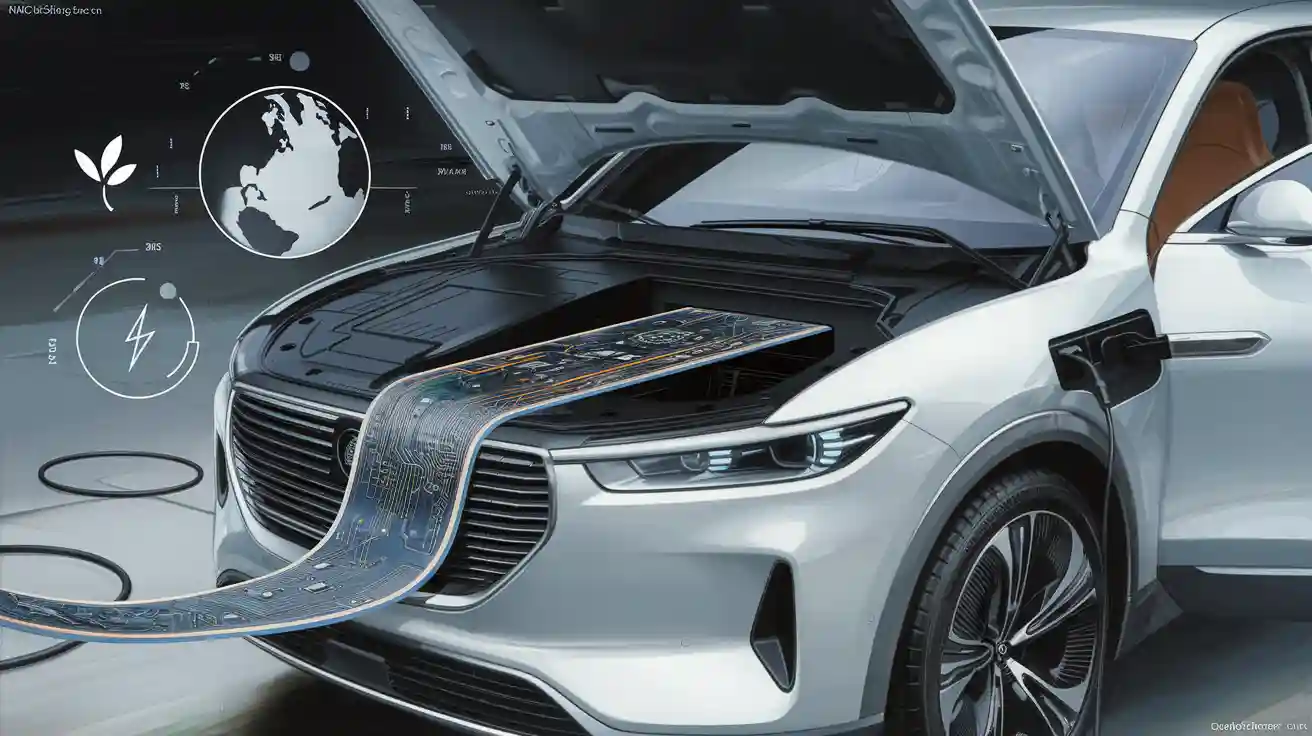
Flexible PCBs are changing cars by making electric vehicles lighter. They also help make them work better. The car industry needs advanced electronics to be more sustainable. Flex PCBs help cars weigh less. This makes them use energy better and be more reliable. Experts think the flexible PCB market will be worth over $42 billion by 2029. This is because more people want electric vehicles. Flex PCBs are important for battery management and motor control. They also help with advanced car systems. Car companies use flexible and flex PCBs to build small, high-performance vehicles.
Key Takeaways
Flexible PCBs help make electric vehicles lighter. They also save space in the car. This helps cars use less energy and go farther.
These circuit boards can bend and fit into small spaces. This makes car parts like battery systems work better. Motor controls also become smaller and more reliable.
Using flexible PCBs helps cars use energy better. They support advanced sensors and lighter wiring. This helps cars run well and last longer.
Flexible PCBs are strong and last a long time. They can handle heat, movement, and shaking. This makes electric vehicles safer and more reliable.
In the future, people will use recyclable materials and hybrid designs. This will help make electric vehicles greener and more advanced.
Flexible PCB Technology
What Is a Flexible PCB
A flexible PCB is a circuit board that can bend and twist. It does not break when it moves. Traditional boards are stiff, but flexible printed circuit boards use polyimide. This material lets the board fit in small spaces inside cars. Car makers use high-quality flexible PCBs to save space and make cars lighter. These flexible circuits have layers. Each layer has a job in car systems.
Layer | Material/Feature | Function/Benefit |
|---|---|---|
Substrate Layer | Flexible polyimide (PI) | Bends and twists, fits into tricky shapes in cars |
Conductor Layer | Copper foil | Moves signals and power, keeps connections working well |
Thickness | About 0.2mm | Light, fits small parts, helps with heat |
Line Width/Spacing | ~0.25mm/0.2mm | Handles lots of wires, keeps signals steady |
Minimum Aperture | 0.1mm | Lets more parts and wires fit, makes circuits more complex |
This design lets flex PCBs work in many car parts. They are used in dashboards and battery systems.
Why Flexibility Matters
Flexibility in PCB design changes how engineers make electric cars. Flex PCBs bend and fit in small or odd spaces. This helps car makers build lighter and better cars. Flexibility also helps put together complex systems. For example, flex PCBs link sensors, LED screens, and control units in tight spots.
Flex PCBs save space by fitting many shapes, which is important for small car parts.
They are light, so cars weigh less.
Flex PCBs can bend many times, so they work well in moving car parts.
Their design helps heat move away by putting them where air flows better.
Flex PCBs make cars more reliable by removing connectors and handling stress.
Flexible circuits help car makers customize electric vehicles. Flex PCB design lets engineers add new features like battery systems, entertainment, and driver help. Good flexible PCBs use new tech like multilayer stacking and high-density interconnects. These things help engineers make small, strong, and powerful car parts. Flexibility in flexible circuits means cars use less energy, work better, and are easier to build. Flex PCBs help car makers meet the needs of new electric vehicles.
Benefits for Electric Vehicles
Weight Reduction
Flex PCBs help make electric vehicles lighter. Old wiring harnesses in cars can weigh over 30 kg. For example, the 2018 Audi A8 has a harness that weighs up to 36 kg. Flex PCBs can cut this weight by about 20%. Lighter cars use less energy and can go farther on one charge. Flex PCBs use materials like polyimide, which are lighter than copper. This helps car makers save space and use fewer materials. Flex PCBs let engineers design smaller and better systems. By replacing big wiring harnesses, flex PCBs help electric vehicles work better and use energy well.
Tip: Lighter cars can drive farther and use less energy. These are important goals for electric vehicles.
Energy Efficiency
Flex PCBs help electric vehicles use energy better. Their design lets cars use advanced sensors and controls. This makes cars safer and work better. Flex PCBs also help cars move from 12V to 48V systems. These new systems use smaller and lighter wires. This means less copper and easier wiring. Zonal architectures let power change close to where it is needed. This cuts down on wiring weight. These changes help electric vehicles use energy better and go farther.
Flex PCBs lower weight, save space, and cost less in electric vehicles.
Using 48V systems with flex PCBs means less copper and easier setup.
Zonal architectures make wiring lighter and cars more efficient.
These upgrades help cars work better and drive longer.
Flex PCBs and power modules let cars use smaller or no low-voltage batteries, which lowers weight.
A 2024 MIT study found that very thin, heat-resistant PCBs can make electric vehicles up to 30% more efficient and help batteries last longer. Flex PCBs also make it easy to add new electronics. These help control power and make cars work better. In battery management systems, flex PCBs connect sensors and controllers in a small and strong way. They help watch and balance battery cells, which keeps cars safe and efficient. Flex PCBs fit in small spaces and can handle tough conditions, so they are great for cars.
Reliability and Durability
Flex PCBs are very reliable and last a long time in electric vehicles. They go through hard tests to make sure they can handle tough car conditions. Tests include life testing, vibration testing, and thermal shock testing. These tests check if the PCBs can survive heat, humidity, and movement. Flex PCBs use materials like polyimide and liquid crystal polymer, which resist heat and chemicals. Their thin and light design helps them take stress and not crack.
Flex PCBs can bend and twist without breaking, which is good for moving car parts.
They keep signals strong even with heat and shaking.
Rigid-flex PCBs mix flexible and stiff parts, which means fewer connectors and less chance of breaking.
These things make flex PCBs good for important car jobs, like collision detection and battery management.
Flex PCBs also make wiring easier by needing fewer solder points. This lowers the chance of problems from rust or stress. They can handle high currents and fit in small places, which is great for new electric vehicles. By being reliable and tough, flex PCBs help cars work well and need less fixing.
Automotive Applications
Battery Management Systems
Battery management systems use flex PCBs in electric vehicles. These systems watch and control each battery cell. This keeps the car safe and working well. Flex PCBs fit inside small battery packs. They can handle a lot of power. Flex PCBs link sensors and controllers. This helps each battery cell work right. One big car company used two-layer flex PCBs. This saved space in the battery modules. The battery pack became lighter and smaller. This helped the car go farther. Another project used special flex PCB materials. These materials helped move heat away. This stopped hot spots and made batteries last longer. Flex PCBs help battery systems by making strong circuits and working well.
Motor Control Units
Motor control units also use flex PCBs in cars. These units control the electric motor. The motor makes the car move. Flex PCBs can make these units much lighter. They can cut weight by up to 75%. Flex PCBs also stand up to shaking and bumps. This is important in cars. The table below shows how flex PCBs help motor control units:
Feature | Benefit for Motor Control Units |
|---|---|
Weight Reduction | Improves efficiency and vehicle range |
Vibration Resistance | Increases reliability in harsh conditions |
Fewer Connectors | Lowers failure rates and assembly errors |
Compact Design | Allows tighter packaging and better layouts |
Flex PCBs make it easier to put together motor control units. They help these units work well in electric vehicles.
Advanced Electronics
Flex PCBs are used in many new car electronics. They are in sensors, lighting, ADAS, and infotainment systems. These systems need circuits that are light and flexible. Flex PCBs connect screens, cameras, and speakers. They also help ADAS sensors send data fast. In lighting, flex PCBs let LED lights change color and brightness. Flex-rigid PCBs help engineers make complex car electronics. They let parts bend and use fewer connectors. This makes the electronics last longer and be smaller. Flex PCBs help car electronics work better and last longer.
Note: Flex PCBs are very important in today’s cars. They help electric vehicles use less material, save energy, and work better.
Challenges and Future Trends
Current Limitations
Flexible PCBs help electric vehicles, but they have some problems too. The table below lists the main technical problems and how they affect cars:
Technical Limitation | Description | Impact on EV Applications |
|---|---|---|
Higher Manufacturing Costs | Special materials like polyimide and careful work cost more. | Makes flexible PCBs more expensive for electric cars. |
Lower Durability Under Stress | Too much bending makes the PCB weaker and shortens its life. | Not good for places with lots of movement or shaking. |
Limited Heat Resistance | Does not handle high heat well during use or when being made. | Hard to use in hot places like near engines. |
Complex Design Requirements | Needs careful planning for bends and stress, which takes time. | Makes design harder and more costly for good EV PCBs. |
Manufacturers also need to fix problems like thermal expansion. Different parts of flex PCBs get bigger at different speeds. This can hurt the board’s shape and signals. Adding flex areas and heat patterns can help, but these fixes cost more and are harder to make. Making flex PCBs for cars needs careful design and picking the right materials. Car makers must use new methods and work with skilled partners to meet tough rules. These things can slow down how fast flex PCBs are used, but they also help make better ideas.
Innovations Ahead
Engineers and makers are finding new ways to solve these problems. They use strong flexible materials like polyimide that work well even when bent. New ways to make PCBs, like Laser Direct Imaging, help make tiny circuit lines. Automatic Optical Inspection checks for mistakes early, so flex PCBs work better in cars. Plasma etching and special tools shape circuits without breaking them, which helps with tricky designs.
Tests like heating and shaking make sure flex PCBs work in real cars. Custom designs and fast samples help make the right part for each job. Many companies now follow strict rules like IPC-6013 and ISO 9001 to make sure their products are good.
In the future, more cars will use hybrid flexible-rigid PCBs. These boards are strong and can bend, so they fit in small spaces in cars. Makers are also trying out recyclable and biodegradable materials to cut down on waste. Using lead-free solder and green materials helps the planet. The market for flex PCBs in electric cars will grow fast. More will be used in battery systems and smart sensors. These new ideas will help electric cars be even greener and work better.
Flexible PCBs make electric vehicles better for the environment. They help cars weigh less and use less space. This means cars can save more energy.
Flexible PCBs fit in small places inside cars. They work with sensors and last a long time, even when things get rough.
Using them in battery management and motor control helps cars stay safe and work well.
Companies can help the planet by picking recyclable materials. They should try new designs and work with experts.
Engineers need to keep learning about flexible PCB technology. This will help them build cleaner and smarter cars in the future.
FAQ
What makes flexible PCBs important for electric vehicles?
Flexible PCBs help engineers make electric vehicles lighter and smaller. These boards can fit into small spaces in the car. They help connect circuits together. Flexible PCBs help cars work better by supporting battery management systems and other car parts.
How do flexible printed circuit boards improve battery management systems?
Flexible printed circuit boards link sensors and controllers in battery management systems. They help check each battery cell. This keeps electric vehicles safe and helps them work well. Their flexibility lets them fit in small battery packs.
Where can engineers use flexible circuits in automotive applications?
Engineers use flexible circuits in dashboards, lighting, and motor control units. These parts need solutions that are light and reliable. Flexible PCBs also help with advanced electronics like infotainment and safety systems in electric vehicles.
Why does the automotive industry prefer high-quality flexible PCBs?
The automotive industry picks high-quality flexible PCBs because they last long and work well. These boards can handle heat, shaking, and movement. They help electric vehicles last longer and work better in many ways.
What future trends exist for flex PCB design in electric vehicles?
Future trends include using recyclable materials and hybrid designs. Flex PCB design will focus on better connections and stronger performance. Engineers will find new ways to use flexible printed circuit boards in electric vehicles.