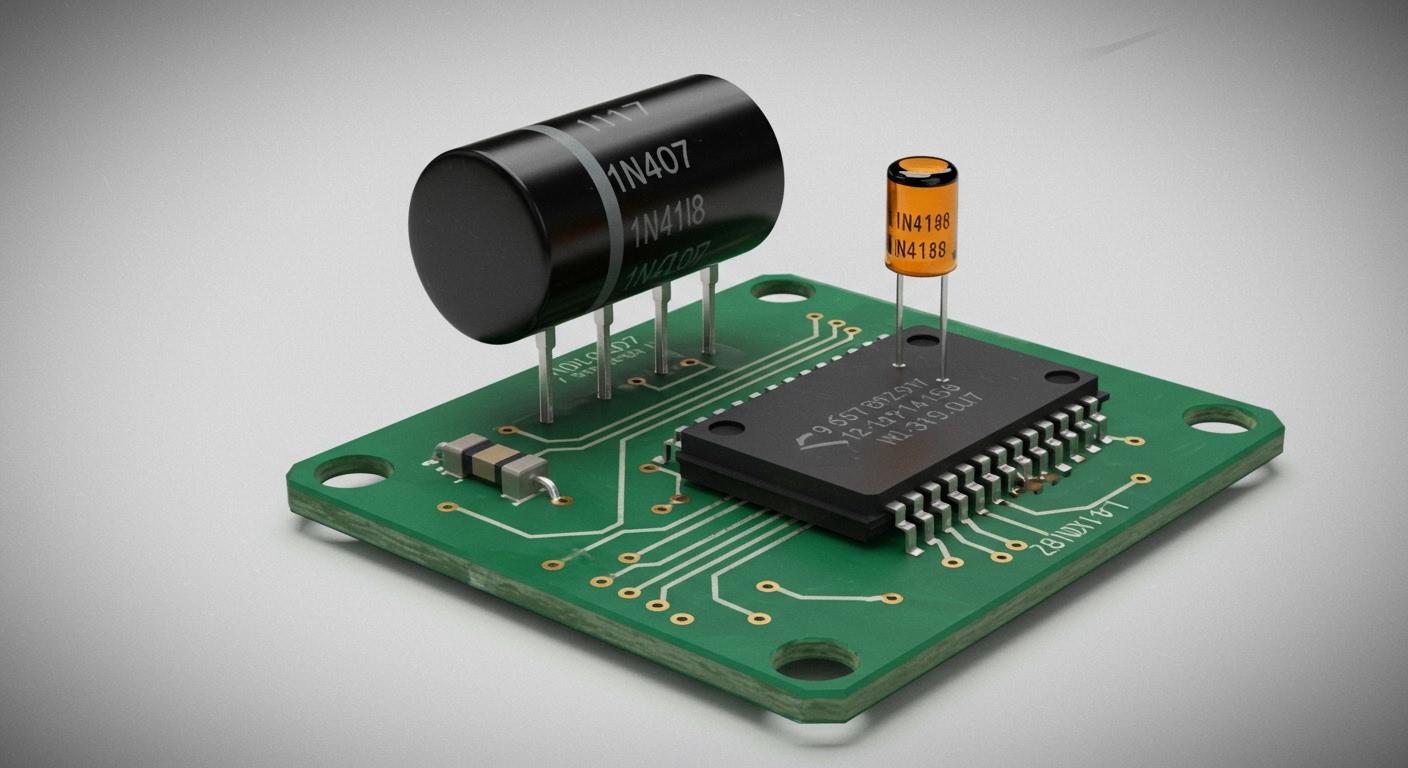
When you look at the 1N4007 vs 1N4148 diode comparison, you can see significant differences between the two. The 1N4007 is capable of handling higher voltage and current, while the 1N4148 excels in switching on and off at a much faster rate. Many circuits require the appropriate diode to ensure the safety of components and to enhance overall circuit performance.
Characteristic | 1N4007 | 1N4148 |
|---|---|---|
Peak Reverse Voltage | 1000V | 100V |
Average Forward Current | 1A | 200mA |
Speed | Slow | Fast |
Understanding these differences in the 1N4007 vs 1N4148 diode comparison can lead to better decisions for your circuit design. Some circuits demand protection against high voltage, while others benefit from a diode that can switch quickly. Selecting the right diode is crucial for maintaining the safety and functionality of your circuits.
Key Takeaways
The 1N4007 diode works well for high voltage jobs. It can handle up to 1000V and 1A of current. This makes it good for power supplies.
The 1N4148 diode is great for fast switching. Its recovery time is only 4 nanoseconds. This makes it perfect for signal processing and digital circuits.
Picking the right diode is very important. Use the 1N4007 for high voltage and current needs. Use the 1N4148 for circuits that need quick response times.
Always look at your circuit’s specifications before you pick a diode. Make sure it fits the voltage, current, and speed your circuit needs.
Put the diode in your circuit the right way. Find the cathode and anode to stop problems and help it work well.
1n4007 vs 1n4148 diode comparison
Key differences
When you look at the 1n4007 and 1n4148 diodes, you see they do different jobs in circuits. The 1n4007 diode can handle more voltage and current. The 1n4148 diode is made to switch on and off very fast. You can see these differences in their electrical features.
Characteristic | 1n4007 Diode | 1n4148 Diode |
|---|---|---|
Current Carrying Capacity | 1A (surge up to 30A) | Hundreds of mA |
Forward Voltage Drop | ~1V | ~0.715V |
Reverse Voltage Rating | 1000V | 75V |
Switching Speed | Slow | Fast |
Reverse Recovery Time | 2μs | 4ns |
Temperature Range | -65°C to +175°C | -65°C to +175°C |
You can also check what each diode is used for:
Diode Type | Typical Use Cases |
|---|---|
1n4007 Diode | Rectification, High Voltage Applications, General-Purpose Use |
1n4148 Diode | Fast Switching, Signal Processing, Protection, Small-Signal Use |
The 1n4007 diode can handle bigger voltages and currents. The 1n4148 diode is much faster and works best when speed matters. The 1n4148 diode switches on and off in only 4 nanoseconds. The 1n4007 diode takes 2 microseconds to switch. This means the 1n4148 diode is much quicker than the 1n4007 diode.
The 1n4148 diode also has a lower forward voltage drop. This makes it better for low-power circuits. The 1n4007 diode is good for power supplies because it can take higher surges and voltages.
Why differences matter
These differences are important when you build circuits. If you pick the wrong diode, your circuit might not work right. For example, using a 1n4007 diode in a fast circuit can cause problems. It might make signals messy or even hurt other parts. The 1n4148 diode is great for fast circuits because it switches quickly.
You should use the 1n4007 diode for high voltages or big currents, like in power supplies. The 1n4148 diode is best for signal processing, logic circuits, and small-signal protection. The 1n4148 diode can react fast to changes, which is needed in communication and digital circuits.
Tip: Always pick the diode that fits your circuit’s needs. Comparing the 1n4007 and 1n4148 diodes helps you choose the right one.
If you use a 1n4007 diode in a fast circuit, it may not work well. The 1n4148 diode keeps signals clear and your circuit working right. Knowing the differences helps you avoid mistakes and build better circuits.
The 1n4007 and 1n4148 diode comparison is not just about numbers. It is about picking the best tool for your project. The 1n4148 diode gives you speed and accuracy. The 1n4007 diode gives you power and strength. Knowing when to use each one helps you make good circuits.
1n4007 diode and 1n4148 diode overview
Definitions
You often see the 1n4007 diode and the 1n4148 diode in many electronic projects. Each diode has a special job in a circuit. The 1n4007 diode is a silicon rectifier. You use it to change AC (alternating current) into pulsed DC (direct current). This diode handles high voltage and works well in power supplies. The 1n4148 diode is different. It is a fast switching diode. You use it in circuits that need quick changes, like signal processing or digital logic.
Here is a table to help you see the main differences:
Diode Type | Definition | Primary Function |
|---|---|---|
1n4007 diode | A silicon rectifier diode with high voltage and low leakage. | Converts AC to pulsed DC in high-voltage circuits. |
1n4148 diode | A fast switching silicon diode for high-frequency applications. | Handles quick changes in low voltage, small current. |
Note: You should always match the diode to your circuit’s needs. The 1n4007 diode is best for power and voltage. The 1n4148 diode is best for speed and signal clarity.
Pinout
Both the 1n4007 diode and the 1n4148 diode have the same basic pinout. Each diode has two pins: the anode and the cathode. You connect the anode to the positive side of your circuit. The cathode connects to the negative side. Current flows from the anode to the cathode. This simple design makes it easy to use either diode in your projects.
Here is a quick look at the pinout:
Pin No. | Pin Name | Description |
|---|---|---|
1 | Anode | Current enters through this pin. |
2 | Cathode | Current exits through this pin. |
You can spot the cathode by a band or stripe on the diode’s body. This marking helps you place the diode the right way in your circuit. If you put the diode in backwards, it will block current and your circuit may not work.
When you choose between the 1n4007 diode and the 1n4148 diode, remember their main jobs and how they fit into your design. The right diode keeps your circuit safe and working well.
Diodes specifications and features
Electrical specifications
It is important to know the main specs when picking diodes. The table below lists the key things about the 1N4007 and 1N4148 diodes. These specs help you choose the right diode for changing ac to dc.
Characteristic | 1N4007 | 1N4148 |
|---|---|---|
Peak Reverse Voltage | 1000V | 100V |
Average Forward Current | 1A | 200mA |
Peak Forward Surge Current | 30A | 2A |
Reverse Recovery Time | 2μs | 4ns |
Temperature Range | -55°C to +150°C | -65°C to +175°C |
The 1N4007 diode can take more voltage and current. The 1N4148 diode is much faster and is good for circuits that need quick action.
Features
Each diode has its own special features. The 1N4007 is good for power supplies. It can handle high voltage and big current spikes. You use it for changing ac to dc and in circuits that need to work well for a long time. The 1N4148 is known for being fast. It is best for signal and logic circuits. Its quick switching makes it great for digital uses.
The 1N4007 is bigger, so you can’t fit as many on a PCB.
The 1N4148 is smaller, so it fits better in tight spaces.
The 1N4148 works in a wider range of temperatures, so it is good for tough places like cars or factories.
Both diodes are good for changing ac to dc, but you need to pick the one that matches your circuit.
Note: Always look at the specs and features before picking a diode. This helps your design work well.
Package types
These diodes come in different package types. The 1N4007 is usually in a DO-41 package. This package is longer and thicker. The 1N4148 is often in a DO-35 package, which is smaller and fits in small spaces.
Diode Type | Package Type | Key Features | Voltage Rating |
|---|---|---|---|
1N4007 | DO-41 | Body: 4.06–5.21mm, Diameter: 2.16mm | 50V–1000V |
1N4148 | DO-35 | Body: 3.5mm x 6.0mm, Compact for dense layouts | 100V–1000V |
You should think about the package type when planning your PCB. The right package makes your circuit work better and easier to build.
Applications of 1n4007 and 1n4148 diodes
Typical applications
Diodes are important in many electronics. The 1n4007 and 1n4148 diodes have different uses. The 1n4007 diode is used in power supplies. Here are some ways you use this diode:
It changes AC to DC in power supply circuits.
It is a main part in AC adapters.
It protects against voltage spikes in inductive circuits.
It helps with clipping and clamping in signal processing.
The 1n4148 diode is used when speed is needed. You see it in signal processing and digital circuits. Here is a table that shows common uses for the 1n4148 diode:
Application Type | Description |
|---|---|
Filtering Noise | Removes noise for better signals in circuits |
Enhancing Signal Clarity | Used in RF and audio to keep signals clean |
Managing Logic Signals | Handles digital signals and stops errors |
Smooth Operation | Makes sure digital circuits work well |
Robust Signal Reception | Works in RF communication with high-frequency signals |
Where each excels
Pick the right diode for your project. The 1n4007 diode is best for power supplies. It can handle high voltage and current. This makes it good for changing AC to DC. The 1n4148 diode is great for fast switching. Its quick recovery time helps in digital and signal circuits.
If you need a diode for high-frequency or fast switching, use the 1n4148. It responds quickly and keeps signals clear. If you need to handle big currents or voltages, use the 1n4007 diode. Both diodes are important, but you must match the diode to your circuit for the best results.
Tip: Always check what your project needs before picking the 1n4007 or 1n4148 diode. The right diode keeps your circuit safe and working well.
Selection guidelines and summary of differences
How to choose
Choosing the right diode for your project can make your circuit work better and last longer. You need to look at the voltage, current, and speed your circuit needs. If your project uses high voltage or needs to handle a lot of current, you should use the 1n4007. This diode works well in power supplies and AC to DC converters. It can handle up to 1000 volts and 1 amp of current. You can trust it for strong circuit protection in these cases.
If your circuit needs to switch on and off very fast, the 1n4148 is the better choice. This diode is perfect for signal processing and high-frequency circuits. It can switch in just a few nanoseconds. You often see it in digital logic and radio frequency work. The 1n4148 also has a lower forward voltage drop, which helps in low-power designs.
Here is a table to help you decide which diode fits your needs:
Criteria | 1N4007 | 1N4148 |
|---|---|---|
Voltage Rating | High voltage applications | Low voltage applications |
Current Rating | Handles higher current | Suitable for lower current |
Switching Speed | Moderate speed | Fast switching |
Application Type | Power supplies, AC to DC conversion | Signal clamping, high-speed switching |
You should always check the voltage and current in your circuit before picking a diode. The 1n4007 is best for jobs where you need to block high voltages or handle big surges. The 1n4148 is best when you need fast action and clear signals.
When you build mixed-signal circuits, you need to follow some best practices:
Use the 1n4007 for voltages over 100V and currents above 200mA.
Pick the 1n4148 for fast switching and high-frequency signals.
Always place the cathode in the right direction to let current flow correctly.
Keep the diode leads at least 5mm long to help with heat.
Make sure the temperature stays below 175°C for both diodes.
Add current-limiting resistors to protect your diodes.
Do not let the reverse voltage go over 75V for the 1n4148.
Use bypass capacitors in switching circuits for better performance.
You should also remember that the forward voltage drop for the 1n4148 is about 0.7V at 20mA. This small drop helps in low-power circuits. Always match the diode to your circuit’s needs for the best results.
Tip: Careful selection of diodes keeps your circuit safe and helps it last longer.
Main differences recap
You can quickly see the main differences between the 1n4007 and 1n4148 diodes in the table below. This summary helps you pick the right part for your project.
Feature | 1N4007 Diode | 1N4148 Diode |
|---|---|---|
Voltage Rating | Up to 1000V | Up to 100V |
Current Rating | Up to 1A | Up to 200mA |
Switching Speed | Slow (2μs) | Very fast (4ns) |
Forward Voltage Drop | ~1V | ~0.7V |
Package Size | Larger (DO-41) | Smaller (DO-35) |
Best Use | Power supplies, rectification | Signal processing, fast switching |
You use the 1n4007 when you need strength and high voltage handling. You use the 1n4148 when you need speed and clear signals. Both diodes are important, but each one fits a different job. When you understand these differences, you can make better choices for your circuit protection and performance.
Note: Always review your circuit’s voltage, current, and frequency needs before making your final selection.
You now know the main differences between the 1n4007 and 1n4148 diodes. The 1n4148 works best in fast, low-current circuits. The 1n4007 handles high voltage and current. Always match the diode to your project’s needs. Use this table to check the most important factors:
Factor | Description |
|---|---|
Voltage and Current Ratings | Make sure the diode can handle your circuit’s voltage and current. |
Switching Speed | Pick the 1n4148 for fast switching. The 1n4007 is slower. |
Power Dissipation | Check if the diode can handle heat. |
Package Type | Choose the right size and mounting for your design. |
Environmental Conditions | Make sure the diode works in your circuit’s environment. |
When you use the right diode, your circuit works better and lasts longer. The 1n4148 gives you speed and clear signals. The 1n4007 gives you strength for power circuits. Use these tips to pick the best diode for your next project.
FAQ
Can you use a 1N4148 diode instead of a 1N4007?
You should not use a 1N4148 in place of a 1N4007 for power circuits. The 1N4148 cannot handle high voltage or current. Always match the diode to your circuit’s needs.
What happens if you reverse a diode in your circuit?
If you reverse a diode, current will not flow as expected. Your circuit may stop working or get damaged. Always check the cathode stripe before soldering.
Why does switching speed matter in diodes?
Diode | Switching Speed | Best Use |
|---|---|---|
1N4007 | Slow | Power conversion |
1N4148 | Fast | Signal processing |
Switching speed affects how well your circuit handles fast signals. Fast diodes keep signals clear.
How do you identify the cathode and anode on these diodes?
Look for a band or stripe on the diode body. That marks the cathode. The other end is the anode. You must connect them correctly for the diode to work.
Can you use both diodes in the same project?
🛠️ Yes, you can use both diodes in one project. Use the 1N4007 for power tasks and the 1N4148 for fast signal switching. This gives your circuit the best performance.