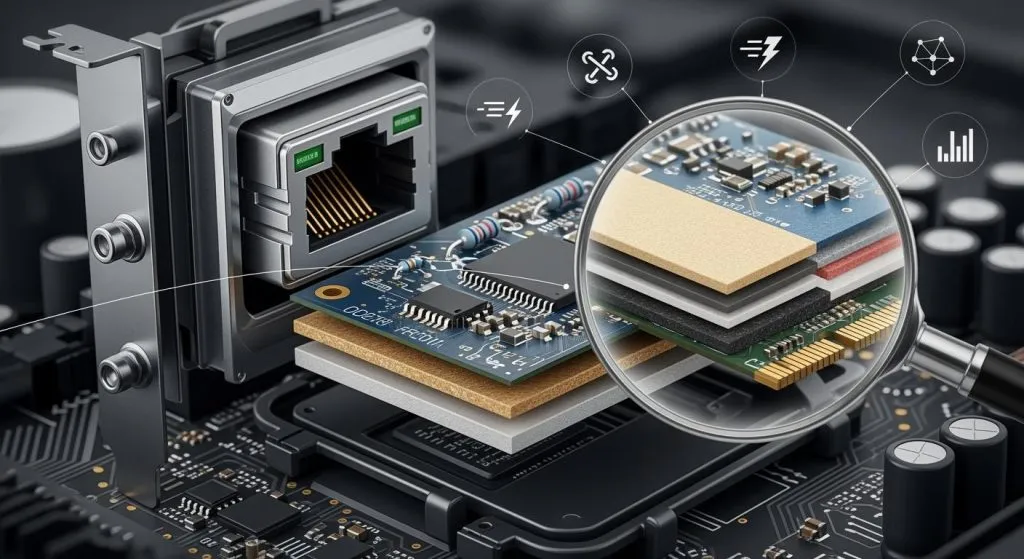
Printed circuit boards (PCBs) use a solder mask to stay strong and work well. This layer protects the copper lines on the board. It stops accidental connections, called solder bridging. The solder mask also keeps the copper from rusting and getting damaged.
Solder masks are becoming more important. For example:
The global solder mask market was worth $1.2 billion in 2023. It might grow to $2.3 billion by 2032.
More IoT devices and electronics need good PCBs, boosting demand.
Better semiconductor technology shows why high-quality solder masks are needed.
This key part helps your devices work better and last longer.
Key Takeaways
A solder mask covers copper lines on PCBs to stop rust and mistakes.
Applying solder masks correctly prevents solder from connecting wrong parts.
Picking the right solder mask, like Liquid Photoimageable or Dry Film, makes PCBs last longer and work better.
Checking solder masks often during production finds problems early and improves quality.
A good solder mask can cut device failures by 30%, making electronics work better.
What Is Solder Mask in PCB Manufacturing?

Definition and purpose
A solder mask is a shield on a circuit board. It helps the board work well and stay reliable. This layer stops solder from going to wrong spots during soldering. This prevents solder bridges, which can cause short circuits.
The solder mask also keeps copper lines safe from water, dust, and rust. This protection makes the board last longer. It also stops accidental connections between metal parts by acting as an insulator.
Purpose/Benefit | Description |
|---|---|
Corrosion Protection | Shields copper lines from water, dust, and rust for durability. |
Insulation | Blocks unwanted connections and stops short circuits. |
Solder Bridge Prevention | Stops solder from connecting lines, avoiding short circuits. |
Identification and Aesthetics | Comes in many colors and makes boards look professional. |
Solderability | Controls solder flow for strong connections, especially for small parts. |
Role in the PCB manufacturing process
The solder mask is very important in making PCBs. It is added after copper lines and pads are made on the board. First, the board is cleaned to remove dirt and water. Then, a solder mask ink is spread on the board. The thickness depends on the project needs.
After applying the ink, it is partly hardened to set the layer and remove extra material. The board is then exposed to UV light to harden certain parts of the mask. Next, extra solder mask is taken off to show the copper pads. Finally, the mask is fully hardened, and the board is cleaned for the next steps.
This process makes sure the solder mask sticks well to the board. It protects and insulates the board while leaving areas open for soldering. By doing this, manufacturers create strong PCBs for modern electronics.
Key Functions of Solder Mask
Stopping solder bridging
Solder bridging happens when solder connects nearby copper lines by mistake. This can cause short circuits. The solder mask helps stop this problem. It covers spaces between copper lines, so solder sticks only to the right spots. This control lowers the chance of electrical problems and makes your PCB more reliable.
Without a solder mask, solder bridging is more likely, especially on crowded boards. The solder mask acts like a shield. It guides solder to the correct places and blocks unwanted connections. This is very important for modern electronics with tiny, close parts.
Tip: Always apply the solder mask properly to avoid solder bridging and keep your circuits safe.
Keeping copper traces safe from rust and harm
Copper lines on a PCB can rust or corrode when exposed to air or water. The solder mask protects them by adding a thin layer over the copper. This layer stops rust and keeps the copper working well for a long time.
Here’s how solder masks protect copper lines:
They cover copper lines and pads, stopping rust and corrosion.
They block short circuits by acting as an insulator.
They guard against moisture, chemicals, and other harmful things.
Other coatings, like conformal or epoxy, also protect PCBs. But the solder mask is the most common and effective choice. It works as both a solder guide and a protective layer, making it essential in PCB production.
Making PCBs stronger and better
The solder mask makes your PCB last longer and work better. It protects the board from damage, stress, and electrical issues. Studies show how solder masks improve PCB performance:
Key Findings | Description |
|---|---|
Drop Shock Strength | Thicker PCBs with solder masks handle stress better. |
Solder Mask Define (SMD) vs NSMD | SMD boards are more reliable and fail less often than NSMD boards. |
Overall Strength | SMD boards with solder masks are great for tough uses. |
The solder mask also helps fit parts closer together without losing performance. It can reduce electromagnetic interference (EMI) in some cases, improving the board’s use. Picking the right solder mask ensures your PCB works well in different conditions.
Note: A good solder mask boosts durability and makes your devices more reliable.
Types of Solder Masks for PCBs
Liquid Photoimageable (LPI) solder mask
Liquid Photoimageable (LPI) solder masks are very common in PCB making. They work well with flexible, rigid-flex, and BGA boards. This type of solder mask is great for high-density boards. It allows precise patterns and offers good flexibility.
LPI solder masks can handle heat and multiple soldering steps. They meet RoHS and REACH rules, making them eco-friendly. You can also pick from many colors to design your PCB.
Property | Description |
|---|---|
Application | Works on flexible, rigid-flex PCBs and BGA boards |
Solder-dam Resolution | Fine resolution (50µm, 2mil) |
Compliance | Meets RoHS and Halogen-Free standards |
Color Options | Available in 9 colors like green, red, blue, and more |
Tip: Use LPI solder masks for detailed designs and eco-friendly projects.
Dry film solder mask
Dry film solder masks (DFSM) are another good option for PCBs. They come as solid sheets and are pressed onto the board. This method creates an even layer and makes the board stronger. DFSM works well for semiconductors and LEDs, where heat resistance is important.
Application Area | Advantages of DFSM |
|---|---|
PCB Manufacturing | Adds a strong layer to stop short circuits. |
Semiconductor Packaging | Gives precision and handles heat well. |
LED Packaging | Helps manage heat and protects parts for longer use. |
Dry film solder masks are best for projects needing strong protection and heat stability.
Epoxy-based solder mask
Epoxy-based solder masks are affordable and used often in PCB production. They protect boards from water, chemicals, and temperature changes. This makes devices last longer and work better.
But epoxy-based masks have some downsides. They may not resist moisture well and need specific curing steps. Even with these issues, they are a good choice for low-cost projects.
Benefits:
Shields PCBs from water, chemicals, and temperature changes.
Improves device durability and performance.
Limitations:
May struggle with moisture and sticking to surfaces.
Needs proper curing for the best results.
Note: Epoxy-based solder masks are budget-friendly but need careful handling for good results.
Comparing solder mask types and their uses
Picking the right solder mask depends on your PCB needs. The three main types—Liquid Photoimageable (LPI), Dry Film, and Epoxy-based—each have special features and uses.
Liquid Photoimageable (LPI):
LPI masks are great for detailed PCBs. They work well with small parts and tight spaces. These masks are used on flexible, rigid-flex, and BGA boards. They also follow eco-friendly rules like RoHS, making them a top choice for green projects.Dry Film:
Dry film masks are strong and handle heat well. They are often used in semiconductors and LED packaging. These masks create a smooth layer, stopping short circuits. If your project faces high heat or stress, dry film masks are a solid option.Epoxy-based:
Epoxy-based masks are cheap and common for simple PCBs. They protect against water, chemicals, and temperature changes. But they don’t do well in very wet places. For low-cost projects, epoxy masks are a smart pick.
Fun Fact: Rough solder masks improve soldering. PCBs without masks had 10.2% voids, 20% less than glossy masks. Rougher masks help solder stick better, reducing voids.
Each type has pros and cons. LPI masks are precise and flexible. Dry film masks are tough and heat-resistant. Epoxy masks are budget-friendly for basic designs. Choose the right mask to make your PCB work its best.
The Solder Mask Application Process

Getting the PCB ready
Before adding the solder mask, the PCB must be cleaned. This removes dust, grease, and dirt from the surface. Cleaning often uses chemicals and scrubbing to make it spotless. A clean board helps the solder mask stick well.
After cleaning, the PCB is dried to remove water. Even tiny water drops can ruin the solder mask. Some makers also use special treatments to help the mask stick better. This ensures the solder mask stays firmly on the PCB.
Tip: Always clean and dry the PCB fully. This avoids problems and makes the solder mask last longer.
Adding the solder mask material
The solder mask is applied to the PCB using different methods. These include screen printing, spraying, or curtain coating. The goal is to spread the mask evenly over the board.
Next, the PCB goes through pre-baking. This step removes extra liquids and partly hardens the mask. Pre-baking makes the mask stable for the next steps. Some advanced methods, like inkjet printing, skip this step as curing happens during application.
The mask must cover copper lines but leave solder pads open. This protects the right areas and stops solder from connecting where it shouldn’t. Precision is very important in this step.
Hardening the solder mask
The last step is curing the solder mask. UV light is used to harden certain parts of the mask. Soft areas are removed later to show the solder pads.
After this, the PCB goes through heat curing. This makes the mask strong and long-lasting. Heat curing also helps the mask protect copper lines from damage and rust.
Note: Curing needs careful control. Time and temperature are key for good results.
By following these steps, the solder mask will be applied correctly. This creates a strong and reliable PCB.
Inspection and quality assurance
Inspection ensures the solder mask is applied correctly. Checking the PCB early helps find problems fast. This step is key to making strong and reliable electronics.
Different methods are used to check the solder mask. Each method looks at specific parts of the PCB:
Inspection Method | What It Checks |
|---|---|
Cleanliness | Makes sure tools and surfaces are clean. |
Heating and Cooling Rates | Checks if heating and cooling follow rules. |
Visual Inspection | Uses cameras to find surface problems. |
Manual Inspection | Checks size, shape, and solder joint quality. |
X-ray Inspection | Finds hidden issues inside the PCB. |
Visual checks are great for spotting surface problems. Cameras and machines look for uneven masks or misplaced parts. For hidden issues, X-rays are used to see inside the PCB.
Manual checks are still important for tricky tasks. People can measure sizes, check shapes, and ensure solder joints are correct. While simple, it works well with machine checks.
Tip: Using many inspection methods together finds more problems and improves quality.
By following these steps, the solder mask will stick well and work right. Careful checks lower failures and make your PCB better.
Importance of Solder Mask in PCB Manufacturing
Helping with soldering and electrical performance
The solder mask is very important for a PCB to work well. It stops solder from going to the wrong places. This helps make strong and exact solder joints. Without it, solder could connect pads by mistake, causing shorts and bad connections.
The solder mask also makes soldering easier by guiding solder to the right spots. This helps metal parts stick together properly for strong connections. The IPC-SM-840C standard shows how important good solder mask materials are for this.
Why solder mask helps with soldering and performance:
Stops solder from bridging, making clean and strong joints.
Protects the PCB from damage, helping it last longer.
Follows rules like IPC-SM-840C for better quality.
Tip: Pick a good solder mask to improve soldering and PCB performance.
Stopping short circuits and electrical problems
Short circuits can harm your PCB and the devices it powers. The solder mask acts like a shield, stopping solder from connecting nearby pads or lines. This is very helpful for boards with small, close parts.
If the solder mask changes color, it might not insulate well anymore. This can lead to short circuits. Applying and curing the solder mask correctly keeps it strong over time. Cleaning off extra flux during assembly also helps stop corrosion and keeps the mask working well.
How solder mask stops electrical problems:
Blocks unwanted connections by acting as an insulator.
Stops rust, which can cause assembly issues.
Guides solder for strong and reliable joints.
Protects against water and harmful materials.
Small barriers called solder mask dams add extra safety. They stop solder from spreading between pads. This lowers short circuits and reduces defects during production.
Protecting PCBs from damage
PCBs face challenges like water, heat, and chemicals. The solder mask protects the board from these dangers, keeping it strong and working well. Cleaning the surface and curing the mask properly helps it stick and last longer.
If the solder mask has tiny holes, chemicals can get through and cause rust. A well-cured, solid solder mask stops this from happening. Tests show that solder masks protect against moisture, heat, and stress, making them great for tough conditions.
How solder mask protects from damage:
Blocks water and chemicals from harming copper lines.
Handles heat changes without breaking solder joints.
Makes the board stronger under stress.
Note: Always cure the solder mask properly to get the best protection.
Making Electronic Devices More Reliable
The solder mask is key to making devices work better. It keeps your electronics safe and working well, even in tough conditions. By protecting the PCB and improving its use, the solder mask helps your devices last longer.
How Solder Mask Improves Device Reliability
Stops Electrical Problems
The solder mask blocks solder from going to wrong spots. This prevents short circuits that can break your device. A good solder mask ensures your device works without sudden electrical issues.Guards Against Harmful Elements
Devices often face moisture, dust, and chemicals. The solder mask protects the PCB from these dangers. This keeps your device working, even in wet or dirty places.Handles Heat Better
Heat can harm electronic parts over time. The solder mask helps manage heat by protecting the PCB. This makes your device stronger in hot conditions.Helps with Compact Designs
Modern devices need small PCBs with close parts. The solder mask allows neat soldering, keeping tiny parts in place. This lowers defects and makes your device more reliable.
Real-Life Benefits of Solder Mask
Feature | How It Helps Devices |
|---|---|
Moisture Protection | Stops rust and makes the PCB last longer. |
Electrical Insulation | Prevents short circuits and keeps devices safe. |
Heat Resistance | Works well in high temperatures. |
Physical Strength | Shields the PCB from damage during use or assembly. |
Tip: Use a good solder mask for your PCBs. It’s a small cost that makes your devices much more reliable.
Why Reliability Is Important
Reliable devices save money and time. A strong PCB means fewer repairs or replacements. Whether it’s a phone, medical tool, or machine, the solder mask helps your product meet high standards.
By focusing on the solder mask, you can make devices people trust. This improves customer happiness and builds your brand’s reputation.
Fun Fact: PCBs with solder masks fail up to 30% less than those without. This shows how important this layer is for reliable devices.
The solder mask is key to making your PCB work well. It shields copper lines, stops short circuits, and makes the board stronger. Adding this layer helps your electronics last longer and work better. Whether for basic circuits or complex systems, a good solder mask keeps things running smoothly. It also lowers the chance of problems. Always include it in your design for the best results.
FAQ
What is the best color for a solder mask?
Green is the most popular and useful option. It makes inspection easier and fits most manufacturing methods. Other colors like red, blue, or black can also be used based on your design.
Can a solder mask affect PCB performance?
Yes, it can. A good solder mask stops short circuits, protects copper lines, and helps with soldering. If applied poorly or made with bad materials, it can cause problems or make the PCB less durable.
How do you choose the right solder mask type?
Think about your project’s needs. Use Liquid Photoimageable (LPI) for detailed designs, Dry Film for heat resistance, and Epoxy-based for budget-friendly options. Pick the type that matches your PCB’s design and conditions.
Is a solder mask necessary for all PCBs?
Yes, especially for modern devices. It shields the board from damage, stops solder bridging, and keeps it working well. Without it, the PCB might fail sooner and not last as long.
How does solder mask thickness impact performance?
Thicker solder masks protect better against harm and rust. But if too thick, it can make soldering harder. Always follow the maker’s rules for the right thickness.
Tip: Ask your PCB maker for help picking and applying the solder mask for the best results.