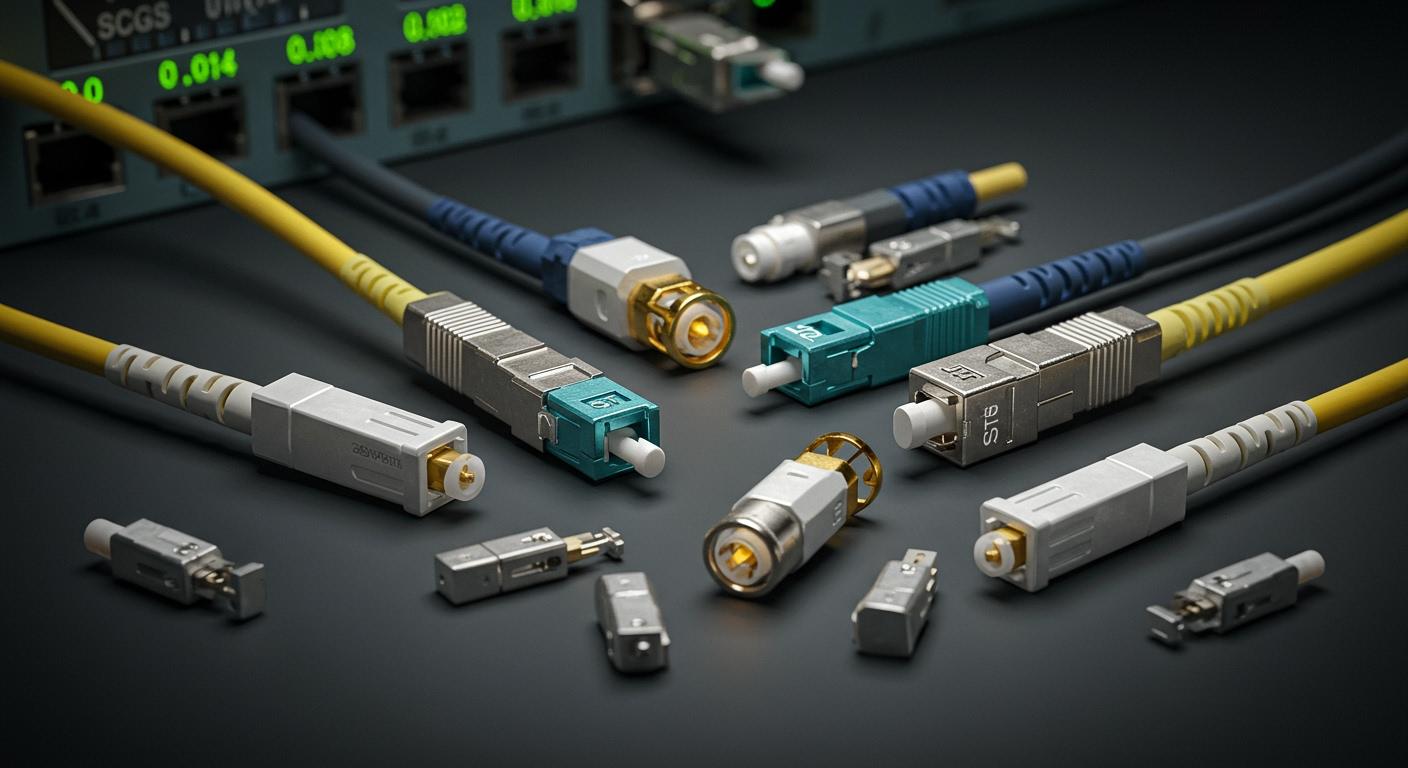
A fiber optic connector lets you join fiber optic cables so light signals can move between them with little loss. You need precise terminations and quick connections to keep your network running fast and stable. These connectors play a big role in modern data systems. You can see their importance in the market’s rapid growth, which reached over $5.9 billion in 2024 and is expected to pass $14 billion by 2034.
Key Takeaways
Fiber optic connectors link cables so light can pass through easily. This helps your network stay quick and steady.
There are different connectors, like SC, LC, and MPO. Each one is made for a special job. Pick the connector that fits your space and data needs.
Keep connectors clean so dust and fingerprints do not block light. Clean them with lint-free wipes.
Make sure the connector works with your fiber and network. This gives you a strong and good connection.
Pick connectors with low insertion loss and high durability. These things help your network work well.
Fiber Optic Connector Definition
What It Is
A fiber optic connector joins two fiber optic cables. This lets light signals move from one cable to another with almost no loss. The connector helps the light travel smoothly between the cables. People also call this connector a termination. You must line up the cables very carefully. Even a small gap or a little dust can block the light and cause trouble in your network. Fiber optic connectors are different from electrical connectors. Electrical connectors carry electricity, but fiber optic connectors move light pulses. Because of this, you must keep the connector clean and tightly attached.
Tip: Be gentle when you touch fiber optic connectors. Dust or fingerprints can block the light and slow down your network.
Fiber optic connectors have a few main parts that help them work:
Connector housing: This is the biggest part. It is made of plastic or metal. It holds all the other parts together.
Ferrule: This is a small tube made from ceramic, plastic, metal, or glass. It keeps the fiber in place and lines it up.
Flange: This part holds the ferrule inside the housing.
Crimp sleeve: This is made of soft metal. It holds the cable’s strong parts to the connector.
Strain relief boot: This part helps control bending and stops stress on the fiber.
Spring: It pushes on the connector to keep a strong connection.
Backshell: This lets the fiber go through and supports the crimp sleeve.
Main Functions
You use a fiber optic connector to make sure your cables connect well and send light signals clearly. The connector holds the cable ends together inside the ferrule. This keeps the fibers lined up so the light can move from one cable to the next without stopping. Some connectors use springs to keep the connection tight. This helps stop the cables from coming apart by accident.
Here is a table that shows how fiber optic connectors help your network compared to other ways to connect cables:
Feature | Fiber Optic Connectors | Other Connection Methods |
|---|---|---|
Signal Loss | Minimal | Higher |
Data Transmission Speed | Maximized | Variable |
Quality of Transmission | High | Often lower |
Fiber optic connectors do many important jobs in networks:
Function | Description |
|---|---|
Secure Connection | Connectors join cables tightly, letting light pulses move without stopping. |
Termination | They connect the ends of cables and hold them together inside the ferrule. |
Ferrule Mechanism | Ferrules keep the connection tight and can use different designs like screw, bayonet, or snap. |
Constant Force Connection | Some connectors have springs to keep the connection strong. |
Reduced Accidental Disconnection | The design makes it harder to pull the cables apart by mistake. |
Compatibility with Devices | Connectors let cables work with converters or plug right into devices. |
You must line up the cables very carefully when you use a fiber optic connector. The ferrule keeps the fiber ends in the right place, which is very important for moving light. Fiber optic technology needs more accuracy than electrical connections. If you do not line up the fibers well, you will lose signal and your network will slow down. Always check that the connector is clean and tightly connected. This helps your fiber optic cable work its best.
Types of Fiber Optic Connectors
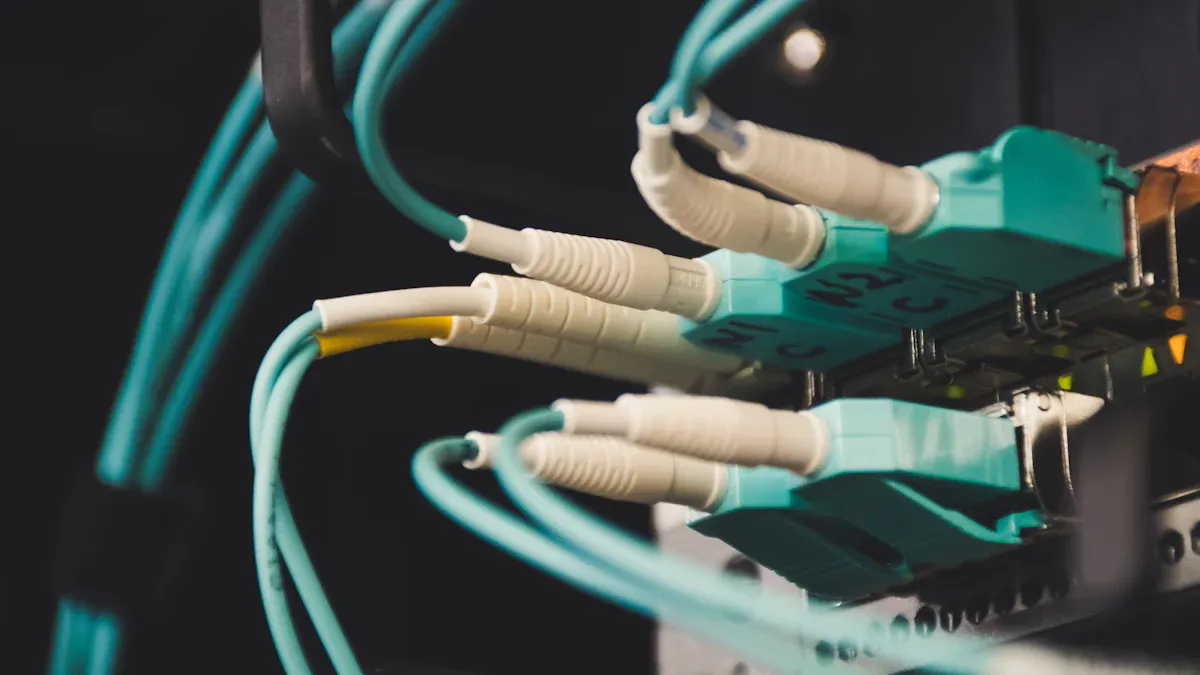
Fiber optic connectors come in many types and sizes. You can find them in networks, data centers, and factories. Each connector has a special shape. This helps you connect cables fast and keep signals strong.
SC Connector
The sc connector is common in many networks. It has a square shape and uses a push-pull lock. You can connect or remove it quickly. The sc connector has a 2.5mm ferrule to line up the fiber. People use the sc connector in phone and data networks. It works with single-mode and multi-mode fibers. The sc connector is good for quick setup and steady data.
| Characteristic — Description — | Shape — Square with push-pull mechanism — | Ferrule Size — 2.5mm for precise alignment — | Durability — Low insertion loss, high-speed data — | Applications — Telecommunications, data networks —
You will see the sc connector where fast setup is needed. It gives a strong link and keeps your network working well.
LC Connector
The lc connector is used in places with lots of cables. It saves space because it is small. The lc connector has a long clip. You can remove it easily, even in tight spots. The lc connector often comes in duplex form. This lets you send and get signals at once. You will find the lc connector in many networks.
Small size saves space
Simple to use with fewer steps
You can switch the polarity easily
The lc connector is great when you need many cables close together. It helps you build networks that do not waste space.
ST Connector
The st connector is round and uses a twist and lock system. You push it in and twist to lock it. It has a spring to keep the link steady. The st connector is used in factories, control systems, and the military. It works well in tough places.
| Feature — Description — | Reliability — Bayonet-style coupling for stable connections — | Durability — Metal housing protects against stress — | Compatibility — Works with legacy systems —
You can trust the st connector in hard conditions. It is easy to care for and works in old systems.
FC Connector
The fc connector uses a screw-on system. You twist it to keep it tight. It has a ceramic or steel ferrule for good fiber placement. The fc connector can handle heat, water, and dust. You will see the fc connector in places with lots of shaking or harsh weather.
| Feature — Description — | Threaded Coupling — Screws in for strong connection — | Durable Ferrule — Ceramic or steel for precise alignment — | Environmental Resistance — Withstands temperature, moisture, dust —
Use the fc connector when you need a tight link that will not come loose. It is best for singlemode fiber and places with lots of movement.
MTP/MPO Connector
The mtp connector and mpo connector are for lots of cables in one place. They can hold many channels, from 4 to 72. These connectors let you join many fibers at once. You will see them in data centers. They make cabling strong and neat. You can change the mtp connector and mpo connector to fit your needs.
Good for lots of cables in data centers
Handles many channels for fast links
You can change them for different setups
The mtp connector and mpo connector help you build big networks fast. They keep your cables tidy and easy to work with.
Duplex Connectors
Duplex connectors let you send and get signals at the same time. You use them in fast networks. They have two strands, one for sending and one for getting. You can use full-duplex mode, so data moves both ways. Duplex connectors are used in data centers and phone networks.
Tip: Use duplex connectors for two-way data in your network. They help your data move fast and smooth.
You will find duplex connectors in lc connector, sc connector, and mpo connector types. They make your network work better.
Most Widely Used Fiber Optic Connectors
These fiber optic connectors are used most in business and factories:
lc connector: Small, saves space, easy to use
sc connector: Standard, fast setup, steady
mpo connector: Many channels, small, can be changed
fc connector: Good alignment, strong in tough places
st connector: Steady, strong, works in old systems
Pick the right connector by thinking about what you need and where you use it.
Connector Uses
Telecommunications
Connectors help keep telecom networks working well. Fiber optic connectors join cables to equipment or other cables. This makes the connection easy to change or remove. You can fix or upgrade your network fast. You do not need to cut or splice cables. Here are some ways connectors help in telecom:
Connect and end fiber optic cables for strong links.
Join cables to network gear or patch panels.
Make fixing and upgrading simple with easy-to-remove connectors.
Change your network quickly without cutting cables.
SC connectors work best for telecom and broadband. LC connectors are good for crowded spaces. ST connectors fit military and factory needs. MTP/MPO connectors help big networks. FC connectors are used in labs and places needing careful work.
Data Centers
Connectors help data centers move information quickly. Fiber optic cables send lots of data fast. This means less waiting and better performance. MPO and MTP connectors join many fibers in one plug. This saves space and makes setup faster. You can grow your data center easily as you need more room.
MPO/MTP connectors help manage many links in small spaces.
You get steady data with little signal loss, even far away.
New connectors make cables easy to organize and help future growth.
Tip: Use small connectors like MPO/MTP to keep your data center neat and ready to grow.
Medical Equipment
Connectors are found in many medical machines. They help send clear signals for pictures and tests. The right connector gives sharp images and correct results. Here is a table with common connectors in medical gear:
Connector Type | Application | Description |
|---|---|---|
Radiall Connectors | Diagnostic Imaging | Sends signals for sharp, clear images. |
Fiber Optic Oxygen Sensors | Medical Devices | Used in patient checks and test tools. |
Intra Aortic Balloon Catheters | Diagnostic Procedures | Needed for some heart tests. |
Laser Treatments | Medical Applications | Gives exact control for treatments. |
ODU medical connectors are used in imaging, checks, and surgery tools. You can pick fiber optic, mixed, or non-magnetic types for different jobs.
Industrial Networks
Connectors help keep factories and plants working safely. Fiber optic cables send fast data for robots and controls. Connectors keep signals strong, even with lots of electrical noise. You can send data far with little loss. Fiber optic connectors also help HD video checks in robot systems.
Fiber optic systems send quick data for factory jobs.
Connectors keep signals clear in noisy places.
You can watch and control machines from far away.
HD video checks use connectors for live quality tests.
Note: Pick the right connector to keep your factory network safe and working well.
Choosing Connectors
Application Needs
Think about where you will use the connector first. Each job needs something special. Some places need connectors that block water or gas. There are different ways to seal connectors:
Inner sealing keeps water or gas out of the connector’s inside.
Panel sealing stops water or gas from going through the panel hole.
Mating sealing helps the connector work well when you join two parts.
Color codes help you pick the right connector for your work. If you use TIA 568 color rules, it is easier to match connectors to cables.
Tip: Always look at the environment. If it is very cold, water can get in and freeze. This can bend the fibers and stop data from moving.
Performance
You want your connector to keep your network fast and strong. Two things to check are insertion loss and return loss. Insertion loss means how much signal is lost in the connector. Return loss means how much signal bounces back. Good connectors keep both numbers low. This helps your fiber optic cable work better.
Good connectors lower signal loss and mistakes.
Strong connectors protect against bad weather and keep your network working.
Well-made connectors help your network stay steady.
Compatibility
Make sure your connector fits your network. Connectors come in different shapes and follow different rules. The kind of fiber optic cable, like single-mode or multimode, is important too. Use this table to help you check if things match:
Compatibility Consideration | Description |
|---|---|
Connector Types and Standards | Make sure the connector type fits your system. |
Matching to Network Infrastructure | Pick a connector that fits your cable and setup. |
Environmental and Mechanical Factors | Choose a connector that can handle your space and daily use. |
Testing and Certification | Use connectors that meet industry rules for best results. |
Industry rules, like the duplex LC connector, help connectors work together. These rules keep your network safe and help you avoid problems when you mix connectors.
Now you know a fiber optic connector joins cables for fast data. Each connector type has its own special use. Picking the right one keeps your network strong and ready. Here are some important things to remember:
| Consideration — Description | |—|—| | Insertion Loss — Keep it low for best results | | Durability — Pick a connector that will last | | Compatibility — Make sure it fits your fiber type |
Keep learning about new trends and always use good ways to install and care for connectors.
FAQ
What is the main job of a fiber optic connector?
A fiber optic connector joins two fiber cables. You use it to keep light signals moving with little loss. This helps your network stay fast and reliable.
How do you keep fiber optic connectors clean?
Always use a lint-free wipe or special cleaning tool. Dust or fingerprints can block the light. Clean the connector before you connect it to another cable.
Can you reuse fiber optic connectors?
You can reuse some connectors if you clean and inspect them first. Some types, like field-installable connectors, work well for reuse. Always check for damage before using them again.
Which connector should you pick for a small space?
LC connectors work best in tight spaces.
They have a small size and fit many cables close together.
You save space and keep your network neat.