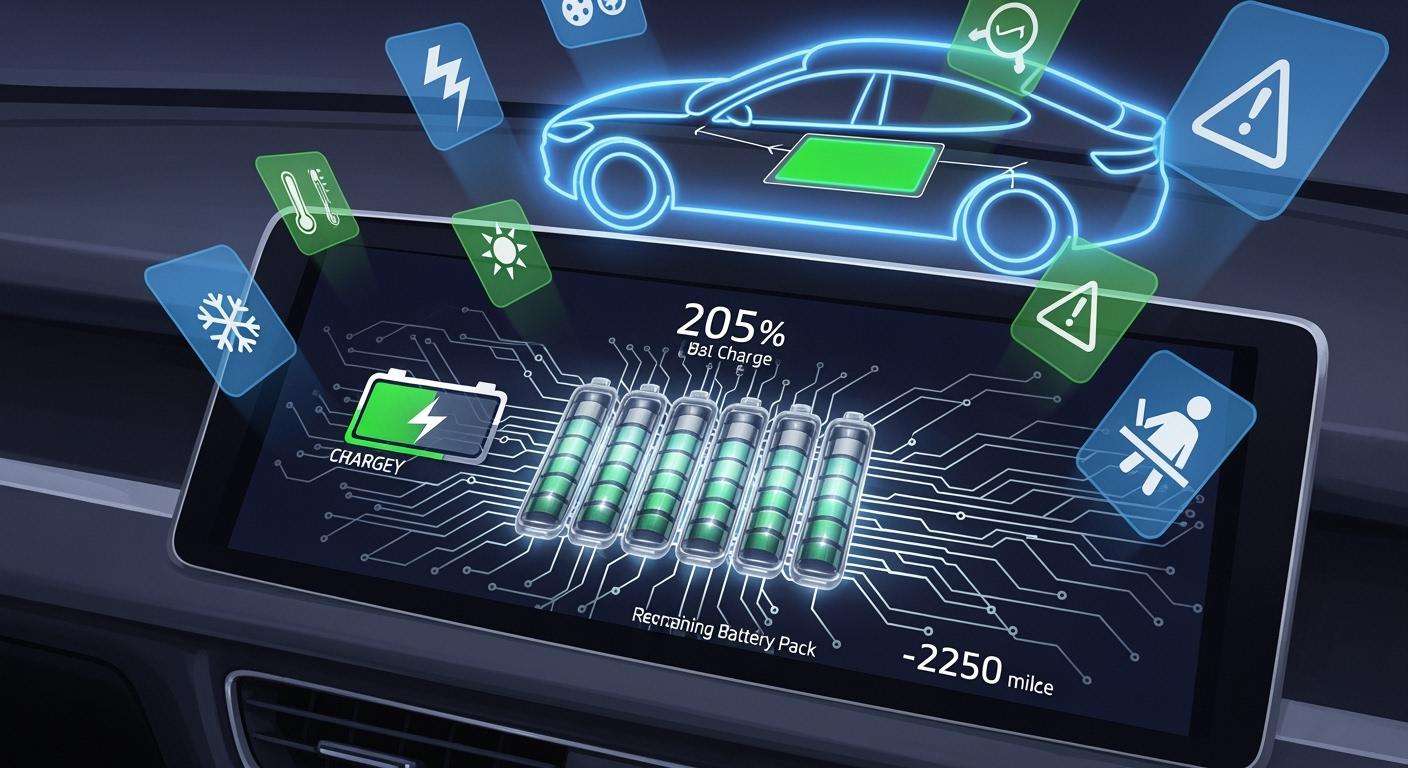
A battery management system in electric vehicles helps you check and control the battery pack. This system uses sensors to watch temperature, voltage, and current. It protects your battery from harm and keeps your car safe. Almost every new electric vehicle in 2024 has this technology. More than 90% use advanced designs. You should learn about battery management systems. They make cars more reliable, help batteries last longer, and stop problems like getting too hot or failing early.
Key Takeaways
A Battery Management System (BMS) watches battery health. It checks voltage, current, and temperature. This keeps the battery safe and reliable.
BMS helps the battery last longer. It controls charging and discharging. It stops overcharging and deep discharging.
Cell balancing is very important. It makes sure all battery cells charge the same. This stops early damage and helps the battery work better.
Thermal management keeps the battery at the best temperature. This makes the battery work well and stops it from getting too hot.
Knowing about BMS technology helps you choose wisely. It makes your electric vehicle safer and work better.
Why Battery Management Systems Matter in Electric Vehicles
Essential Roles of BMS
A battery management system helps electric vehicles work safely. It checks things like voltage, current, and temperature. This helps stop problems like overheating or short circuits. You can see updates about your battery’s health and charge. The system also shares information with other parts of your car. This makes sure everything works well together.
Tip: Think of a battery management system as a smart helper for your car’s battery. It watches each cell and acts fast to keep you and your car safe.
Here is a table that lists the main jobs and what they mean:
Function | Description |
|---|---|
Real-time Monitoring | Watches voltage, current, and temperature of each cell. |
State Estimation | Figures out State of Charge (SOC) and State of Health (SOH) of the battery pack. |
Cell Balancing | Makes sure all cells have the same charge for good performance. |
Thermal Management | Keeps battery temperatures safe and steady. |
Safety Mechanisms | Stops overcharging, over-discharging, and short circuits. |
Communication | Talks to other car systems for smooth driving. |
Fault Diagnosis | Finds and fixes problems so you can get repairs quickly. |
Benefits for Battery Health and Longevity
You want your electric vehicle’s battery to last a long time. Battery management systems help make this happen. They control charging and discharging so the battery does not get hurt. These systems use energy wisely and keep the battery in good shape.
Battery management systems keep voltage even across all cells, so no cell wears out too fast.
Smart charging changes the charging speed based on battery health and temperature.
You are protected from using the battery too much or charging too often, so your car stays reliable.
The system checks battery health and tells you when to get maintenance, so you avoid sudden problems.
Here is a table that shows how battery management systems help batteries last longer:
Feature | Description |
|---|---|
Charging and Discharging Cycles | Controls cycles to stop overcharging and deep discharging. |
Energy Usage Optimization | Uses energy in a smart way to help the battery last. |
Optimal Operating Conditions | Keeps the battery in the best shape. |
Active Cell Balancing | Makes sure all cells have the same voltage to stop problems. |
Smart Charging Algorithms | Changes charging speed for battery health and temperature. |
When you use a battery management system, your electric vehicle’s battery is safer and lasts longer.
Key Functions of a Battery Management System
A battery management system acts like the brain for your battery. You depend on it to keep your battery safe and healthy. Each part of the system has a special job. These jobs help your electric vehicle run well and stay safe. Let’s see what these main jobs are and how they help your battery and car.
Monitoring and Control
You need to know what is happening inside your battery. The battery management system checks important things all the time. It looks at voltage for each cell and the whole battery. It measures the current going through the battery. It also checks the temperature of every cell. This helps you find problems before they get worse.
The system uses special technology to give you good data. It tells you about your battery’s state of charge and state of health. This helps you know how much energy you have left. It also helps you know how long your battery will last. If the system finds a problem, it can act fast to keep you safe.
Note: Real-time checks help find problems, balance cells, and control heat. These things are important for good battery performance and a reliable car.
Technology Description | Advantages |
|---|---|
Electrochemical model-based adaptive interconnected observer | Watches data in real time, gives better SOC and SOH numbers, works for the battery’s whole life, uses aging details right away, helps improve battery health checks |
Cell Balancing
Not all battery cells charge or empty at the same speed. If some cells get too full or too empty, your battery can wear out faster. The battery management system uses cell balancing to keep all cells at the same level.
When cells are balanced, your car can use all the battery’s power. If cells are not balanced, you may have these problems:
You cannot use all the battery’s energy because of the weakest cell.
Cells that get too full or too empty wear out faster.
The battery pack may not last as long if one cell fails.
Cells that are not balanced can get too hot or short-circuit.
There are two main ways to balance cells:
Technique | Description | Advantages | Disadvantages |
|---|---|---|---|
Active Cell Balancing | Moves energy between cells to make charge levels even. | Makes the battery last longer and work better. | Needs a more complex design. |
Passive Cell Balancing | Gets rid of extra energy as heat to balance cells. | Easier to design and use. | Wastes energy and is less efficient. |
Active cell balancing helps your battery last longer and work better. Passive cell balancing is easier but wastes some energy as heat.
Protection and Safety
You want your car to be safe every time you drive. The battery management system keeps your battery safe from things like too much current, short circuits, and getting too hot. It uses fuses to stop too much current from hurting the battery. If something goes wrong, the fuse blows and stops the circuit to keep you safe.
The system also makes sure high-voltage parts stay away from low-voltage parts. This keeps you safe from shocks and short circuits. By watching voltage, temperature, and charge, the system can act fast to stop dangers.
You can trust your battery management system to follow strict safety rules, like:
IEC 61508 (Functional Safety Standard)
ISO 26262 (Automotive Functional Safety)
UL 1973
EU CO₂ Emissions Regulations
SAE International BMS Standards
Battery passport and traceability rules
Post-crash steps
Thermal Management
Batteries work best in a certain temperature range. If your battery gets too hot or too cold, it can lose power or get old faster. It can even become unsafe. The battery management system uses thermal management to keep the battery at the right temperature.
Good thermal management keeps your battery in the best range. This helps your battery give more power and last longer.
It helps all cells stay at the same temperature, so your battery works evenly.
The system stops thermal runaway, which can cause fires or explosions.
To cool the battery, the system may use:
Liquid cooling, which takes away heat fast and keeps things steady.
Ribbon-shaped cooling tubes, which cool evenly but are harder to make.
Cooling plates, which are simple but may not cool every part.
Direct or immersive cooling, which works best but costs more.
Phase-change materials, which soak up heat and keep things stable.
Charging and Discharging Regulation
Charging and discharging are very important for your battery. The battery management system controls these to keep your battery healthy. It checks the state of charge, depth of discharge, voltage, and temperature to keep things safe.
The battery management system always checks and controls key things like SOC, DOD, voltage, and temperature to keep your car safe and working well.
You get many benefits from this control:
The system stops overcharging and over-discharging, which can hurt your battery.
It makes sure all cells get the right amount of energy.
It keeps the battery in the best temperature range, usually between 15°C and 30°C.
It checks how much of the battery you use at once.
If you do not have a battery management system, you may have these problems:
Consequence | Description |
|---|---|
Faster battery wear | Using up the battery too much can make it lose power and not last as long. |
Cells not working together | Deep discharging makes some cells get old faster, so the battery does not work as well. |
Heat dangers | Low charge can make heat inside, which can be unsafe. |
Battery gets worse over time | Using up the battery too much can make it lose range, take longer to charge, and cost more to fix. |
With a battery management system, your car’s battery stays safe, lasts longer, and works well every time you drive.
Main Components of Battery Management Systems
Hardware Elements
A battery management system has many important hardware parts. These parts help keep your battery pack safe and working well. Each part does something special. Sensors check the voltage and current in your battery pack and each cell. Isolation circuits keep your battery safe from electrical noise and dangerous problems. Protection circuits stop things like overcharging or over-discharging. Charging circuits control how your battery pack charges and when to stop.
Here is a table that lists the main hardware parts and what they do:
Component | Description |
|---|---|
Voltage and Current Sensors | Measure the voltage and current of the battery pack and individual cells for safe operation. |
Isolation Circuits | Prevent electrical noise and protect the BMS from overvoltage and overcurrent conditions. |
Protection Circuits | Safeguard the battery from overcharging, over-discharging, and other adverse conditions. |
Charging Circuits | Control the charging process, including charging rate and termination criteria. |
Tip: Strong hardware in your battery management system helps protect your battery pack from harm and makes it last longer.
Software and Algorithms
Smart software and algorithms are also needed to manage your battery pack. The software checks your battery all the time. It watches for changes in temperature, voltage, and other important things. Algorithms help find problems early and keep your battery safe. They can tell if a change is normal or if something is really wrong. This means you get fewer false alarms and faster help when there is a real problem.
The software also helps control the battery’s temperature. It keeps your battery pack at the best temperature for good performance. You can trust these systems to find risks like overcharging or too much heat. They use advanced ways to find many kinds of battery problems.
Here is a table that shows how software and algorithms help your battery pack:
Aspect | Contribution |
|---|---|
Thermal Management | Ensures optimal thermal behavior, maximizing battery lifespan and performance through monitoring and control. |
Fault Detection Mechanisms | Continuously monitors parameters like voltage and temperature to identify potential issues early. |
Algorithm Precision | Distinguishes between normal fluctuations and genuine faults, minimizing false alarms and ensuring prompt action. |
Find problems early and use control steps.
Use special ways to find many battery problems.
Note: Good software and algorithms make your battery pack safer, smarter, and more reliable.
BMS Operation in Electric Vehicles
Step-by-Step Process
You can learn how a battery management system works in electric vehicles by looking at each step. When you turn on your electric car, the system starts and checks the battery pack. It looks at voltage, current, and temperature for every cell. This lets you know if the battery is safe.
After that, the system checks how much charge is left. You see how much energy your battery has. The battery management system makes sure all cells work at the same level. This keeps your battery pack healthy and helps it work better.
While you drive, the system keeps watching the battery. It controls charging and discharging to protect the battery pack. If the temperature gets too high or too low, the system changes cooling or heating. This helps your electric vehicle stay safe and work well.
When you plug in your car to charge, the system manages how fast it charges. It stops charging when the battery pack is full. This keeps the battery from getting too much charge and helps it last longer. You can trust the system to keep your electric vehicle working every day.
Tip: A battery management system always checks the charge and keeps your battery pack safe at every step.
Real-World Scenarios
There are many times when battery management systems make electric vehicles safer and more reliable. In cold weather, the system warms the battery pack so your car starts easily. On hot days, it cools the battery to stop overheating. This keeps the battery safe and helps it work well.
Most electric vehicles use lithium-ion batteries. These batteries can be affected by temperature changes. The battery management system keeps the battery pack in a safe range. This stops problems like thermal runaway, which can damage the battery. You get better performance and longer battery life.
When you drive up a steep hill, the system gives you the power you need without hurting the battery. If you use fast charging, the system controls how it charges to protect the battery pack. You can see how the system helps electric vehicles work well in many different situations.
Scenario | How BMS Helps Improve Performance and Efficiency |
|---|---|
Cold Weather | Warms battery pack for better starting and efficiency |
Hot Weather | Cools battery to prevent overheating and damage |
Fast Charging | Controls charging speed for safety and battery health |
Steep Hills | Balances power use for best performance |
You can rely on the battery management system to keep your electric vehicle safe, efficient, and ready for any road.
Battery Safety and Performance with BMS
Preventing Overcharge and Overdischarge
You want your electric car to be safe and work well. The battery management system helps stop overcharging and over-discharging. These problems can hurt your battery and make it work worse. Here is how the system keeps your car safe:
The system checks each battery cell’s voltage all the time using sensors.
It sets safe voltage limits, like 4.2 volts at the top and 2.5 volts at the bottom.
If a cell gets too full while charging, the system stops charging and gives you a warning.
If a cell gets too empty while using power, the system stops discharging and warns you with a low battery alert.
The system can change how much current and voltage goes to the cells to keep them safe and balanced.
Tip: These steps help stop battery damage and keep your electric car working well.
You should also know about problems the battery management system helps prevent. Here is a table that shows some of these problems:
Failure Mode | Description |
|---|---|
Physical Damage | Accidents or bumps can hurt the battery and cause it to fail. |
Chemical Issues | Changes inside the battery can make parts fail, so the system checks and balances them. |
Overcharge/Over-discharge | The system controls these to stop single cells from failing in the battery pack. |
Other risks can happen too:
Very hot or cold temperatures can make the battery stop working.
Charging too much or using too much power can break battery cells.
Crashes can damage the battery and make it unsafe.
Enhancing Battery Life and Reliability
You want your electric car to last a long time and work well. The battery management system helps by keeping the state of charge and state of health in the best range. It checks every cell and makes sure they all work together. If some cells get old faster, the system balances them. This keeps your battery strong and helps you get the most from every charge.
Studies show battery management systems help lithium-ion batteries last longer. The system lowers how often you need to charge and recharge. It keeps all cells in good shape. This means your car’s battery stays strong and reliable for more years.
Note: You get better battery power, more energy, and more miles from every charge with a good battery management system.
You can count on the system to give you:
Longer battery life
Fewer sudden problems
Better performance in all driving conditions
Higher efficiency for your electric car
With a battery management system, your battery is safer, lasts longer, and your car works better every time you drive.
Future Trends and Challenges in Battery Management Systems
Current Limitations
Battery management systems in electric vehicles still have some big problems. These systems need to work with new battery types and different ways people drive. Here are some of the main problems you might notice:
It is hard to check battery state in real time, especially as batteries get older.
Data security is a bigger worry as more cars connect to the internet.
It is tough to control temperature, especially in very hot or cold weather.
Charging and discharging do not always work perfectly, which can hurt battery life.
It is still hard to guess how long a battery will last.
Sometimes, there is not enough power to run the system well.
Getting rid of old batteries and recycling them is a new problem.
You can see more about these problems in this table:
Limitation Type | Description |
|---|---|
State Estimation | Systems often use lab data, but this may not work for old batteries in electric vehicles. |
Safety | Lithium-ion batteries can get too hot or catch fire if not managed right. |
Efficiency | Fast charging can waste energy as heat, which lowers efficiency. |
Reliability | Cells that are not balanced or are damaged can cause safety and reliability problems. |
Reuse Challenges | Using old batteries again brings new problems for electric vehicles. |
Innovations and Emerging Solutions
Many new ideas are being used to fix these problems in electric vehicles. Companies now use smart battery management systems with better ways to find problems and machine learning. These systems help you find issues early and keep your battery safe.
Some of the newest ideas are:
Self-healing electrolytes that fix themselves, so batteries last longer.
Nanostructured thermal barriers that help control heat and stop overheating.
AI-powered systems that watch battery health and warn you before something goes wrong.
Smart charging systems that change power based on battery state and temperature.
Innovation Type | Description |
|---|---|
Self-healing electrolytes | Materials that fix themselves after damage, making batteries safer and last longer in electric vehicles. |
Nanostructured thermal barriers | Barriers that control heat better, so batteries do not get too hot. |
Smart battery management | Uses machine learning to watch batteries and find problems in electric vehicles. |
In the future, electric vehicles may use wireless battery management, solid-state batteries, and battery passports that track a battery’s history. These new things will help make electric vehicles safer, more reliable, and better for the planet.
You need a Battery Management System to keep your electric car safe. BMS helps your car work well and last longer. It checks your battery’s health and keeps you safe from harm. BMS also helps your car run better every day. When you know about BMS, you can make better choices for your car.
Learning about new BMS technology gives you lots of good things:
Your battery works better and uses energy well.
You are safer because BMS watches your battery closely.
It is easier to follow new rules and standards.
You can use cool features like checking your battery from far away.
FAQ
What happens if your electric vehicle does not have a BMS?
You risk battery damage, overheating, or even fire. The battery may not last as long. You will not get safety alerts or balanced charging. Your car could stop working without warning.
Can you replace or upgrade your BMS?
Yes, you can replace or upgrade your BMS. Always use a system made for your battery pack. Ask a trained technician for help. Using the wrong BMS can damage your battery or make your car unsafe.
How does a BMS help in cold or hot weather?
A BMS controls battery temperature. It warms the battery in cold weather and cools it in hot weather. This keeps your battery safe and helps your car run well in any season.
Does a BMS affect how far you can drive?
Yes, a BMS helps you get more miles from each charge. It balances cells and manages energy use. You get better range and fewer problems with your battery.
What should you do if your BMS shows a warning?
Stop your car safely. Check the warning message on your dashboard. You may need to visit a service center. Do not ignore BMS warnings. They help protect you and your battery.