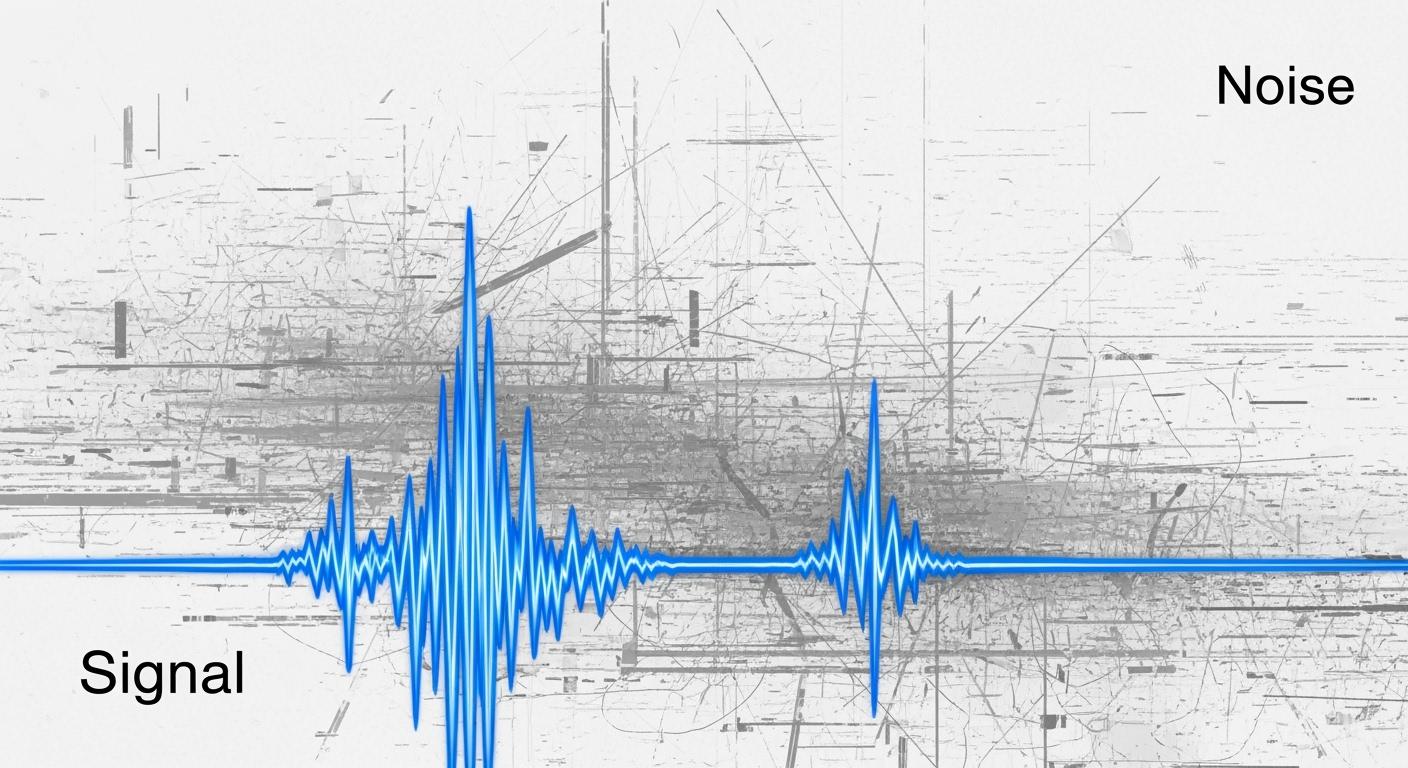
You can think of signal to noise ratio as a way to compare how strong a signal is to how much unwanted noise there is. Imagine you are talking to a friend in a busy cafeteria. If your friend’s voice is louder than the background sounds, you can hear what they say clearly. In electronics and signal transmission, a high ratio means devices can work with less trouble from noise. Studies show that when the ratio is low, signals can get weaker, which makes things work less well and less reliably. A strong signal to noise ratio helps communication stay clear and helps devices work better.
Key Takeaways
Signal to Noise Ratio (SNR) shows how strong a signal is compared to noise. If SNR is higher, communication is clearer.
Devices with high SNR work better and are more dependable. Try to find devices with SNR over 60 dB for best results.
You can figure out SNR by using easy ways like subtracting decibels. This lets you check signal quality fast.
You can make SNR better by lowering noise and making the signal stronger. Use good equipment and set it up right to do this.
Knowing about SNR is important in many areas, like audio, video, and medical imaging. Good SNR gives better results and fewer mistakes.
Signal to Noise Ratio Basics

What Is Signal to Noise Ratio
You hear about signal to noise ratio in electronics. It shows how strong a signal is compared to noise. A high signal to noise ratio means the signal is clear. There is not much interference. If the ratio is low, noise can cover the signal. This makes it hard to use or understand. Many devices use this ratio, like radios and smartphones. Engineers check signal to noise ratio to see how well a device works. They want to separate good information from background noise.
SNR Units and Simple Example
You can measure snr in two ways. Most people use decibels, or dB. Decibels help you compare systems easily. Sometimes, snr is shown as a raw ratio, like 100:1. Decibels let you see changes in quality fast. If your signal is 100 times stronger than noise, snr is 20 dB. Here is a quick list to show snr:
snr as a raw ratio (like 50:1)
snr as a decibel value (like 17 dB)
Technical papers use decibels for snr. The formula is 20*log10(signal/noise). This helps you compare systems and make better designs.
Aspect | Description |
|---|---|
Measurement Method | Sequential Gaussian mixture estimation |
Ratio of the smallest standard deviation to the largest on the decibel scale | |
Application | Helps develop noise reduction algorithms for speech recognition |
SNR in Electronics and Communication
Signal to noise ratio is important in many areas. Communication systems need high snr for good data transmission. Audio and video devices use snr for clear sound and pictures. Factories use snr for accurate measurements. Cameras and imaging use snr for sharp photos. The table below shows where snr matters most:
Field | Importance of SNR |
|---|---|
Communication Systems | Makes sure data is sent well in wireless and wired systems. |
Audio and Video Quality | Improves sound and picture quality for new technology. |
Industrial Applications | Gives good data and measurements in many jobs. |
Imaging and Photography | Makes images clear and detailed for science and medicine. |
Everyday Analogy
Picture talking to a friend in a noisy room. Your friend’s voice is the signal. The other sounds are the noise. If your friend talks louder than the noise, you hear every word. If the noise gets louder, it is hard to listen. This shows why a high signal to noise ratio is needed. You want the signal to be easy to hear. Devices use this idea to give strong signals and less noise. Good designs always try for a strong signal to noise ratio.
Why SNR Matters
Device Performance and Reliability
You want your devices to work well each time. Signal to noise ratio is important for this. If the signal is strong and noise is low, snr is high. This helps your device get clear information. When the ratio goes down, noise can hide the signal. This makes your device less reliable. Here are some things that change how well your device works:
A strong and clear signal gives a higher snr.
Noise from other electronics can make snr lower.
Good equipment can cut down noise and raise snr.
Smart data processing can take away noise and help the ratio.
A high snr means you get better measurements and sharper pictures. It also means your results are more reliable. Devices with high snr work better and last longer.
SNR in Wireless and Audio Systems
You use wireless networks and audio systems a lot. The snr changes how well these systems send and get information. Here is what snr does for communication and sending data:
Quality of transmission: High snr means the signal is much stronger than noise. You can hear music or voices clearly, with no static or hiss.
Error rates: Low snr can cause mistakes when sending data. This can make you lose data or have to send it again, which slows things down.
Bandwidth efficiency: Good snr lets systems send more data at once. This makes everything faster.
A higher snr also means your connection is more stable. For example, in wireless networks, 20 dB or more is good for data. For voice calls, 25 dB or more is best. Access points use snr to check how good the connection is and change things if there is too much noise.
SNR Value Ranges
You can look at snr values to see how good your devices are. Phones and microphones for most people have snr above 60 dB. Some special microphones can go up to 68 dBA. For cable TV, you need at least 43 dB for a good picture. Some systems need up to 51 dB. Speakers should have snr of at least 80 dB. Subwoofers should be above 70 dB. If snr is too low, you will hear more noise and sound or images will not be clear. When you buy devices, pick ones with high snr for the best results.
How to Calculate SNR
Knowing how to calculate snr helps you check signal quality in devices. You can use easy subtraction or special formulas. Both ways show how much stronger the signal is than the noise. This section explains these methods and how to avoid mistakes.
Decibel Subtraction Method
The decibel subtraction method is a fast way to find snr. It works when both signal and noise are in decibels (dB). Here is what you do:
Measure the signal in decibels.
Measure the noise in decibels.
Subtract the noise from the signal.
Tip: When you subtract decibel numbers, you get the ratio of signal to noise. This helps you compare different systems easily.
For example, if a radio signal is -10 dB and the noise is -50 dB, you do this:
Signal: -10 dB
Noise: -50 dB
SNR = -10 – (-50) = 40 dB
This method is quick for checking signal to noise ratio in audio and wireless systems.
Logarithmic Formulas
Sometimes, you need logarithmic formulas to find snr. These are used when you have signal power or amplitude, not decibels. These formulas give more exact snr in engineering and design.
Formula | Description |
|---|---|
10 log₁₀(signal power/noise power) | Use this for power values of signal and noise. |
SNR_dB = signal_dB – noise_dB | Use this if both are already in decibels. |
20 log₁₀(signal amplitude/noise amplitude) | Use this for volts or amperes. |
Pick the formula that matches your units. If you use volts, pick the amplitude formula. If you use watts, pick the power formula. This helps you get the right signal to noise ratio for your system.
Practical Examples to Calculate SNR
You can see how these ways work with real examples. In radio, you measure signal in dBm. If you get a signal at -65 dBm and noise at -85 dBm, you do this:
SNR = -65 – (-85) = 20 dB
This means the signal is 20 dB stronger than the noise. You can use the same way for voltage. If the signal is 2 volts and noise is 0.2 volts, use the amplitude formula:
SNR = 20 log₁₀(2/0.2) = 20 log₁₀(10) = 20 dB
You can use these steps for microphones or cameras too. Always check your units before you start. Mixing volts and decibels can give wrong answers.
Note: Common mistakes in snr math are using peak values, mixing up units, or missing changes in signal or noise. Things like temperature or humidity can also change signal power and noise power. Always measure carefully for the best results.
You may see different kinds of noise in your tests. Here is a table to show where noise comes from and why it matters for snr:
Noise Type | Origin/Characteristics | Importance in SNR Calculation |
|---|---|---|
Shot Noise | Comes from random arrival of photons or electrons. | Important in imaging and astronomy. |
Thermal Noise | Caused by electron movement in resistors. | Affects electronics and wireless communication. |
Dark Current Noise | Random changes in sensor current. | Matters in long exposures. |
Read Noise | Comes from amplifiers and analog-to-digital converters. | Important in low-signal systems. |
Quantization Noise | Happens during digitization. | Affects low-bit-depth audio and video. |
Environmental/System Noise | Comes from EMI, crosstalk, or power supply ripple. | Can dominate if not controlled. |
You can make your signal to noise ratio better by lowering noise or making the signal stronger. Good design and careful measuring help you get the best from your devices.
SNR and Channel Capacity
Shannon-Hartley Theorem
The Shannon-Hartley theorem helps you see how snr changes channel capacity. It says the fastest data rate depends on bandwidth and signal to noise ratio. If snr goes up, channel capacity also gets bigger. But it does not grow twice as fast if you double the signal. Each time snr increases, you get a smaller jump in capacity. Shannon found that white Gaussian noise is the worst kind for communication. So, you must watch out for noise when sending lots of data.
Variable | Description |
|---|---|
C | Channel capacity (in bits per second) |
B | Bandwidth of the channel (in Hertz) |
SNR | Signal-to-Noise Ratio |
Tip: Knowing about snr helps you pick the best bandwidth and signal strength for your system.
SNR in Device Design
You should think about snr when you design electronics and PCBs. Good choices help you get a higher ratio and better signals. Here are some ways to make snr better:
Route traces with care and use the right layers. This controls impedance and stops signal reflections.
Add copper planes for shielding. This blocks outside noise and keeps signals clean.
Pick PCB materials with low loss and use conductors with low resistance. This keeps signals strong and lowers noise.
Doing these things helps your devices work better and send more data.
Importance of Accurate SNR Calculation
You need to calculate snr the right way to get the best results. Good snr math gives you clear signals and less interference. This matters for communication and any device that sends or gets data. If you want your design to be great, you should:
Check your snr numbers before you finish your design.
Use ways to make snr better, like making signals stronger or lowering noise.
Remember, a high ratio means your device works better and lasts longer.
Note: Making snr better can help you save money. You will not need as much error correction and your system will be easier.
Interpreting SNR Values
Good vs. Bad SNR
You can judge the quality of a signal by looking at the snr. A higher snr means you get better signal quality and less noise. If the signal is close to the noise floor, you may see data errors or hear static. In communication systems, you want to keep the snr above certain levels for best results.
Application Type | Recommended SNR (dB) |
|---|---|
Data Networks | 20 or more |
Voice Applications | 25 or more |
A higher snr gives you clearer sound and fewer mistakes.
Low snr can cause data loss and slow down your network.
Devices may need to resend data if the ratio drops too low.
Higher or Lower SNR?
You always want a higher snr. When the signal is much stronger than the noise, you get pure sound and sharp images. For audio, a snr below 70 dB is not enough. High-end speakers should have snr above 110 dB. Cameras with high snr capture more detail and less random noise. This makes pictures sharper and colors brighter. In medical and industrial uses, a high snr helps you see small details and avoid mistakes.
Higher snr means less background noise and better quality.
Low snr can hide important parts of the signal.
High snr is key for clear audio, sharp images, and accurate results.
SNR in Real-World Scenarios
You see the effects of snr every day. In low-light places, a high snr lets cameras capture clear images when others fail. On factory lines, poor snr can cause machines to miss defects. In hospitals, low snr in scans can lead to wrong diagnoses. Security cameras with low snr may miss faces or details. Systems with snr below 25 dB can show 15% more false positives than those with 35 dB. High snr is also important for smart cameras, AI, and robotics. These systems need clear signals to make good decisions.
Scenario | Impact of SNR |
|---|---|
Low-light environments | High snr gives you usable images and better reliability. |
Industrial automation | Poor snr can cause missed defects and lower quality. |
Healthcare diagnostics | Low snr may lead to wrong results and affect patient care. |
Security footage | Bad snr can cause misidentification and security risks. |
General performance | snr below 25 dB increases false positives and wastes resources. |
Tip: Always check the snr when you set up new devices. A good ratio helps you get the best performance and fewer errors.
You should know how to find signal to noise ratio. This helps you get the best from your electronics and communication systems. When you pay attention to SNR, your devices work better. You can send more data and your designs become more dependable.
A higher SNR gives you clearer signals and fewer mistakes.
Simulation tools let you test and improve your designs before you build them.
Simulation Tool Feature | Benefit |
|---|---|
Fast time-domain simulation | Gives quick feedback on signal quality |
Support for corrective options | Lets you check design improvements easily |
These ideas help you make devices that work well and last a long time.
FAQ
What does a high SNR mean for my device?
A high SNR means your device gets a strong signal and not much noise. You will hear sounds more clearly and see sharper pictures. There will be fewer mistakes when your device works. Your device will also last longer and work better.
How can I improve SNR in my home setup?
You can use shielded cables to block noise. Keep your devices away from things that cause interference. Pick good quality equipment for your setup. Lowering background noise and making the signal stronger helps too.
Tip: Put your router or audio gear far from microwaves and cordless phones.
Is SNR only important for audio and video?
SNR is important in many areas, not just audio and video. You see it in wireless networks, medical imaging, cameras, and factory machines. A good SNR helps all these things work well.
Field | SNR Importance |
|---|---|
Audio/Video | Clear sound/images |
Networking | Fewer data errors |
Medical | Accurate results |
Can SNR be too high?
You cannot have too much SNR. A higher SNR always gives you better quality. Most of the time, you want the highest SNR you can get for your device or system.