為您的企業選擇合適的RFID閱讀器

為您的企業選擇合適的RFID閱讀器
圖片來源: unsplash

You should focus on choosing the right RFID reader for your business to ensure you make good choices. You need a reader that is accurate, has a good range, and works well. Compatibility is important because you want your system to run smoothly. Many industries are using RFID more and more. Stores use it to 追蹤庫存 and stop theft. Hospitals use RFID to keep patients safe and track equipment. Factories use these systems to work better. Think about what you need now and what you might need next year. Choosing the right RFID reader can help your business grow.

關鍵要點

  • Figure out what your business needs before picking an RFID reader. Know what problems you want to fix, like keeping track of inventory or making work faster.

  • Find out how you will use RFID in your business. This helps you pick a reader with the right features for your work.

  • Think about how big your business is and how much you do. Pick a reader that can scan the number of tags you have and reach the distance you need.

  • Make sure the reader works with your current systems and tags. This stops problems later as your business grows and technology changes.

  • Check if the RFID reader is tough enough for your workplace. Look for strong designs and high IP ratings for outdoor or hard places.

Choosing the right RFID reader: Key Steps

定義您的業務需求

首先思考一下 what your business needs right now. Ask yourself what problems you want RFID to fix. Maybe you want to track inventory better or make work faster. Some companies use RFID to keep up with tools, equipment, or people. If you own a store, you might want to stop theft or count items faster. In a factory, RFID can help watch raw materials or check product quality. Write down your goals so you remember them. This helps you pick the best RFID reader for your business.

Tip: Write a list of your most important needs. This will help you compare different readers later.

確定用例

Next, think about how you will use RFID readers. Every business is different. You might want to see your inventory in real time. Maybe you want to make inventory work easier and faster. Some stores use RFID to track each product. This helps them know what they have and follow rules. In factories, RFID tags can watch raw materials, save data, and find problems early. You can also use RFID to keep track of tools and machines.

Here are some common ways to use RFID readers:

  • 即時追蹤庫存 to know what you have.

  • Make inventory work automatic to save time and stop mistakes.

  • Watch raw materials and finished products in the factory.

  • Make shopping better with smart fitting rooms.

  • Keep up with tools and equipment to work better.

When you know your use cases, you can look for the right features in a reader. This step is important for picking the best RFID reader.

Assess Volume and Scale

Think about how many things you want to track and how big your business is. Some readers are good for small jobs, but others work for big warehouses. If you need to scan hundreds or thousands of tags at once, you need a strong reader. You should also think about how far the reader can scan and how well it works.

Here’s a table to help you compare how RFID readers work:

應用類型

讀取範圍

讀取率

Read Accuracy

智能門鎖

3–5 英尺

不適用

不適用

倉庫管理

20–30 feet or more

不適用

不適用

手持式讀寫器

不適用

100–200 tags/sec

95%+

Fixed Reader at Portal

不適用

500+ tags/sec

接近100%

庫存跟踪

不適用

不適用

95%+

Pharmaceutical Tracking

不適用

不適用

接近100%

有源RFID

Up to hundreds of feet

不適用

不適用

If you need to scan lots of tags fast, fixed readers at doors are a good pick. For small jobs, handheld readers work well. You should also think about the frequency band and tag type. Passive tags can scan up to 30 feet. Active tags can go much farther. Stronger readers and special antennas can help you scan farther.

Note: If your business gets bigger, you might need a better RFID system. Pick a reader that can handle more work as your business grows.

By following these steps, you can pick the right RFID reader for your business. You match the features to what you need now and later. You get to see your inventory in real time, track items better, and make your business run smoother.

RFID閱讀器類型

RFID閱讀器類型
圖片來源: pexels

When you start looking for the best RFID讀取器, you will see many types. Each one fits a different job. You want to pick the right tool for your business. Let’s break down the main options.

Fixed vs. Mobile Readers

Fixed readers stay in one place. You mount them at doors, gates, or workstations. They scan every tag that passes by. This setup works well for busy warehouses or factories. You get fast and automatic tracking. A standalone rfid reader can work as a fixed reader if you need a simple setup. You do not need a big network or extra software.

Mobile readers move with you. You can carry them around your store, hospital, or warehouse. The zebra handheld rfid reader is a popular choice for this. You can walk up to items and scan them on the spot. This gives you more control and flexibility. You can use a standalone rfid reader in mobile jobs too. It works well for quick checks or small spaces.

Handheld and Portal Options

You will see two main types in this group: handheld readers and portal readers. Handheld readers, like the zebra handheld rfid reader, give you freedom. You can scan items anywhere. You can use them for inventory checks, audits, or finding lost items. The zebra handheld rfid reader is easy to use and set up. You do not need a lot of training.

Portal readers sit at fixed spots, like doors or loading docks. They scan everything that passes through. You get superior read performance in busy areas. Portal readers help you avoid missed scans. They make sure every item gets tracked. You can see the main differences in the table below:

類型

優點

限制

Portal Readers

Reduces errors, automates tracking, enforces compliance

High cost, fixed location, needs maintenance

手持式閱讀器

Flexible, mobile, easy to deploy, lower cost

Labor needed, possible human error, battery life issues

You should think about your workflow. If you need to scan lots of items fast, a portal reader or a fixed standalone rfid reader works best. If you want to move around and scan as you go, pick a zebra handheld rfid reader. Both types help you get the most from your rfid system.

Tip: Try both types in a small test before you buy. You will see which one fits your team and space.

Frequency and Range

LF, HF, UHF Explained

You might wonder why some rfid readers work better in certain places. The answer often comes down to frequency. There are three main types: LF (Low Frequency), HF (High Frequency), and UHF (Ultra High Frequency). Each one has its own strengths.

  • LF rfid works at 125-134 kHz. You see this type in animal tracking or access cards. It reads tags up close.

  • HF rfid uses 13.56 MHz. You find this in library books, smart cards, and some payment systems. It gives you a bit more distance.

  • UHF rfid runs at 860-960 MHz. This is the best choice for tracking lots of items in a warehouse or store. It covers a much bigger area.

快速瀏覽一下 how these compare:

RFID類型

頻率

Average Read Range

LF (Low Frequency)

125-134kHz

高達10厘米

HF(高頻)

13.56 MHz

高達1米

UHF(超高頻)

860 960兆赫

Several meters (up to 10 meters under optimal conditions)

Read Range and Accuracy

You want your rfid reader to pick up tags quickly and from the right distance. The read range tells you how far away the reader can spot a tag. Accuracy means the reader gets the right data every time.

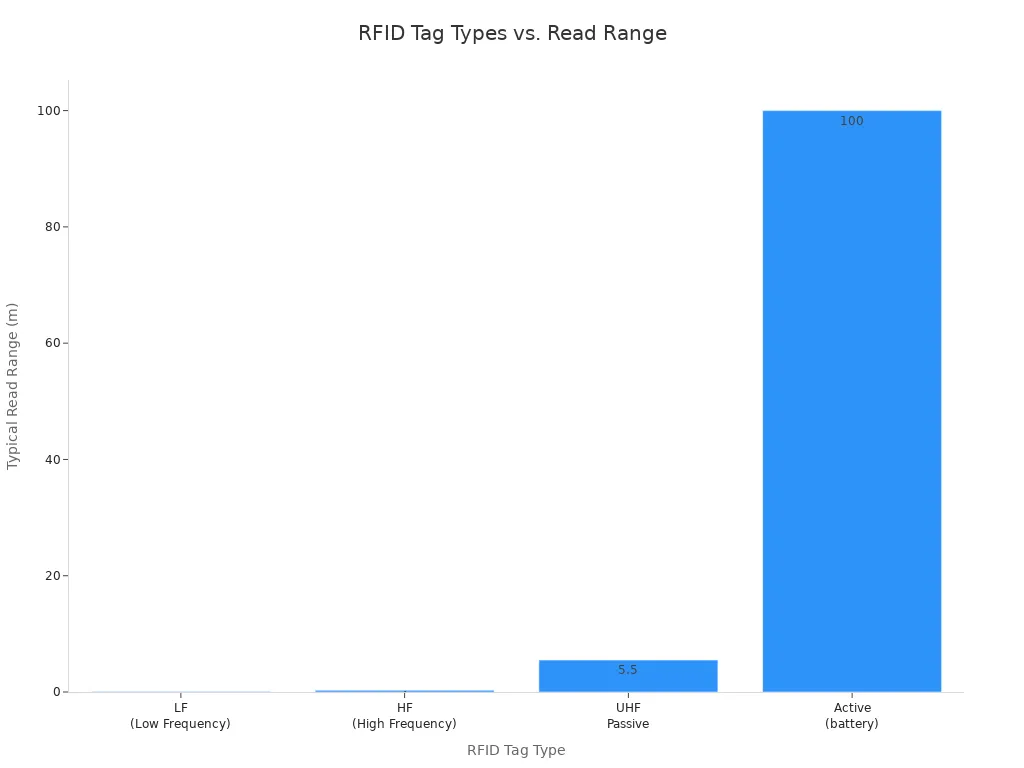
讓我們來分析一下這些數字:

標籤類型

頻率

典型讀取範圍

Max Reported

LF (Low Frequency)

125-134kHz

高達10厘米

1-1.5 m

HF(高頻)

13.56 MHz

高達30厘米

0.5-1 m

UHF Passive

860 960兆赫

1-10 m

15-20 m

Active (battery)

2.4 GHz

100平方米

300+ ft (90+ m)

Bar chart comparing typical read ranges of LF, HF, UHF Passive, and Active RFID tags

If you need long-range rfid reading, UHF or active tags are your best bet. These work well for tracking pallets, vehicles, or large groups of items. For long-range rfid scanning, you should look for a reader that matches your space and tag type. LF and HF work best for close-up jobs, like checking library books or controlling doors.

Tip: Always test your rfid reader in your real space. Walls, metal, and water can change how well it works.

You can pick the right rfid reader by thinking about what you need to track and how far away you want to scan. This helps you get the best results for your business.

兼容性和集成

Tag and System Compatibility

When you pick an rfid reader, you want it to work with your tags and your current systems. Not all rfid tags use the same frequency or format. Some readers only work with certain tags. You should check if your reader supports the tag types you use now and the ones you might use later. This helps you avoid problems as your business grows.

You also need to think about how your rfid reader will fit with your other systems. Many companies face challenges when they try to connect new rfid readers to old software. Here’s a quick look at what some big companies faced:

公司

挑戰描述

耐克

Needed lots of customization and testing to connect rfid to their supply chain system.

沃爾瑪

Had to work with tech partners and invest in new software for real-time rfid data.

馬莎百貨

Updated their IT systems and worked with outside vendors to handle rfid data.

If you plan ahead, you can avoid these problems. Make sure your reader matches your tags and can talk to your other business tools.

軟硬體集成

You want your rfid reader to work smoothly with your software and hardware. This means your reader should connect to your computers, apps, and networks without trouble. Some readers need special drivers or updates. Others work right out of the box. Always check what your reader needs before you buy.

To make sure your rfid system can grow with your business, keep these tips in mind:

  1. Define how you will use your reader and what security you need.

  2. Check if your reader works with your current systems.

  3. Pick a reader that supports many tag types and formats.

  4. Choose a reader that can handle more tags and new standards in the future.

Tip: If you want to future-proof your rfid setup, pick a reader that can handle new software updates and more users as your business grows.

When you focus on compatibility and integration, you set your rfid system up for success. You save time, avoid costly changes, and keep your business ready for what comes next.

耐用性和環境

耐用性和環境
圖片來源: pexels

Ruggedness and IP Ratings

When you pick an RFID reader, you want it to last a long time. You need a device that can take hits, falls, and tough situations. Rugged readers are great for factories, warehouses, and outside areas. They usually have strong cases and sealed parts. Check the IP rating before you buy. IP ratings tell you how well a reader keeps out dust and water. For example, IP65 means the reader can handle dust and water sprays. IP67 means it can survive being dropped in water.

Industry standards help you find a good RFID reader. Look for ARC Certification, which shows the reader works in different places. FCC Part 15 Compliance ensures the reader does not cause radio issues. You also want readers made from strong materials. These readers can handle heat, cold, and hits.

快速瀏覽一下 future trends for RFID reader durability 和性能:

趨勢

簡介

Multi-band compatibility

Readers will support more frequencies, making them flexible and cost-effective.

High performance and low power

New readers will scan faster and use less energy, lasting longer in harsh settings.

小型化、整合化

Smaller readers will fit in tight spaces and work with other tech for better results.

Tip: Always check the IP rating and certifications before you buy a reader. This helps you avoid costly repairs.

室內與室外使用

Think about where you will use your RFID reader. Indoor spaces are usually safe, but you may have metal racks and other devices that cause problems. Outdoor areas have more challenges. Your reader must handle rain, sun, wind, and big temperature changes. You need weather-resistant readers with high IP ratings, like IP65 or IP67.

以下是一些需要注意的事項:

  • Extreme temperatures can make readers fail. Pick readers with wide temperature ranges.

  • Dust, shaking, and chemicals can damage readers. Rugged readers with sealed cases work best.

  • Moisture and UV rays can wear down outdoor readers. Choose readers built for these conditions.

If you plan to use your RFID reader outside, make sure it can handle the weather. You want a reader that keeps working, no matter what.

成本和投資回報率

前期和持續成本

你要知道 how much an RFID reader will set your business back. Prices can change a lot, but you can use this table to get a quick idea:

成本類型

費用範圍

前期費用

$100 – $5,000 per reader

$1,000 – $50,000 for 10 readers

維修費用

15-25% of initial cost yearly

(about $500 to $1,000)

持續營運成本

每年$ 1,000-$ 3,000

You pay an upfront cost when you buy your RFID reader. This covers the device and setup. If you need more than one reader, the price goes up. After you get started, you will have 持續成本. These include software, updates, and support. Most businesses spend about 15-25% of the first cost each year to keep things running. For a small system, this means $500 to $1,000 per year. Bigger systems can cost $1,000 to $3,000 each year.

Tip: Always look at the total cost, not just the price tag. Think about how much you will spend over time.

維護和支持

You want your RFID system to work all the time. Good support and maintenance help you avoid problems. Most vendors give you a free warranty for the first year. You can pay for more years if you want extra peace of mind. If something breaks, you can get help fast. Many companies promise a one-hour response to your support ticket. If you need a part replaced, a technician can come out within 24 hours.

Here’s what you can expect from top vendors:

服務水平

信息

保修政策

Free for 12 months, with extra years available

響應時間

1-hour reply to support requests

問題解決

Remote help first; onsite tech within 24 hours if needed

客戶滿意度

99.5% uptime; surveys after each support call

When you pick an RFID reader, think about how much support you will get. Fast help means less downtime for your business. You want your investment to pay off by making your work easier, not harder.

Note: A good RFID system can boost your business by improving inventory accuracy, cutting labor costs, and making your team more efficient.

Usability and Training

易於使用

You want an rfid system that feels easy from day one. A good reader should not slow you down or confuse your team. Look for a reader with a simple screen and clear buttons. Many rfid readers now come with touchscreens or easy-to-read displays. You can often set up these devices in just a few steps. Some readers even have lights or sounds to show you when they scan a tag. This feedback helps you know the rfid system works right away.

Here are a few things to check for easy use:

  • Clear instructions on the reader

  • Simple menus and quick setup

  • Feedback like beeps or lights after each scan

Tip: Try a demo unit before you buy. You will see if the rfid reader fits your workflow.

員工培訓需求

You do not want to spend weeks teaching your team how to use a new rfid reader. Most modern rfid readers need only a short training session. You can show your staff how to scan tags, check results, and fix simple problems. Some companies offer online videos or quick-start guides. These tools help your team learn fast.

Here is a simple table to help you plan training:

培訓類型

需要時間

誰該參加

基本操作

30分鐘

All staff using reader

故障排除

15分鐘

監事

Software Sync

20分鐘

IT or managers

You can also ask your vendor for extra help if you need it. Good support makes sure your rfid system keeps running smoothly. When your team feels confident, you get better results from your rfid reader every day.

You now know how to pick the right RFID reader for your business. Match your needs with the features, think about future growth, and make sure everything fits together. If you want to test your system, try these steps:

  1. Build a team with different skills.

  2. Choose a software manager.

  3. Set up your IT.

  4. 培訓你的員工。

  5. Check warehouse tagging.

  6. Pick the best tags.

  7. Get your hardware ready.

  8. Watch how the system works.

Ready to start? Take the first step and find the RFID reader that fits your goals!

常見問題

What is the difference between active and passive RFID tags?

Active tags have batteries and send signals on their own. Passive tags get power from the reader. You use active tags for long-range tracking. Passive tags work well for short-range jobs.

How do I know which RFID frequency to choose?

You pick a frequency based on your needs. LF works for close-up scans. HF is good for medium range. UHF covers large areas. Check your environment and what you want to track.

Can I use RFID readers outdoors?

Yes, you can use RFID readers outside. Look for readers with high IP ratings, like IP65 or IP67. These readers handle rain, dust, and sunlight. Always check the specs before you buy.

How many tags can an RFID reader scan at once?

Some readers scan hundreds of tags per second. Fixed readers at portals scan the most. Handheld readers scan fewer tags. Check the read rate in the specs for your reader.

Do I need special training to use an RFID reader?

Most RFID readers are easy to use. You can learn basic operation in 30 minutes. Vendors often provide quick-start guides or videos. Ask for a demo if you want extra help.

發表評論

您的電子郵件地址將不會被發表。 必填欄位已標記 *