Si buscas los mejores lectores RFID para fábricas en 2026, los modelos más destacados son Zebra FX9600, Impinj Speedway Revolution R420, Avery Dennison AD-9000 y Honeywell IF2B. Estas soluciones RFID ofrecen buena precisión, largo alcance y funcionan bien en entornos difíciles. Grandes marcas como Zebra Technologies tienen una cuota de mercado del 15.4 % en este sector.
Marcas | Cuota de mercado |
|---|---|
Zebra Technologies | 15.4% |
Cuota de mercado colectiva | 48.9% |
Se observa un rápido crecimiento de la tecnología RFID en China, India y Alemania. Se utiliza para envíos, fabricación de productos y comercios.
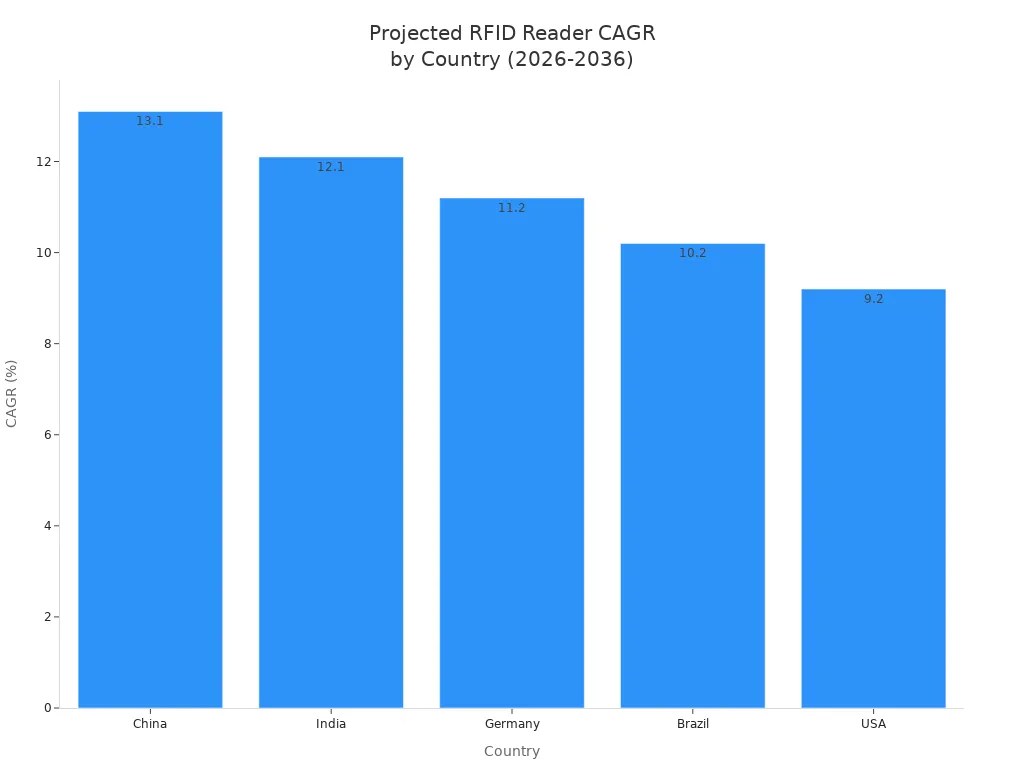
Nuevas ideas como la tecnología UHF pasiva, la computación perimetral y la integración de IoT cambian la forma en que se utilizará la tecnología RFID.
Puntos Clave
Elige lectores RFID que se ajusten a tus necesidades. Puedes optar por modelos fijos, portátiles o integrados para diferentes tareas. – Verifica características importantes como la resistencia, su compatibilidad con otros sistemas y su capacidad de crecimiento. Esto permite que tu sistema RFID se adapte a los cambios futuros. – La tecnología RFID te ayuda a contar mejor los artículos. Evita la falta de existencias y ahorra tiempo en almacenes y fábricas. – Infórmate sobre las nuevas tendencias en RFID, como la integración con IoT y la computación perimetral. Estas pueden mejorar el rendimiento de tu negocio. – Prueba tu sistema RFID con detenimiento. Capacita a tu equipo para que aproveche al máximo tu inversión en RFID.
Criterios de selección de lectores RFID
Características clave para uso industrial
Al seleccionar lectores RFID para una fábrica o almacén, es necesario verificar algunos aspectos importantes. Estos aspectos le ayudarán a aprovechar al máximo su sistema RFID. La siguiente tabla muestra los principales aspectos a considerar y su significado:
Criterios de selección | Mareas Ideales para Lecciones |
|---|---|
Funciona con sus sistemas actuales y facilita la transferencia de datos. | |
Durabilidad y adaptabilidad ambiental | Puede soportar entornos difíciles como polvo, agua y temperaturas extremas, tanto de calor como de frío. |
Escalabilidad y preparación para el futuro | Crece con su empresa y funciona con las nuevas tecnologías. |
Análisis del costo total de propiedad y del retorno de la inversión | Analiza todos los costes, no solo el precio, y comprueba cuánto se gana con una mayor precisión. |
Usted busca lectores RFID que le funcionen ahora y que puedan adaptarse a medida que cambien sus necesidades.
Evaluación del rendimiento de los lectores RFID
Debes comprobar qué tan bien funcionan los lectores RFID en tu espacio. Muchos factores pueden modificar su funcionamiento:
El metal puede hacer rebotar las señales y reducir el rango de lectura.
El agua y el aire húmedo pueden debilitar la señal, especialmente en el caso de la tecnología RFID UHF.
Los objetos que se encuentren entre la etiqueta y el lector pueden bloquear la señal.
El lugar donde se sitúa al lector y a dónde se dirige su atención es importante para obtener buenos resultados.
Otras máquinas pueden interferir con la señal y dificultar la lectura de las etiquetas.
Las temperaturas extremas, ya sean muy altas o muy bajas, pueden dañar el lector o las etiquetas.
La distancia y la fuerza del lector determinan hasta dónde puede leer.
Recuerda que más potencia no siempre significa mejor lectura. No todas las etiquetas funcionan igual , y la nueva tecnología RFID puede funcionar incluso en superficies metálicas o mojadas.
Necesidades del entorno industrial
Lugares como almacenes, fábricas y centros de distribución tienen necesidades especiales. La tecnología RFID permite realizar el trabajo de forma más rápida y precisa. Por ejemplo, el seguimiento de activos mediante RFID facilita la localización de artículos y reduce los errores. Los lectores instalados en vehículos y puertas RFID fijas pueden escanear varios artículos a la vez , lo que ahorra tiempo. El seguimiento en tiempo real permite saber qué se tiene y tomar decisiones acertadas.
También debes pensar en el lugar:
Las máquinas pueden distorsionar las señales y hacerlas difíciles de leer.
El metal y los materiales gruesos pueden bloquear o reflejar las señales RFID.
Los lugares calurosos o húmedos pueden dañar las etiquetas y los lectores.
La ubicación y la calidad de las etiquetas son factores importantes para obtener buenos resultados.
Al elegir los lectores RFID adecuados para tu trabajo, obtendrás el máximo provecho de la tecnología RFID.
Lista de los 10 mejores lectores RFID
Breve resumen de los modelos principales
Necesitas buenos lectores RFID para tu almacén o fábrica. Aquí tienes los 10 mejores modelos que debes conocer en 2026: 1. Lector RFID UHF Zebra FX9600 2. Impinj Speedway Revolution R420 3. Lector de borde Avery Dennison AD-9000 4. Lector RFID fijo Honeywell IF2B 5. Lector UHF SICK RFU650 6. Lector de borde Alien ALR-F800 7. Datalogic DLR-PR001 8. Lector RFID HF GRH-I40 9. Lector UHF portátil Chainway C72 10. Invengo XC-RF850
Estos lectores RFID son útiles para diversas tareas. Se pueden usar para el seguimiento de activos RFID , el control de inventario y la gestión de la cadena de suministro. Cada lector tiene una función específica.
Tabla comparativa: Especificaciones y elementos diferenciadores
Antes de elegir un lector RFID, conviene analizar sus características. La siguiente tabla compara los modelos más destacados en aspectos importantes. Podrá ver la frecuencia de funcionamiento , el alcance de lectura, el tipo de conexión y las funciones especiales de cada lector.
Modelo | Frecuencia | Rango de lectura | Conectividad | Características especiales |
|---|---|---|---|---|
Cebra FX9600 | UHF | Hasta 30m | Ethernet, PoE | Alta durabilidad, fácil integración |
Impinj Speedway R420 | UHF | Hasta 20m | Ethernet, USB | Sintonización dinámica de antenas |
Avery Dennison AD-9000 | UHF | Hasta 25m | WiFi, Ethernet | Computación perimetral, preparada para IoT. |
Honeywell IF2B | UHF | Hasta 15m | Ethernet, Serie | Montaje compacto y flexible |
SICK RFU650 | UHF | Hasta 10m | Ethernet, CAN | Diseño robusto e industrial |
Alien ALR-F800 | UHF | Hasta 18m | Ethernet, USB | Alto rendimiento, fácil configuración. |
Datalogic DLR-PR001 | UHF | Hasta 12m | Ethernet, USB | Antena integrada |
GRH-I40 | HF | Hasta 1.5m | USB, RS232 | Ideal para datos seguros de corto alcance. |
Cadena C72 | UHF | Hasta 15m | Wi-Fi, Bluetooth | Portátil, de mano |
Invengo XC-RF850 | UHF | Hasta 20m | Ethernet, USB | Soporte multiprotocolo |
Como puedes ver, la tecnología RFID se presenta en diferentes tipos. Los lectores UHF tienen un gran alcance y son ideales para grandes almacenes y el transporte de mercancías. Los lectores HF son mejores para distancias cortas y para proteger los datos. Algunos lectores utilizan Wi-Fi o Bluetooth, mientras que otros usan Ethernet o USB. Características especiales como la computación perimetral o un diseño robusto te ayudarán a encontrar el lector RFID que mejor se adapte a tus necesidades.
Esta tabla te ayuda a elegir el lector más adecuado para tu sistema RFID. El lector correcto te permite controlar el inventario y sacar el máximo provecho de tu tecnología.
Reseñas de lectores RFID
Lector RFID UHF Zebra FX9600
Este lector es ideal para lugares concurridos. El Zebra FX9600 funciona bien en almacenes y fábricas. Permite contar artículos más rápido y realizar un mejor seguimiento de los activos. Puede leer muchas etiquetas a la vez. Se pueden ejecutar aplicaciones, lo que facilita la configuración y ahorra dinero. Utiliza una mayor velocidad de red para un mejor rendimiento. La carcasa está fabricada en aluminio resistente . Cuenta con protección IP53, por lo que es resistente al polvo y al agua.
Usos tipicos:
Puede utilizar el FX9600 para llevar un control del inventario, realizar el seguimiento de los artículos en la cadena de suministro y el seguimiento de activos en lugares de difícil acceso.
Consejo: Elija este lector si necesita algo resistente para trabajos pesados.
Ventajas:
Muy rudo
Fácil de añadir a su sistema
Trabaja en lugares difíciles
Desventajas:
No puedes llevarlo contigo
Debe permanecer en un solo lugar.
Punto único:
Este lector sigue funcionando incluso en entornos difíciles y ayuda a que su sistema RFID funcione correctamente.
Impinj Speedway Revolution R420
Este lector se adapta a nuevos entornos. El Impinj Speedway Revolution R420 utiliza una sintonización de antena especial. Esto le permite leer las etiquetas incluso cuando los objetos se mueven.
Utiliza UHF para leer a distancia.
Cambia la antena para una mejor lectura.
Se conecta mediante Ethernet y USB.
Usos tipicos:
Este lector le permite realizar un seguimiento de los activos, contar el inventario y supervisar la cadena de suministro.
Ventajas:
Funciona en muchos lugares
Ideal para artículos de alta rotación.
Fácil de conectar
Desventajas:
Puede que necesite más antenas.
No es la construcción más resistente.
Punto único:
Este lector se adapta para funcionar de la mejor manera, incluso si su almacén cambia.
Lector de bordes Avery Dennison AD-9000
Este lector es inteligente y rápido. El lector Avery Dennison AD-9000 Edge utiliza computación perimetral. Puede procesar datos directamente en el lector, lo que acelera el proceso y reduce el consumo de red.
Computación de borde para datos rápidos
Preparados para el IoT en fábricas inteligentes
Se conecta mediante Wi-Fi y Ethernet.
Usos tipicos:
Este lector le permite realizar un seguimiento del inventario en tiempo real, gestionar fábricas inteligentes y cadenas de suministro conectadas.
Ventajas:
Maneja los datos rápidamente
Funciona con IoT
Muchas formas de conectar
Desventajas:
Cuesta más
Necesita una buena red
Punto único:
Este lector ayuda a que su fábrica sea más inteligente y esté más conectada.
Lector RFID fijo Honeywell IF2B
Este lector es pequeño y cabe en espacios reducidos. El Honeywell IF2B se puede colocar fácilmente donde otros no caben. Ofrece múltiples opciones de montaje y funciona correctamente.
Tamaño pequeño para facilitar la localización
Se conecta mediante Ethernet y serie.
Lecturas a media distancia
Usos tipicos:
Este lector se puede utilizar para controlar el inventario, realizar un seguimiento del trabajo y gestionar sistemas de activos pequeños.
Ventajas:
Cabe en lugares pequeños
Fácil de configurar
Bueno para uso diario
Desventajas:
No lee hasta el final
Tiene menos funciones
Punto único:
Este lector es ideal para lugares donde el espacio es reducido.
Lector UHF SICK RFU650
Este lector funciona en entornos muy difíciles. El lector UHF SICK RFU650 tiene un gran alcance y soporta condiciones climáticas adversas.
La potencia se puede cambiar, mide hasta 10 metros.
Antena integrada con polarización circular.
Funciona desde -25°C hasta 60°C
Usos tipicos:
Este lector se puede utilizar para trenes, automóviles, transporte de mercancías, fabricación de productos y seguimiento de activos.
Nota: Este lector es especial porque funciona en lugares muy calurosos o muy fríos.
Ventajas:
Maneja calor y frío
La antena funciona de muchas maneras.
Buen estado tanto por dentro como por fuera.
Desventajas:
El alcance es menor que algunos
Puede requerir una configuración especial.
Punto único:
Este lector sigue funcionando incluso cuando hace mal tiempo.
Lector de bordes Alien ALR-F800
Este lector está preparado para el futuro. El lector Alien ALR-F800 Edge Reader cuenta con nuevas funciones y funciona perfectamente con el IoT.
Elemento | Mareas Ideales para Lecciones |
|---|---|
Confiabilidad | Muy fiable con nuevo diseño |
Integración: | Funciona bien con IoT |
Potencia | La mejor alimentación y rendimiento PoE |
Arquitectura de interiores | Quinta generación, cambios para adaptarse a su lugar |
Flexibilidad | Puede utilizar MicroSD y USB para más usos. |
Tiene dos procesadores y funciona con Linux.
Dispone de un servidor web para una configuración sencilla.
Cambia los tipos de alimentación sin apagarlo.
Usos tipicos:
Este lector se puede utilizar para el seguimiento de grandes activos, inventario y almacenes inteligentes.
Ventajas:
Confiable en lugares concurridos
Simple de configurar
Muchas opciones de poder
Desventajas:
Puede ser difícil para trabajos pequeños.
Cuesta más
Punto único:
Este lector es compatible con las nuevas tecnologías de IoT y se adapta a tus necesidades.
Datalogic DLR-PR001
Este lector es sencillo y funciona bien. El Datalogic DLR-PR001 tiene una antena integrada y es fácil de conectar.
UHF para lectura a media distancia
Antena integrada para una fácil configuración.
Se conecta mediante Ethernet y USB.
Usos tipicos:
Este lector se puede utilizar para el control de inventario, el control de acceso y el seguimiento de pequeños activos.
Ventajas:
Fácil de poner
Bueno para trabajos sencillos
Funciona bien
Desventajas:
El alcance no es largo
No hay muchas características adicionales
Punto único:
Este lector es ideal para tareas sencillas de RFID.
Lector RFID GRH-I40 HF
Este lector está diseñado para trabajos de datos que requieren precisión y seguridad. El lector RFID GRH-I40 HF es ideal para estas tareas.
HF para leer de cerca
Se conecta mediante USB y RS232.
Ideal para transferencias de datos seguras
Usos tipicos:
Este lector le permite acceder de forma segura a sus documentos, hacer un seguimiento de ellos y encontrar objetos pequeños.
Ventajas:
Mantiene los datos seguros
Fácil de usar
Ideal para artículos especiales
Desventajas:
Solo lee cerca
No apto para grandes almacenes.
Punto único:
Este lector mantiene sus datos seguros y funciona bien para trabajos que requieren precisión.
Lector UHF portátil Chainway C72
Este lector te ayuda a rastrear objetos mientras te desplazas. El lector UHF portátil Chainway C72 es robusto y fácil de transportar.
Cuenta con escáner de código de barras, NFC y RFID UHF.
Muestra los activos en tiempo real.
Resistente para trabajos duros
Fácil de cargar
Los lectores RFID portátiles con GPS te ayudan a encontrar tus objetos. Puedes ver dónde están en tiempo real, lo que evita pérdidas y facilita el trabajo.
Usos tipicos:
Este lector le permite realizar seguimientos sobre la marcha, consultar el inventario y verificar los equipos.
Ventajas:
Recopila datos fácilmente
Actualizaciones en tiempo real
Fuerte y fácil de transportar.
Desventajas:
Necesita ser cargado
Más pesado que algunos
Punto único:
Este lector te permite gestionar tus activos estés donde estés.
Invengo XC-RF850
Este lector es robusto y versátil. El Invengo XC-RF850 es delgado y ofrece múltiples opciones de conexión.
Antena de -7 dBi con polarización circular
Segundo puerto para otra antena
Utiliza TCP/IP y RS-232.
Tiene salida GPIO o Wiegand.
Funciona con JAVA, .NET y C++.
La protección IP65 lo mantiene seguro en lugares difíciles.
Usos tipicos:
Este lector se puede utilizar para la gestión de inventarios, el seguimiento de activos, el transporte de mercancías y la automatización de fábricas.
Este lector le ayuda a controlar el inventario, revisar el equipo y realizar el seguimiento de los envíos en tiempo real.
Ventajas:
Muchas formas de conectar
Trabaja en lugares difíciles
Ideal para muchos usos
Desventajas:
Necesita configuración técnica
No apto para transportar
Punto único:
Este lector se adapta a muchas tareas y mantiene su sistema RFID en óptimas condiciones.
Seguimiento de inventario mediante RFID en la industria
Beneficios del seguimiento de inventario mediante RFID
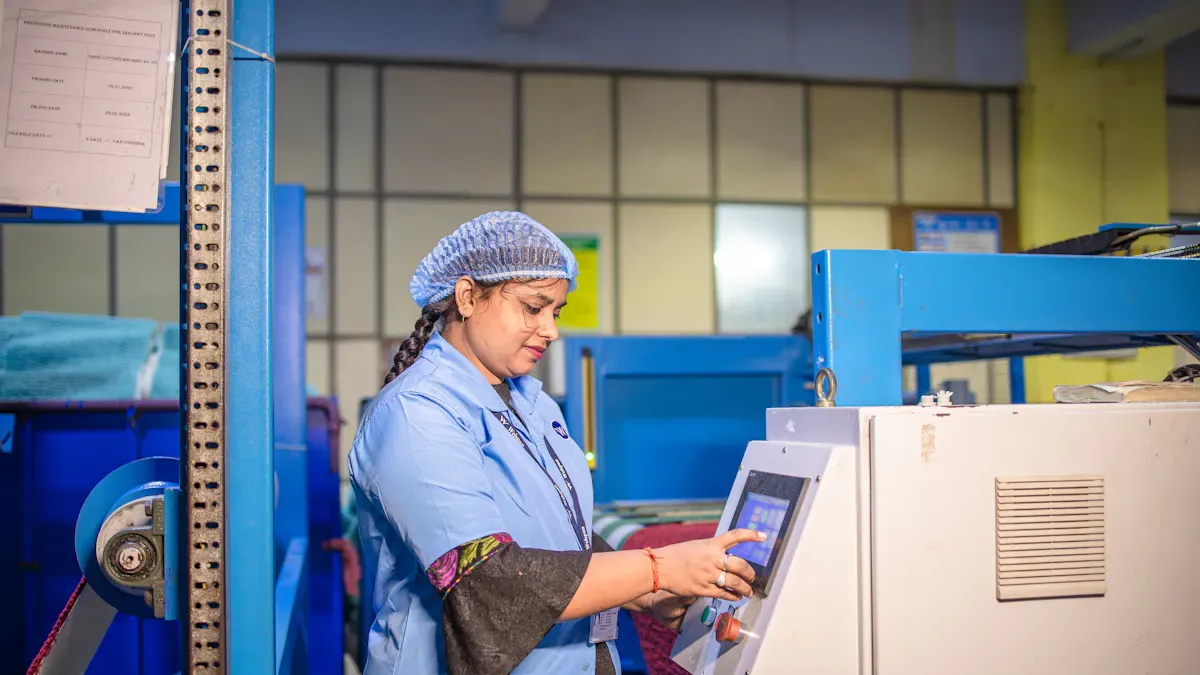
El seguimiento de inventario mediante RFID transforma por completo las fábricas y almacenes. Permite ver la ubicación exacta de los artículos en tiempo real , lo que ayuda a mantener un nivel de existencias óptimo y reduce la frecuencia de desabastecimiento. La tecnología RFID aumenta la precisión del inventario del 65 % al 99 % , logrando que los estantes casi nunca estén vacíos. Además, se ahorra dinero al no tener un exceso de existencias. El seguimiento RFID permite automatizar tareas, eliminando la necesidad de contar los artículos manualmente. Las etiquetas RFID facilitan la localización rápida de productos por parte de las máquinas, lo que se traduce en menos errores y pedidos más rápidos.
La precisión del inventario aumenta hasta un 95-99% con RFID.
La escasez de existencias disminuye entre un 50% y un 80%.
Ahorras tiempo y pagas menos por el trabajo.
Los clientes encuentran lo que buscan con mayor frecuencia.
Consejo: El seguimiento de inventario mediante RFID hace que su sistema sea más inteligente y fiable.
Aplicaciones en el mundo real
Muchas industrias utilizan RFID para el seguimiento de inventario . El seguimiento RFID facilita la gestión de activos y existencias. Permite visualizar el inventario a lo largo de toda la cadena de suministro. RFID permite el seguimiento de productos desde su fabricación hasta su entrega . En las tiendas, las etiquetas RFID se colocan en la ropa durante la producción . Los envíos se escanean en los centros de distribución y los recuentos se actualizan al instante. Los trabajadores utilizan lectores RFID portátiles para comprobar el stock rápidamente, con una precisión superior al 98 %. RFID ayuda a preparar pedidos con rapidez, reduciendo los errores de preparación en más del 95 % . Los trabajadores son más productivos, hasta un 30 % más rápidos.
Las principales tiendas utilizan la tecnología RFID para mejorar su inventario y lograr clientes satisfechos.
El seguimiento mediante RFID ayuda a automatizar las tareas de almacén.
Con RFID, el seguimiento de activos y productos es más eficaz.
Caso práctico: Walmart y la tecnología RFID
Walmart utiliza RFID para mejorar la gestión de inventario. Permite visualizar el inventario en tiempo real y minimizar errores. Walmart logra una precisión de inventario un 20 % mayor. Los problemas de falta de existencias se reducen un 16 %. Los costos laborales disminuyen un 15 %. RFID proporciona a Walmart un mejor control de inventario y optimiza las ventas de diversas maneras.
Resultado | Porcentaje de mejora |
|---|---|
Precisión de inventario | 20% |
Reducción de situaciones de falta de existencias | 16% |
Ahorros en costos laborales | 15% |
El trabajo se realiza más rápido.
Los clientes están más contentos.
Los sistemas de inventario funcionan mejor.
Cómo elegir el lector RFID adecuado
Lector que se ajusta a la aplicación
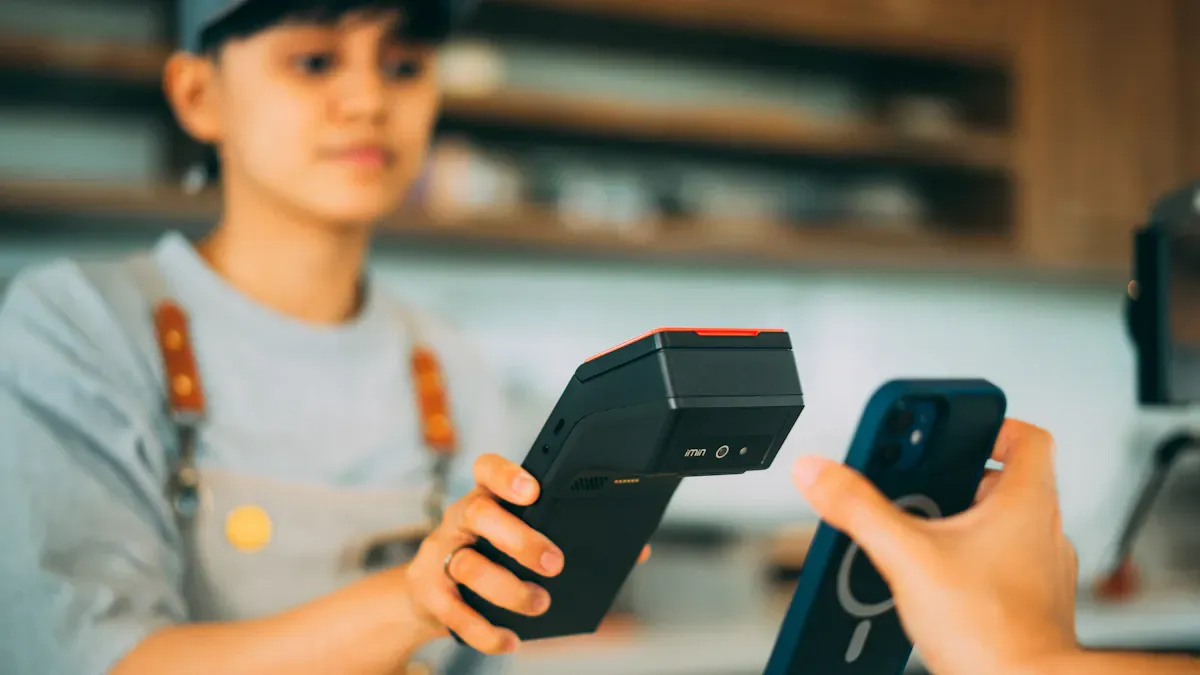
Necesitas elegir el lector RFID adecuado para tu trabajo. Piensa en cómo utilizas RFID a diario. Los lectores fijos se quedan en un lugar , como en puertas o cintas transportadoras. Los lectores portátiles son útiles cuando te desplazas y cuentas objetos. Los lectores integrados se colocan dentro de las máquinas para tareas específicas. Ten en cuenta también tu lugar de trabajo. El metal y el agua pueden bloquear las señales. Los lugares con temperaturas extremas pueden hacer que los lectores se estropeen más rápido. Los objetos que se mueven rápidamente necesitan lectores rápidos. Asegúrate siempre de que el alcance y la frecuencia del lector coincidan con tus etiquetas. Si tienes muchos objetos cerca unos de otros, comprueba el tipo de antena. Verifica que tu lector cumpla con las normas del sector.
Los lectores fijos funcionan bien en puertas y en cintas transportadoras.
Los lectores portátiles son ideales para llevarlos a todas partes.
Los lectores integrados se colocan dentro de las máquinas.
El metal y el agua pueden causar problemas de señal.
Elige la frecuencia y la antena adecuadas para tu zona.
Factores de presupuesto e integración
Tu presupuesto te ayudará a elegir el lector RFID adecuado. Necesitas un lector que funcione bien pero que no sea demasiado caro. Busca sistemas que te ofrezcan una buena relación calidad-precio. Asegúrate de que el lector sea compatible con tu software y red. Ethernet y PoE proporcionan conexiones estables. Wi-Fi y Bluetooth son ideales para trabajos en movimiento. El middleware ayuda a conectar los datos RFID a tu sistema principal. Comprueba siempre que el lector sea compatible con tus sistemas de seguimiento.
Cómo proteger su inversión en RFID del futuro
Si quieres que tu RFID dure mucho tiempo, elige lectores y etiquetas que puedan soportar nuevas tareas. Los lectores y etiquetas pequeños te permiten rastrear más objetos. Las mejores antenas ofrecen mayor alcance y mejor seguimiento. Conecta tu RFID a la IoT para obtener datos en tiempo real. Algunas etiquetas ahora incluyen sensores y memoria para información adicional.
El mercado de RFID crece porque la gente busca un mejor seguimiento, un trabajo más eficiente y decisiones más inteligentes. Existen desafíos como el costo y la seguridad de los datos, pero las nuevas tecnologías ofrecen más maneras de mejorar.
Consideración clave | Mareas Ideales para Lecciones |
|---|---|
El seguimiento automatizado ayuda a que el trabajo sea más rápido y con menos errores. | |
Mejorando la experiencia del cliente | Un buen inventario significa que los clientes encuentran lo que buscan. |
Toma de decisiones más rápida | RFID, IoT e IA te ayudan a tomar decisiones inteligentes rápidamente. |
Siga siempre las normas para proteger sus datos y realizar el seguimiento de sus productos. De esta forma, su sistema RFID estará preparado para el futuro.
Has aprendido cómo los 10 mejores lectores RFID te ayudan a mejorar tu trabajo. Estos lectores RFID te ofrecen un mejor seguimiento, recuentos más rápidos y menos errores. Debes elegir el lector RFID adecuado para tu trabajo y estar al tanto de las nuevas tendencias en RFID. Para sacarle el máximo partido a la tecnología RFID, sigue estos pasos:
Comprueba cuáles son tus objetivos de RFID.
Elige las etiquetas RFID, los lectores RFID y el software RFID que mejor se adapten a tus necesidades.
Conecte el RFID a su sistema principal.
Prueba tu configuración RFID y enseña a tu equipo.
Manténgase al día sobre las novedades en tecnología RFID. Descubrirá cómo la tecnología RFID y las nuevas tecnologías transforman su negocio.
Preguntas Frecuentes
¿Cuál es la principal diferencia entre los lectores RFID UHF y HF?
Los lectores UHF escanean las etiquetas desde más lejos. Los lectores HF funcionan mejor para trabajos de corto alcance. Se utilizan UHF para grandes almacenes. Se utilizan HF para tareas seguras o de corto alcance.
¿Cómo se mantienen seguros los datos RFID?
Debe usar contraseñas seguras y redes cifradas. Actualice siempre su software. Limite quién puede acceder a su sistema RFID.
¿Pueden funcionar los lectores RFID en lugares fríos o húmedos?
Sí, muchos lectores RFID industriales tienen carcasas resistentes. Se pueden usar en cámaras frigoríficas o fábricas húmedas. Siempre verifique el grado de protección IP antes de comprar.
¿Cómo saber qué lector RFID se ajusta mejor a sus necesidades?
Haz una lista de tus tareas. Verifica el alcance, la frecuencia y los tipos de conexión. Usa esta tabla para obtener ayuda rápida:
¿ Necesita ayuda | Mejor tipo de lector |
|---|---|
De largo alcance | UHF fijo |
Moverse | UHF portátil |
Datos seguros | Lector HF |