1. Kakaretso ea morero
1.1 Semelo sa Moreki
The client runs a security systems integration and industrial services business. Their customers span property management companies, utility operators, oil and gas facilities, and large manufacturing plants. These are not small sites. Some of them cover hundreds of acres. Some run 24-hour operations where a missed patrol checkpoint at 3 AM is not a paperwork problem. It is a liability. For years, their patrol staff carried RFID wands, tapping checkpoint cards at fixed locations, then filing paper logs at the end of a shift. The system proved one thing: a guard reached a specific spot at a specific time. Everything else, what they saw, what condition the equipment was in, whether anything unusual happened between checkpoints, none of that was captured. So the client came looking for smart inspection device.
1.2 Maikemisetso a Morero
The smart inspection device needed to do several things simultaneously and reliably. Real-time GPS positioning was the foundation. Without knowing where a worker is at any given moment, the rest of the system is just guesswork. Beyond location, the client needed HD photo and video capture so guards could document what they actually saw, not just that they showed up somewhere.
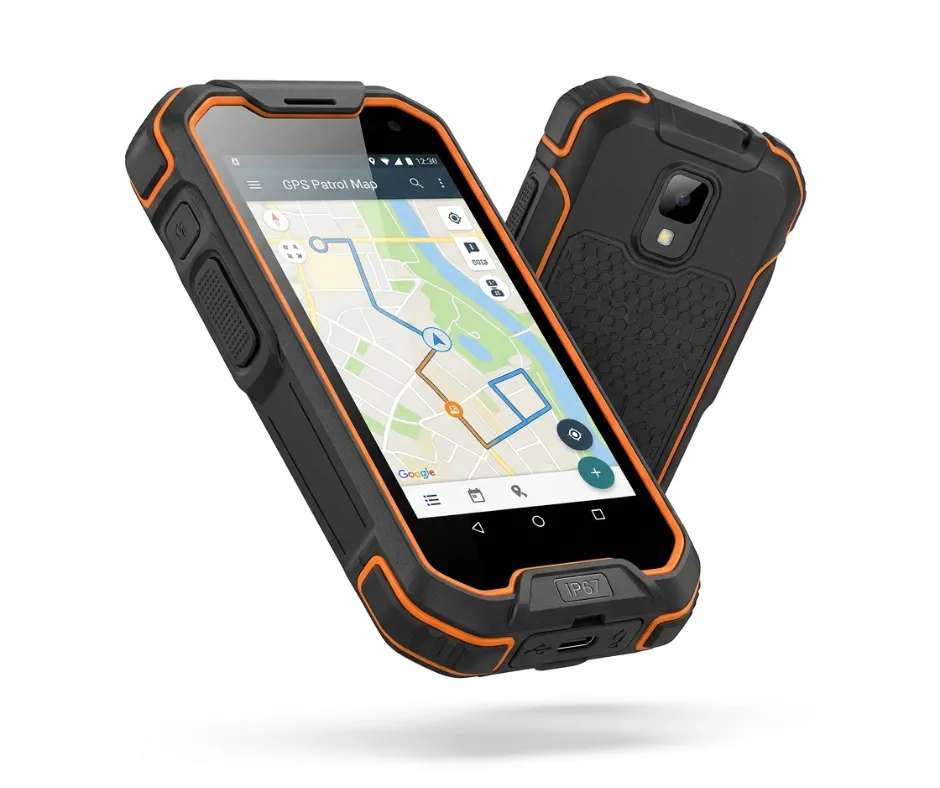
Push-to-talk voice communication was on the list from day one. Guards are not comfortable navigating phone menus while wearing gloves in the dark. One button, instant radio-style communication, that was the requirement. 4G/LTE data transmission, a battery that lasts a full 12-hour shift minimum, an IP-rated rugged body that survives drops and dust and water, and clean integration with a cloud management platform. That was the full scope.
2. Industry Challenges in Smart Inspection Device Development
2.1 Positioning Accuracy
Outdoor GPS is manageable. The real problem is that industrial sites are not purely outdoor environments. They mix open yards with enclosed warehouses, underground cable runs, multi-floor process buildings, and tank farms surrounded by steel structures that scatter satellite signals in every direction. A device that tracks accurately in the parking lot but loses position inside the boiler room is not solving the actual problem.
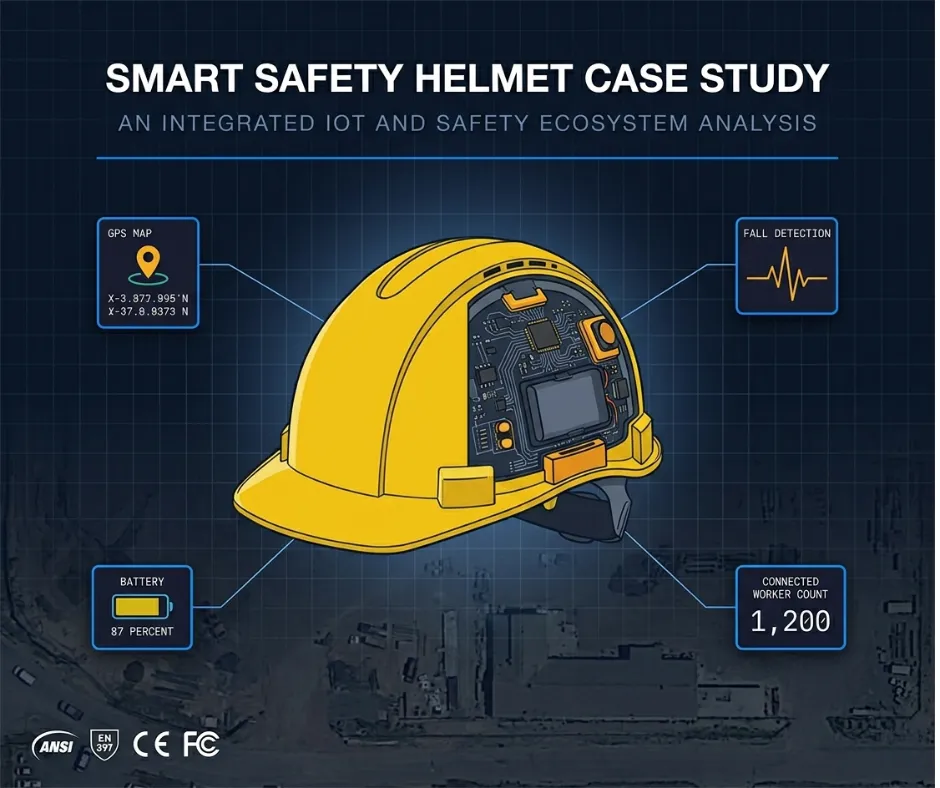
Hape Bala: Smart Safety Helmet Case Study
Hybrid positioning approaches, pulling from GPS, WiFi, and Bluetooth Low Energy beacons in combination, were evaluated from the beginning. Each technology covers what the others cannot. The tradeoff is added complexity in both hardware and the software that fuses location data from multiple sources.
2.2 Real-Time Data Transmission
Here is a scenario worth thinking about. A guard photographs a cracked pipe fitting at the far end of a facility. The 4G signal in that corner is weak. The photo uploads partially, fails silently, and the control room never sees it. Nobody knows the report was lost. That is actually worse than no photo at all because it creates a gap in records that looks complete.
Designing for unreliable networks means building offline-first data handling into the system. Photos, GPS logs, and incident notes buffer locally when connectivity drops. When signal recovers, they upload with accurate original timestamps. Low-latency upload for routine data, reliable eventual delivery for everything else, those are two different engineering problems that both need solutions.
2.3 Rugged Industrial Environment
Consumer electronics last about three weeks on a construction site before something breaks. That is not an exaggeration. Dust gets into ports. Devices get dropped onto concrete from belt height. They go from a cold storage area into a hot outdoor environment repeatedly. Touchscreens crack. Buttons corrode. None of that is acceptable for a device workers are supposed to use every single shift for years.
Drop resistance of at least 1.5 meters, full dust protection, water ingress protection, and stable operation from -20 to 60 degrees Celsius. Those were the non-negotiable physical requirements going into mechanical design.
2.4 Power and Thermal Constraints

Running GPS tracking, active 4G connectivity, and a camera simultaneously on a handheld device drains battery fast. Most consumer smartphones would be dead in four hours under that workload. A shift is twelve. That gap drives nearly every power architecture decision in the design. And when components run hard in a compact sealed enclosure, heat has nowhere easy to go. Thermal management and battery life are tightly connected problems.
3. Moralo oa Meaho ea Sistimi
3.1 Sethala sa Ts'ebetso ea Motheo
The processing core runs on an ARM Cortex-A processor with a customized Android build on top. Android was a practical choice, not just a default. It lets the application development team move quickly on the inspection software layer without waiting for a custom OS to stabilize. The platform also has an optional NPU slot designed in for AI image analysis features, so customers who want machine vision capabilities later do not need a different smart inspection device.
Secure boot architecture was built in from the start. Devices on industrial sites are targets for firmware tampering, and the security of the data they collect matters.
3.2 Positioning Module
Smart inspection device uses four satellite systems at the same time. Using four systems allows the device to see more satellites. This makes the location tracking faster and more accurate, even when tall buildings block the sky.
The system also uses “Assisted-GPS.” This technology downloads satellite data from the network so the device finds your location in seconds instead of minutes. If you need to track items inside a building, there is a special slot to add a UWB module easily.
3.3 Camera System
The camera module runs from 8 to 16 megapixels depending on deployment requirements. Auto-focus, low-light improvement, and optional infrared support for night operations. Why does camera quality matter this much in a patrol context? A soft, underexposed image of a suspected leak or a piece of damaged equipment is nearly useless when someone reviews it remotely. The camera is not a feature. It is the evidence system.
3.4 Meralo ea Puisano
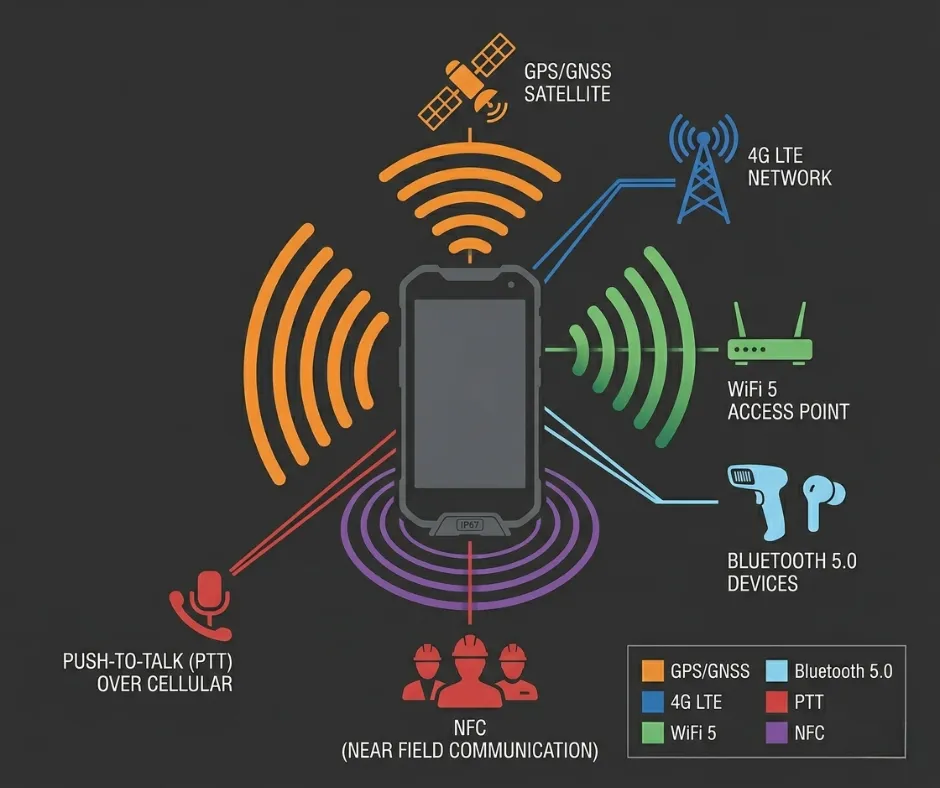
4G LTE is the primary data channel. WiFi 5 is available when the device is within range of facility networks, which saves cellular data costs on campuses with good wireless coverage. Bluetooth 5.0 handles accessories and short-range data. PTT over cellular gives guards radio-style communication without separate hardware. NFC handles checkpoint scanning, a clean replacement for older RFID card systems that keeps the familiar checkpoint-by-checkpoint patrol verification workflow intact.
4. Boenjiniere ba PCB le Hardware
4.1 Moralo oa PCB oa Mekhahlelo e Mengata
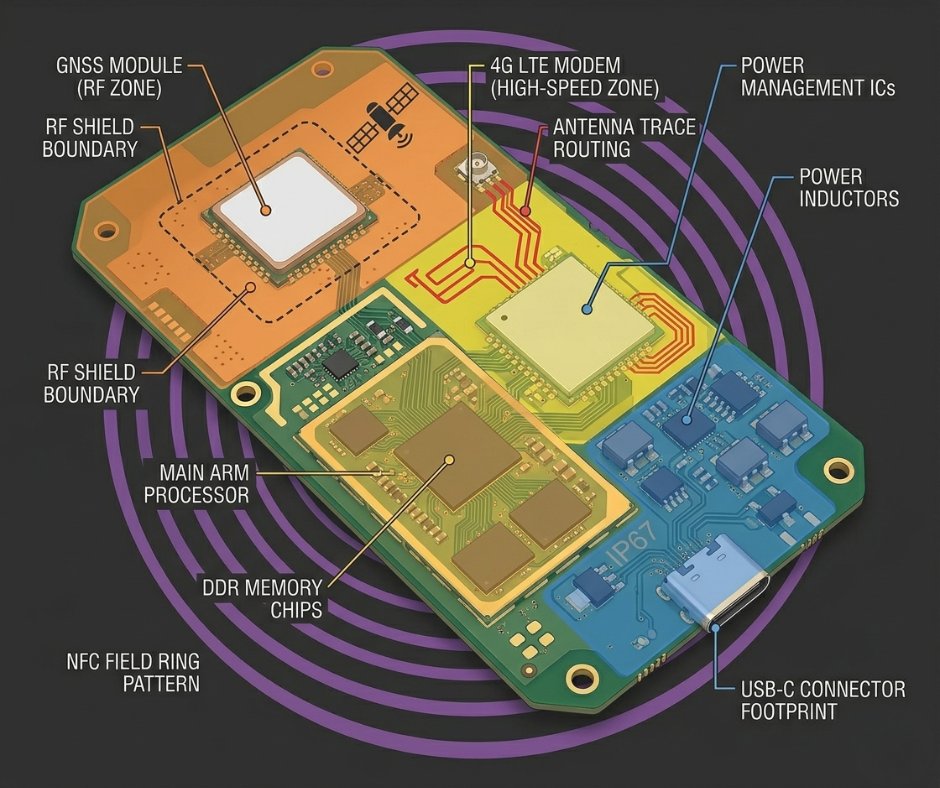
Six to eight layer boards were used across this design. That layer count is not just about fitting more traces. It is about giving RF signals room to behave properly. GNSS receivers and LTE modems both occupy frequency ranges where poor signal routing causes them to interfere with each other in subtle ways. A device that passes lab testing can still show real-world degradation if RF isolation was handled carelessly. Ground planes, dedicated RF routing layers, and EMI shielding around sensitive sections were part of the layout from the first revision.
4.2 Sistimi ea Tsamaiso ea Matla
Battery capacity targets ran from 4,000 to 6,000 mAh. But raw capacity is only part of the answer. The power management system schedules subsystem activity based on actual usage patterns. GPS polling frequency drops when the device detects minimal movement. The screen dims when no interaction has occurred. The modem sends data in short bursts rather staying on all the time. It improves battery life. Special safety chips also protect the battery from overcharging, getting too low, or overheating. With USB-C fast charging, the smart inspection device can gain a lot of power during a short break.
4.3 Rugged Hardware Structure
The PCB sits in a shock-absorbing mounting arrangement inside the chassis. This detail matters more than it sounds. A drop onto concrete sends a sharp mechanical impulse through the whole assembly. A rigidly mounted PCB transfers that impulse directly to solder joints and component pads, and enough of those events cause failures that do not show up immediately. Compliant mounting absorbs a portion of that energy before it reaches the electronics. Combined with a reinforced internal metal frame and full IP65/IP67 sealing, the internal structure is built to take the working environment seriously.
5. Software and Platform Integration
5.1 Inspection Workflow System
The application handles task assignment, checkpoint scanning, live patrol tracking, and incident reporting. Workers see their assigned patrol route on a simple map. When a guard scans a QR code, the system saves both time and the GPS location. So, the system checks if the guard is working fine. If the guard is far, the system tells the scan as an error. It stops guards from faking a scan from a different location.
5.2 Image and Video Management
Photos and videos are timestamped and geotagged at the moment of capture, not at upload time. This is not a small distinction. If a device buffers media during a connectivity gap and uploads it later, server-side tagging based on upload time would record the wrong location and wrong time. Capture-time tagging preserves accurate records regardless of when the data reaches the cloud. Encrypted upload and cloud storage integration are standard.
5.3 Voice Communication System
One-touch PTT connects workers to their group channel instantly. No navigating menus, no unlocking the screen first. Supervisor groups, zone-based groups, and full-site broadcasts are all configurable. The SOS function is a dedicated button that sends an alert with the worker’s current location to the control room and opens a voice channel automatically.
5.4 Backend Management Platform
The web dashboard shows a live map of active workers with their patrol paths updating in real time. Historical data lets supervisors replay any past shift. Reports export to PDF or Excel for client documentation, audit records, or incident investigation use. No specialist software is needed. A browser is enough.
6. AI and Smart Features (Optional Upgrade)
6.1 AI Image Recognition
Safety hazard detection, equipment anomaly recognition, and PPE compliance monitoring are available as upgrades that run either on-device through the NPU or via cloud inference depending on connectivity and latency requirements. The honest answer on AI features is that they add genuine value in the right context and meaningful complexity in the wrong one. A facility with a specific recurring hazard detection problem is a good candidate. A standard residential property patrol program probably is not.
6.2 Geofencing Alerts
Restricted area boundary alerts and missed checkpoint notifications are rules-based features built on the GPS data the device already collects. Automatic shift summary generation pulls together patrol coverage, checkpoint scan records, and incident reports into a single document at end of shift. These features require no additional sensors and no hardware changes.
7. Moralo oa Mekaniki le oa Liindasteri
7.1 Rugged Enclosure Design
The shell uses two materials: PC and TPU. The PC makes it strong. The TPU protects the corners from breaking if dropped. The standard version (IP65) stops dust and rain. A better version (IP67) is for very wet areas. We use rubber seals and tight screws on every button and hole to keep water out.
7.2 Moralo oa Ergonomic
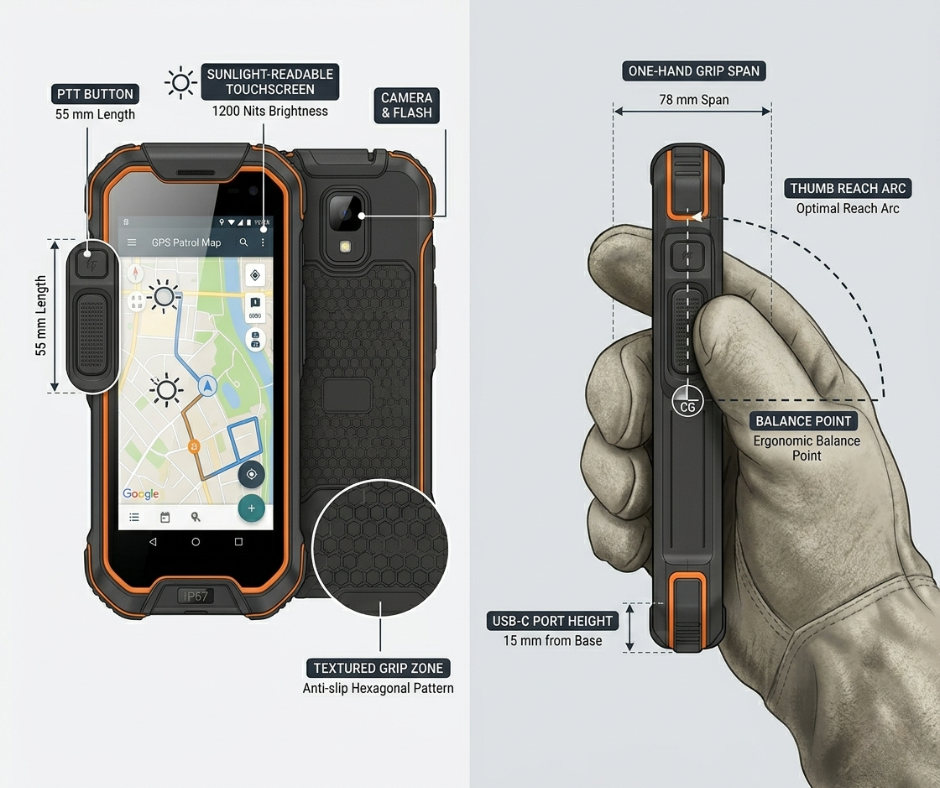
Field research with working security guards shaped the ergonomic decisions more than any design trend. One-handed operation works because of where controls are placed, not just because the device is light enough to hold. The PTT button is physical, large, and positioned where a thumb lands naturally. The touchscreen is calibrated for gloved use, which requires different capacitive sensitivity settings than a bare-finger consumer device. Screen brightness hits outdoor readability in direct sunlight.
7.3 Taolo ea Mocheso
A graphite sheet spreads heat away from the processor and modem hotspots. An aluminum internal frame moves that heat toward sections of the enclosure with more surface area for passive dissipation. The result is a device that stays warm during a long shift but does not become uncomfortable to hold and does not throttle processor speed to manage temperature.
8. Teko le netefatso
8.1 Teko ea Ts'ebetso
GNSS accuracy is validated against reference equipment in multiple sky conditions, not just in a clear open area with perfect visibility. 4G stability testing runs in signal-marginal environments rather than a clean lab. Camera resolution and focus calibration are checked during production on a sample basis in addition to engineering validation.
8.2 Teko ea Tikoloho
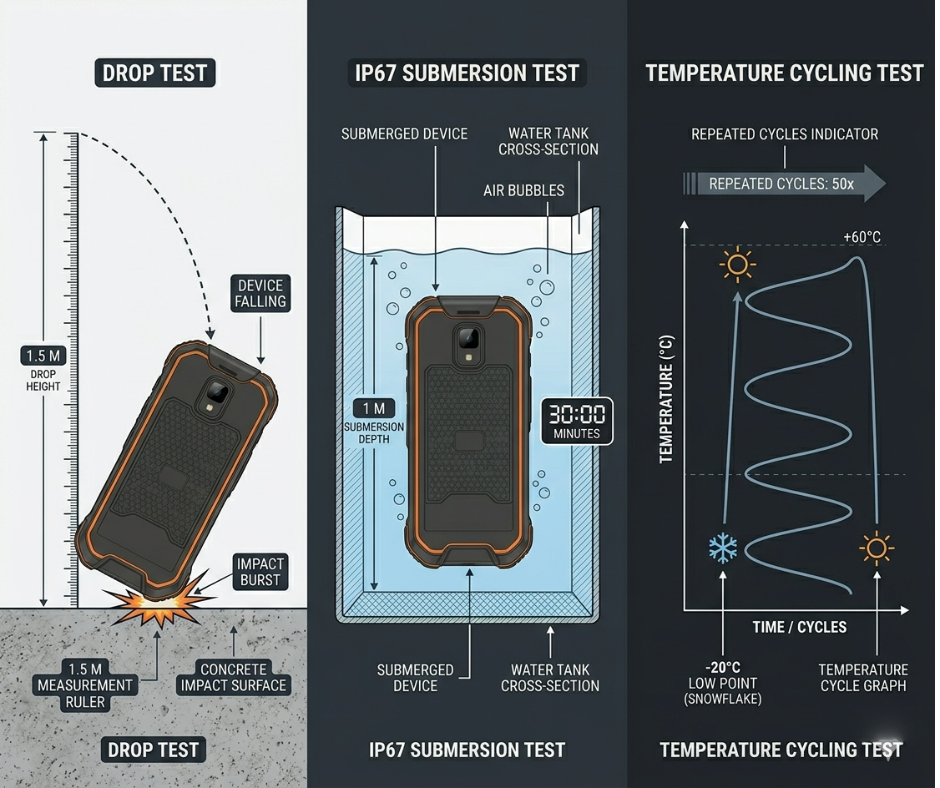
We test the tools by dropping them 1.5 meters onto concrete and steel. We drop them from different sides to make sure they do not break. We also check that no dust or water can get inside.
We test them in extreme cold and extreme heat. Changing the temperature over and over checks if the parts stay together. This is more difficult for the tool than just staying in one hot or cold place.
8.3 Battery and Endurance Testing
Full 12 to 15 hour shift simulations run under workload profiles that reflect actual field use, not best-case light usage. Charging cycle validation covers hundreds of charge cycles to confirm capacity retention. Aging tests push batteries beyond normal use conditions to check safety behavior at end of life.
9. Setifikeiti le Tumellano
Smart inspection device carries CE and FCC marks for market access in Europe and North America. RoHS compliance covers restricted substance requirements. IP65/IP67 ratings are tested and documented, not self-declared. UN38.3 battery certification covers safe transportation of lithium-ion cells, which is a practical requirement for shipping devices internationally.
10. Tlhahiso le Tlhahiso e Kholo
10.1 DFM and Component Strategy
Design for manufacturing review ran before tooling was finalized. Industrial-grade components with documented long lifecycle availability were specified wherever possible. Alternative component sources were identified for anything with supply chain risk history. This is not caution for its own sake. It is basic program management for a device that needs to stay in production and be supported in the field for five or more years.
10.2 SMT le Kopano
High-density SMT assembly runs standard. The waterproof assembly process adds steps not present in consumer electronics production, gasket installation, compression seal placement, torque-controlled fastening, and seal integrity checks before any unit is considered closed. Firmware flashing and calibration happen during the production process, not as a separate downstream step.
10.3 Taolo ea Boleng
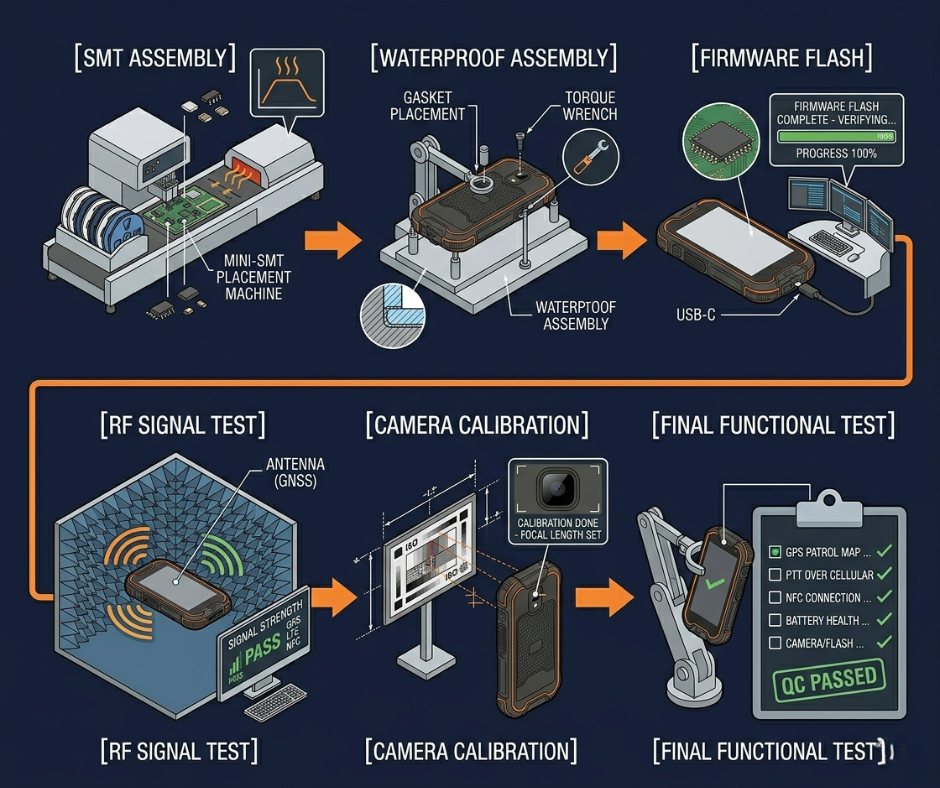
Every unit goes through 100% functional testing covering wireless signal strength, camera operation, GPS acquisition, PTT function, and battery behavior. The standard is zero defective units reaching customers. Catching failures during production costs less and causes less damage than catching them after deployment.
11. Liphetho tsa Morero
11.1 Liphihlello tsa Tekheniki
Average battery endurance across field deployments settled at 15 hours under normal use, meaning guards end their shifts before devices run out of power. GPS positioning remained stable in the outdoor and semi-sheltered environments where most patrol routes actually run. HD image quality gave supervisors and clients usable documentation rather than blurry, low-light photos attached to incident reports.
11.2 Ho Romelloa ha 'Maraka
Deployments across property management and industrial sectors showed measurable reduction in manual reporting errors. Guards could not retroactively fill in patrol records, because the GPS track showed where they actually went and when. Patrol accountability improved not because management enforced it harder, but because the data made the actual patrol path visible to everyone.
12. Bokhoni ba Katoloso ea Nakong e Tlang
12.1 5G Upgrade
The communication architecture was designed with 5G migration in mind. High-definition live video streaming and real-time remote expert support become practical on 5G in ways that 4G bandwidth does not easily support. The shift to 5G does not require a full hardware redesign.
12.2 Kopanyo ea Smart City
Industrial inspection devices generate location, event, and sensor data continuously. That data has value beyond the immediate facility management use case. Integration with broader IoT sensor networks and unified city or campus management platforms is a logical next step for operators managing infrastructure at scale.
13. Why Choose Us for Industrial Smart Device Development
Building a rugged industrial handheld is a different kind of program than building a consumer app or even a standard commercial smart inspection device. The hardware engineering depth required across embedded systems, RF design, power management, mechanical sealing, and thermal control is specialized. Mistakes in any one of those areas show up as field failures months after deployment, which is an expensive place to find them.
Our team has worked through that full stack across multiple industrial handheld programs. PCB and RF design, rugged enclosure engineering, IoT platform integration, OEM and ODM manufacturing programs from first prototype through production ramp. If you are planning a smart inspection device or industrial patrol terminal, we would rather talk through the actual requirements early than review a spec that has already locked in decisions that will cause problems later.
Contact our engineering team to discuss your customized inspection hardware solution.